Battery Cooling Plate
Symptom Finder: What Is Actually Broken?
| What you see or hear | Part to check first |
|---|---|
| Cell temperature deviation reported across the pack | Cooling plate contact or coolant flow |
| Charging rate limited with normal coolant flow elsewhere | Pack cooling path |
| Coolant loss traced to the pack rather than the loop | Cooling plate or its connections |
| Power limited after sustained load with healthy pumps | Pack thermal path |
About Battery Cooling Plate
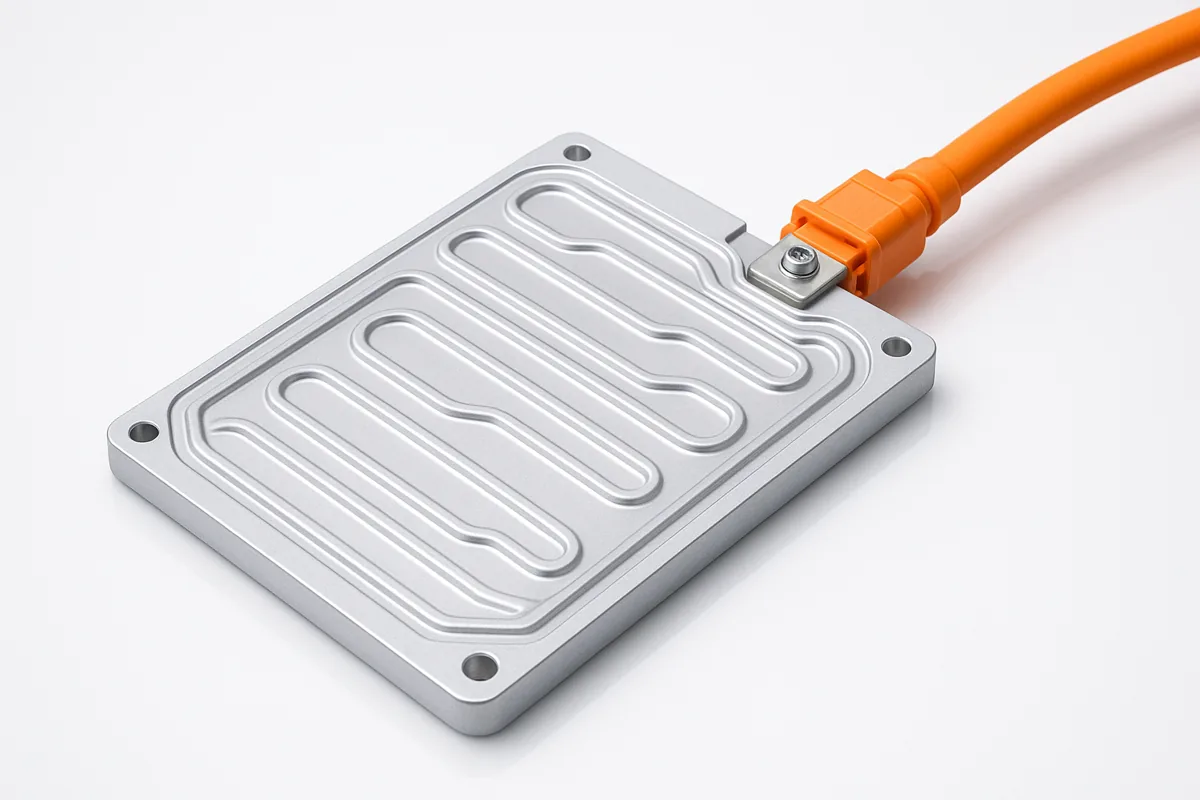
Cells produce heat in use and in charging, and they do not tolerate it evenly: a difference of a few degrees between one part of a pack and another shortens the life of the warmer cells and limits what the whole pack will accept. A cooling plate is the answer, an aluminium panel with coolant channels formed inside it that sits in contact with the cells, usually beneath them, sometimes between rows. Thermally conductive material fills the microscopic gaps between cell and plate so heat actually crosses the joint rather than meeting an insulating layer of air. The same plate works in reverse in cold weather, carrying warmth into the pack so it can accept charge. Because it lives inside the enclosure, it is part of the pack rather than a serviceable component.
What to know before buying Battery Cooling Plate parts
Send an enquiry with the OE number from the old part, or a photograph of the part and its label, along with the thermal fault data. The catalogue is then checked directly.
Cooling plate content exists in the factory catalogue, and pricing is being brought online in stages. The plate sits inside the sealed pack enclosure. That places any work on it in manufacturer or specialist territory rather than a general workshop. The parts an ordinary repair can reach are the pumps, valves, hoses and chiller around it.
Before You Order: 4 Checks
- Confirm the fault sits in the pack rather than in the pumps, valves or hoses around it.
- Have the pack assessed by a workshop equipped for high voltage work before pursuing internals.
- Check for trapped air in the loop, which produces the same symptoms as a cooling fault.
- Send an enquiry with your vehicle identification number and the thermal fault data.
What Changed and Why
Cooling plate design has followed pack construction. Cell to pack architectures bond cells directly onto the plate, which improves heat transfer and structural stiffness while making the assembly effectively inseparable, and immersion cooling is under development for applications demanding very high charging rates. Thermal interface materials have advanced in parallel, since the resistance at the joint between cell and plate often matters more than the plate itself. The practical direction is towards packs that are thermally excellent and correspondingly less serviceable at component level.
Battery Cooling Plate: Frequently Asked Questions
Why does temperature evenness matter so much in a pack?
Because cells age at a rate that depends strongly on temperature, so a group running warmer than the rest degrades faster and drags the whole pack's usable capacity down with it. Uneven temperature also limits what the pack will accept during charging, since the management system protects the hottest cells rather than the average. The cooling plate exists to keep that spread small, which is why a fault there shows as a temperature deviation warning rather than as an obvious overheat.
Is the cooling plate serviceable?
Not in a general workshop. It sits inside the sealed pack enclosure in contact with the cells, so reaching it means opening a high voltage assembly, which is manufacturer level work requiring training, equipment and facilities. What an ordinary repair can reach is everything in the loops around it, meaning the pumps, the valves, the hoses and the chiller, and those account for the great majority of thermal faults. Confirm the fault sits inside the pack before assuming plate work is needed.
Why is nothing priced here yet?
Cooling plates are usually laminated into the pack structure during assembly, which means they are seldom sold as a standalone item and a published figure would misrepresent what can be bought. Loading a partial listing would help nobody. What this page does instead is describe how the plate works and where its faults show up, so an owner facing a thermal warning knows what is being discussed. Anyone who needs a reference checked can ask, and the answer comes from the manufacturer data rather than from a guess about your pack.
What should I check before assuming a pack cooling fault?
The loop around the pack, in this order: coolant level and specification, trapped air after any previous coolant work, the electric pump serving that circuit, and the diverter valves that route flow. Every one of those produces reduced pack cooling with the plate in perfect condition, and every one is far cheaper to put right. Have the thermal data read, since it shows temperatures at each point in the loop and usually identifies where flow is failing.