Battery Management System (BMS)
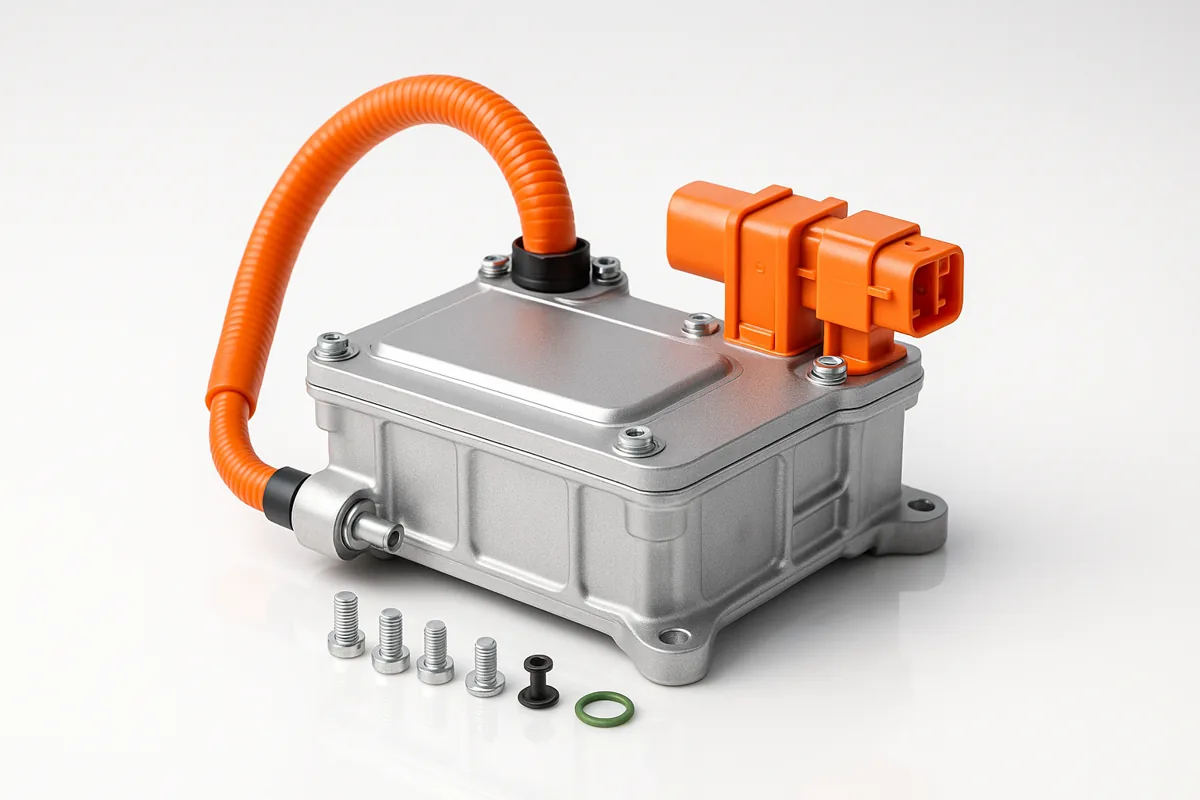
Symptom Finder: What Is Actually Broken?
| What you see or hear | Part to check first |
|---|---|
| Battery system fault with drive limited or unavailable | Battery management controller or its inputs |
| State of charge reading jumping or implausible | Management system calibration |
| Cell voltage deviation reported repeatedly | Pack condition or a sensing circuit |
| Insulation resistance fault stored against the pack | Pack or its monitoring circuit |
About Battery Management System (BMS)
A battery pack cannot be trusted to look after itself. The management system measures the voltage of every cell group and the temperature at many points, calculates how much energy remains and how much the pack will safely accept or deliver at this moment, and commands the contactors that connect it to the vehicle. It balances cells against one another, since a pack is only as usable as its weakest member, and it monitors insulation resistance between the high voltage system and the chassis continuously. It also records history: how the pack has been charged, how hot it has been and how it has aged, which is what a state of health report reads. Because it is a safety system as much as an energy manager, it errs towards limiting the vehicle rather than allowing an unsafe condition.
What to know before buying Battery Management System (BMS) parts
Have the fault confirmed before you chase a management system part. A weak low voltage supply and connector corrosion produce very similar symptoms. The check needs a workshop with high voltage diagnostic access.
These are security bound components, configured and tied to a specific pack. Replacement involves coding and a pairing procedure rather than a simple swap. Proof of ownership is expected.
Management system content exists in the factory catalogue, and pricing is coming online in stages. Send an enquiry with the OE number from the old part, or a photograph of the part and its label, and the stored codes. We then check the catalogue directly for what is available.
Before You Order: 4 Checks
- Check the low voltage supply first, since the management system depends on it and low voltage mimics failure.
- Have the stored codes read with high voltage diagnostic access before pursuing a controller.
- Expect coding, pairing and proof of ownership requirements for any replacement.
- Send an enquiry with your vehicle identification number and the fault data.
What Changed and Why
Battery management has grown from a protective circuit into a system that determines much of how a vehicle behaves, setting charging speed, available power, regeneration and range prediction. Wireless cell monitoring is emerging, replacing the harnesses that link sensing boards and removing a common failure point. Software updating over the air has spread here too, so behaviour that once required a workshop visit can change with a release, and a fault that looks like hardware is occasionally resolved by an update instead.
Battery Management System (BMS): Frequently Asked Questions
What does the battery management system actually control?
Far more than the name suggests. It decides how much power the pack will deliver and accept from moment to moment, commands the contactors that connect it to the vehicle, balances the cells so the weakest does not limit the rest, monitors insulation resistance to the chassis, and records the pack's history. That is why a management fault presents as reduced power, refused charging or a vehicle that will not start rather than as a battery symptom, and why the codes it stores are the starting point for any diagnosis.
Why is nothing priced in this category yet?
Because these are configured, security bound components and the listings are being brought online in stages rather than published without confirmed availability and the procedures that go with them. The content exists in the factory catalogue, and an enquiry with your vehicle identification number is checked directly against it. Coverage across the group grows as further catalogues load, so a reference that is not shown today may well be listed shortly.
My car reports a battery fault. Is the management system to blame?
Check the low voltage supply before anything else. The management system, like every controller on the vehicle, runs on the twelve volt circuit, and a weak auxiliary battery produces resets, communication faults and a scatter of warnings that look exactly like a high voltage failure. After that, connector corrosion and sensing harness damage account for a large share of remaining faults. Only once those are excluded does the controller itself become the likely cause.
Can I send an enquiry with nothing listed?
Yes, and it is the intended route here. Send your vehicle identification number, the stored fault codes and the state of health report if one has been produced, and the factory catalogue is checked for what is available along with the coding and pairing requirements. Expect proof of ownership to be requested, since these components are security bound to the vehicle. Enquiries also influence which references are priced next.