Bulbs & Control Modules
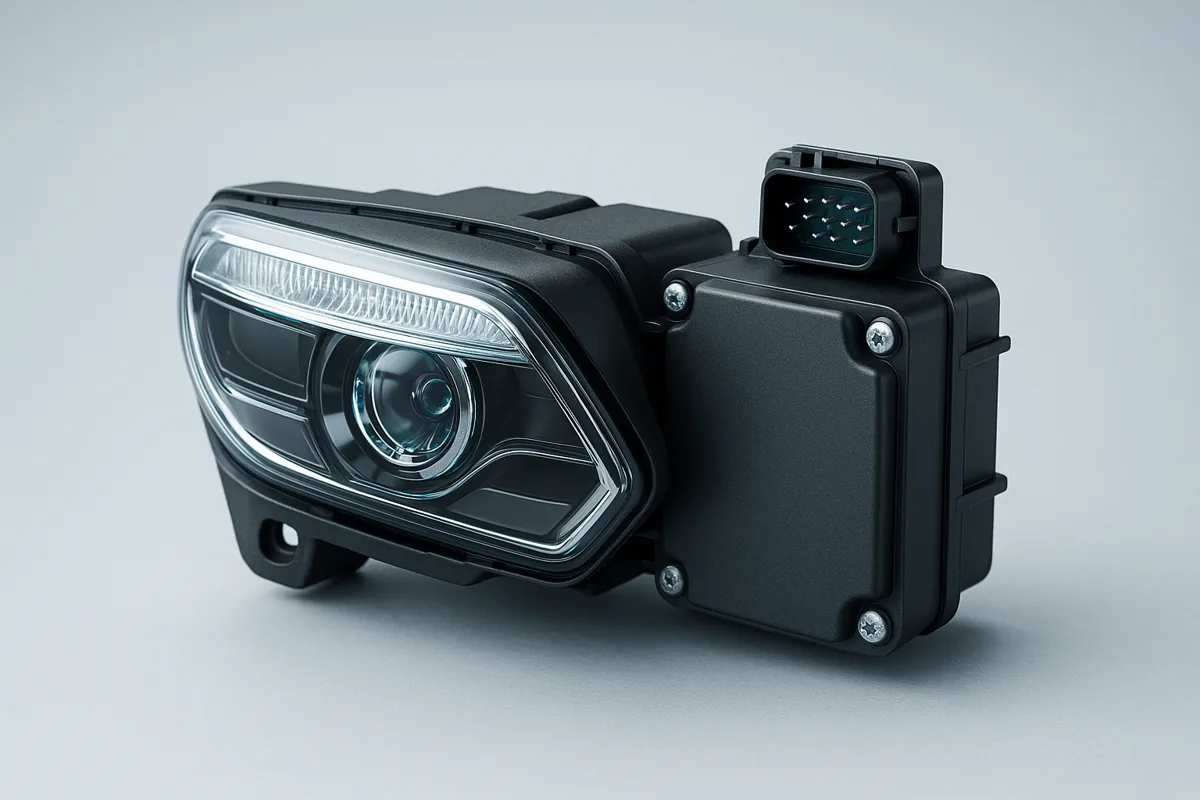
Shop Bulbs & Control Modules by Part Type
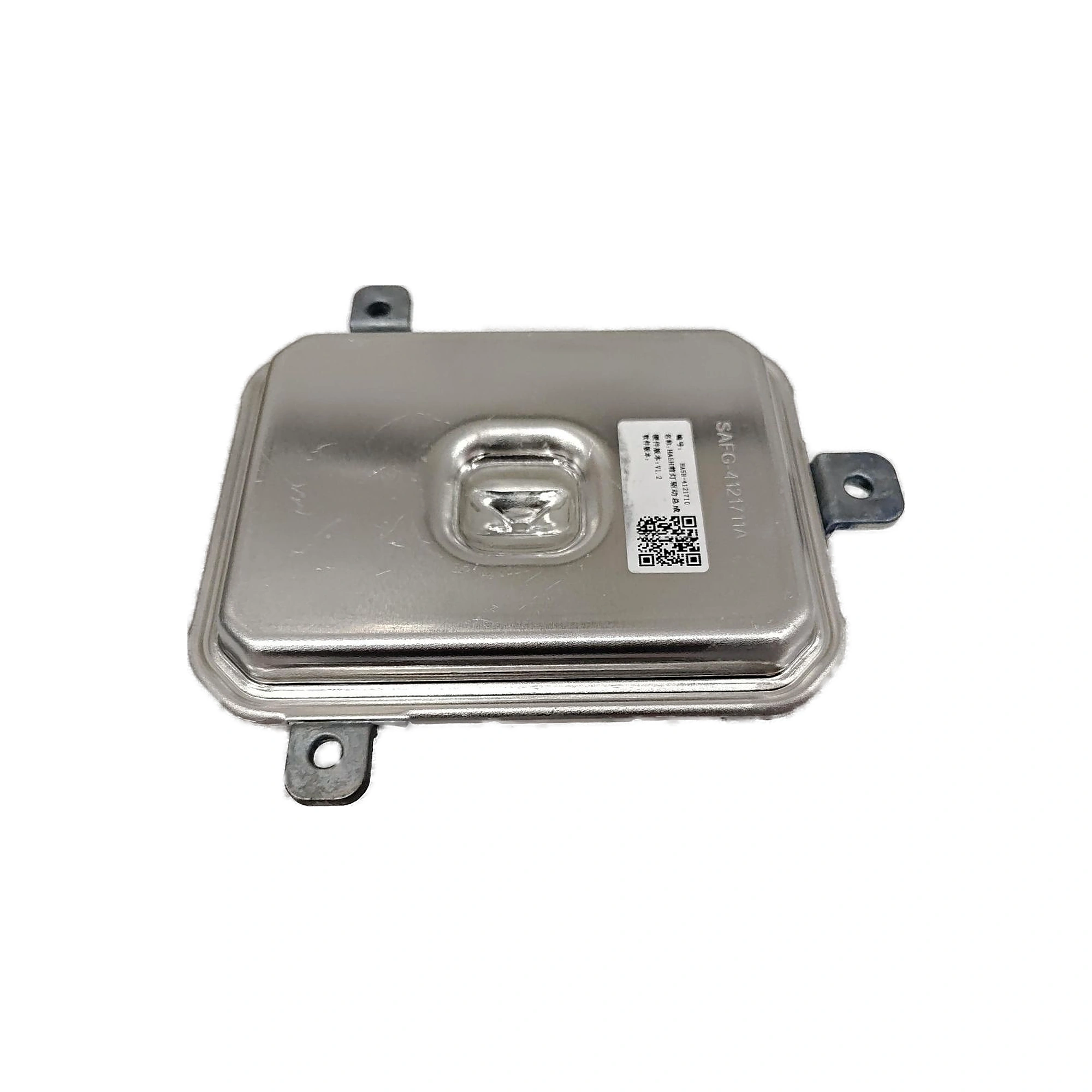
Popular Right Now
scroll for more →
Symptom Finder: What Is Actually Broken?
| What you see or hear | Part to check first |
|---|---|
| One headlamp completely dead with the other working | Headlamp driver module |
| Lamp flickering or cutting out when hot | Headlamp driver module |
| Lamp failure warning with the lamp apparently lit | Driver module reporting a fault |
| Dim or colour shifted output on one side | Headlamp driver module |
| Failure recurring shortly after a module replacement | Water ingress into the lamp housing |
| Intermittent lamp operation that changes over bumps | Driver module connector or wiring |
About Bulbs & Control Modules
Light emitting diodes will not run directly from a vehicle's supply. They need constant current rather than constant voltage, they need that current adjusted for temperature, and they need protection against the voltage spikes an automotive electrical system produces routinely. A driver module does all of this, converting the incoming supply into precisely regulated output for each string of emitters, monitoring for open and short circuits, and reporting failures to the body controller so the vehicle can warn the driver. Older discharge lamps needed a similar unit, the ballast, to strike and sustain an arc at high voltage. In both cases the electronics are the part most likely to fail, since they sit in a hot housing exposed to vibration and, when a seal gives up, to water pooling exactly where the module is mounted.
What to know before buying Bulbs & Control Modules parts
Start with the headlamp driver module, listed by side. It is the most useful part here. A dead lamp on sealed light emitting diode headlamps is often taken to mean a whole new assembly. Where the emitters themselves are healthy, the driver is the cheaper answer by a wide margin.
Match the OE number and the side when you order, because output configuration and connector follow the lamp type. Check the supply and the connector first. A corroded pin or a chafed lead gives you the same dead lamp.
Where water has reached the module, cure the ingress as well. Fitting a new module into a wet housing simply repeats the failure. If the same module has failed twice, treat the housing as the fault rather than the electronics. A lamp taking water will destroy any replacement fitted into it.
Parts showing a price can be ordered from the listing. Anything without a price is quoted against the same factory reference. Coverage is strongest across the BYD group and widens as further catalogues load.
Before You Order: 6 Checks
- Check the supply, the earth and the connector before ordering a module.
- Match the OE number and the side, since output configuration and connector follow the lamp type.
- Look for water inside the housing, and cure the ingress before fitting a replacement.
- Confirm the emitters themselves are healthy, since a module cannot fix a failed diode string.
- Check whether your vehicle requires the lamp system to be coded after replacement.
- Handle the module by its housing and avoid touching connector pins.
What Changed and Why
Lamp electronics have moved inside the lamp on many recent designs, so the driver is bonded into a sealed assembly and cannot be replaced separately, which turns a small electronic failure into a complete headlamp purchase. Where a separate module survives, it remains the cheaper repair by a wide margin. The other direction of travel is diagnostic: modules now report their own status over the vehicle network, so a lamp fault names the circuit and often the string that has failed, which makes accurate ordering far easier than it was with filament bulbs.
Bulbs & Control Modules: Frequently Asked Questions
My headlight is dead. Do I need a whole new lamp?
Check the driver module first, because it is the component most likely to have failed and it is a fraction of the cost of an assembly. The emitters themselves rarely fail outright, while the electronics driving them sit in a hot housing and, if the seal has given up, in water. Test the supply and the connector, then the module. Only if the module is proven healthy and the emitters are dark does the complete lamp become necessary.
Why do driver modules fail?
Heat, vibration and water, roughly in that order. The module dissipates real power in a small package inside a sealed housing that gets hot, it lives on a vehicle that vibrates constantly, and on many designs it is mounted at the lowest point of the lamp, which is exactly where any water that enters will collect. That last point is why a module failure is so often a symptom: cure the seal or the water path, or the replacement will fail the same way.
My lamp flickers when it has been on for a while.
That pattern points at the driver rather than the emitters. As the module heats, a marginal solder joint or a failing capacitor loses contact, the output becomes unstable, and the lamp flickers or cuts out until everything cools. It is also worth checking the supply and the earth, since a high resistance connection produces similar behaviour under load. Test with the lamp hot rather than cold, since a cold test frequently shows nothing wrong.
Can a driver module be repaired?
Specialist electronic repairers rebuild some units, typically replacing failed capacitors or output components, and where that service exists it can be cheaper and quicker than a new module. What it requires is a repairer familiar with your specific unit. Where the module has been sitting in water, corrosion usually extends beyond the failed component and a replacement is the cleaner answer. Either way, deal with the water before refitting anything.
Does the vehicle need coding after a module change?
Usually not for the module itself, since it is a power stage rather than a configured controller on most designs. What is generally needed is clearing the stored lamp fault so the vehicle stops warning, and on vehicles with adaptive lighting a calibration may be required if the lamp was disturbed. Check the requirement for your vehicle before starting, since some manufacturers do configure lighting outputs and will not accept a swapped module silently.
What does a driver module cost?
Considerably less than a complete headlamp assembly, which is the entire point of diagnosing before ordering. The live minimum and maximum for the category are shown in the band at the top of this page. Given that a failed module is one of the most common causes of a dead modern headlamp, and that many owners are quoted for a complete lamp, this is one of the more worthwhile checks in the catalogue.
Can I fit one myself?
On lamps where the module is externally mounted or accessible through a removable cover, yes, and the work is a connector and two or three screws. On sealed designs where the driver is bonded inside the housing, no, and that is a genuine limitation of current construction rather than a difficulty to be worked around. Establish which type your lamp is before ordering, since a module listed for one vehicle may be internal on another.
Why does my dashboard warn of a lamp fault when the light works?
Because the module monitors its own output and reports partial failures. A string of emitters can lose one section while the rest still light, or the current can drift outside the expected window, and the module reports that even though the lamp appears to be working. It is early warning rather than a nuisance. Have the fault read, since the code usually identifies which output has failed and tells you whether a module or a lamp is required.
Are these interchangeable between sides?
Not reliably. Left and right modules frequently differ in configuration, mounting and connector even where the housings look the same, and this catalogue lists them by side for that reason. Fitting the wrong side may work partially, may not fit the mounting, or may report a fault. Read the number from the unit you are replacing and match the side stated in the listing rather than assuming symmetry.
Can I fit an aftermarket driver?
It is a poor idea on a monitored circuit. The vehicle expects a particular current profile and a particular fault reporting behaviour, and a generic driver that lights the emitters may still trigger a fault, may run them outside their thermal limit, or may fail early in a hot housing. Given that the module is the cheap part of the lamp, the argument for saving further on it is weak. Order the factory reference by OE number.
What should I check if the same module fails twice?
Water, first and last. A module that has failed twice in the same lamp almost always sits in a housing that is taking water, whether through a cracked lens, a perished seal, a vent that has been blocked or a repair that left a gap. Look for tide marks and corrosion inside the housing. Also check the supply for spikes and the earth for resistance, since both stress the electronics, but water is the usual answer.
The part I need shows no price. Can I still order it?
Yes. Bulbs themselves are almost always priced. What arrives without a figure is usually a driver module or a ballast, and those are matched to a specific lamp assembly rather than to the vehicle as a whole, so they move in small numbers. Take the reference from the label on the failed module, not from the lamp housing, and send it through the enquiry form. Mention whether the module was wet when you removed it. Water ingress kills these units repeatedly, and a new one fitted into a lamp with a failed seal will follow the old one.