Lighting
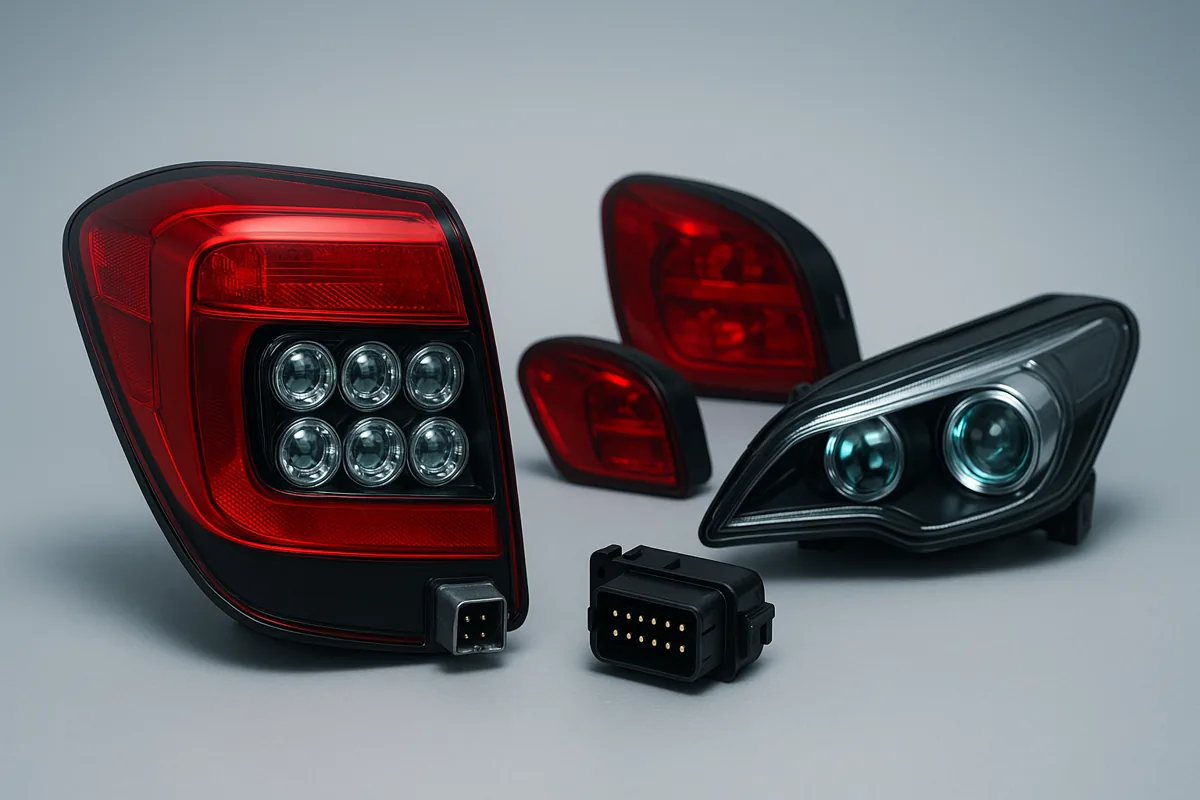
Shop Lighting by Part Type
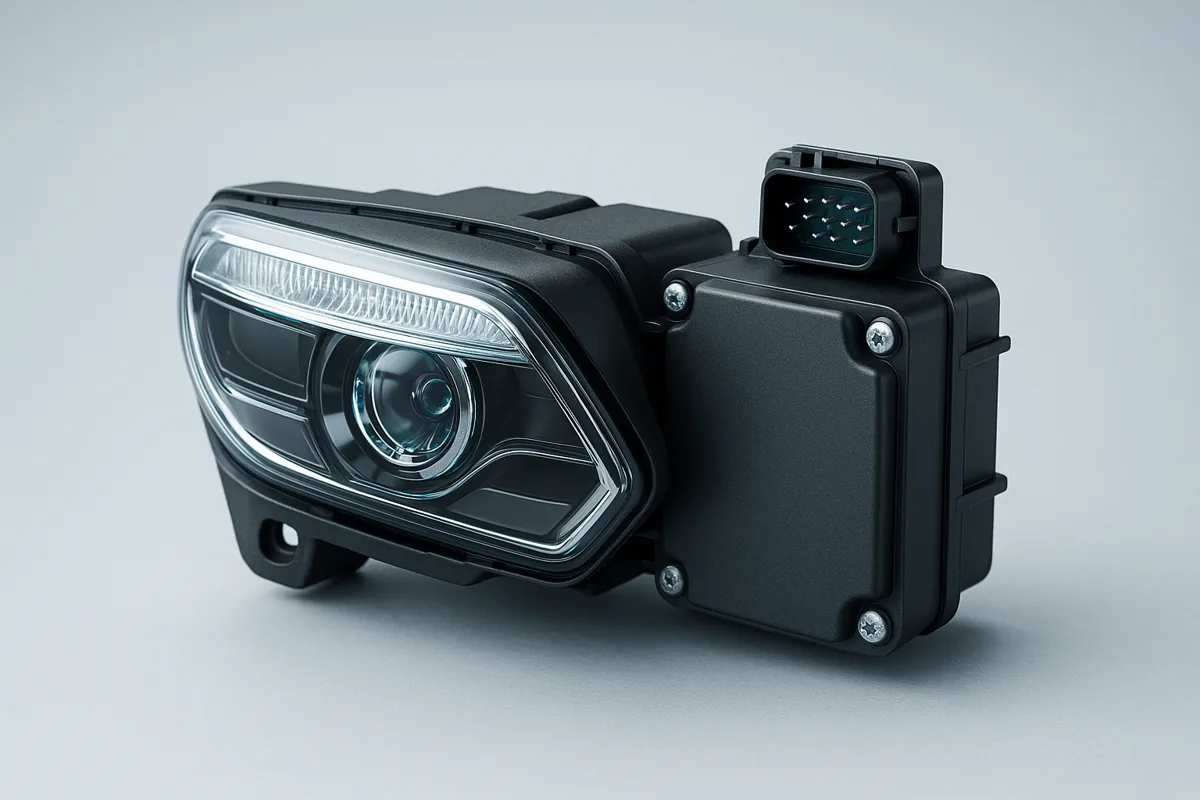
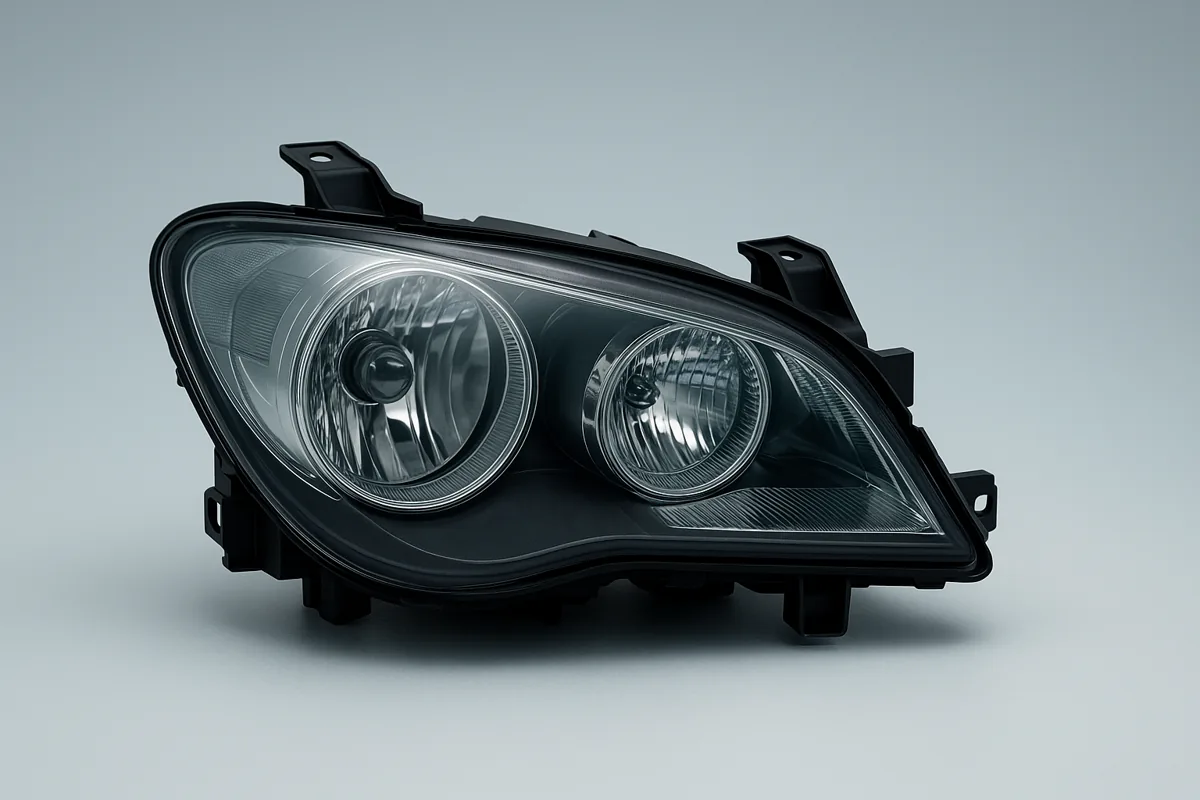
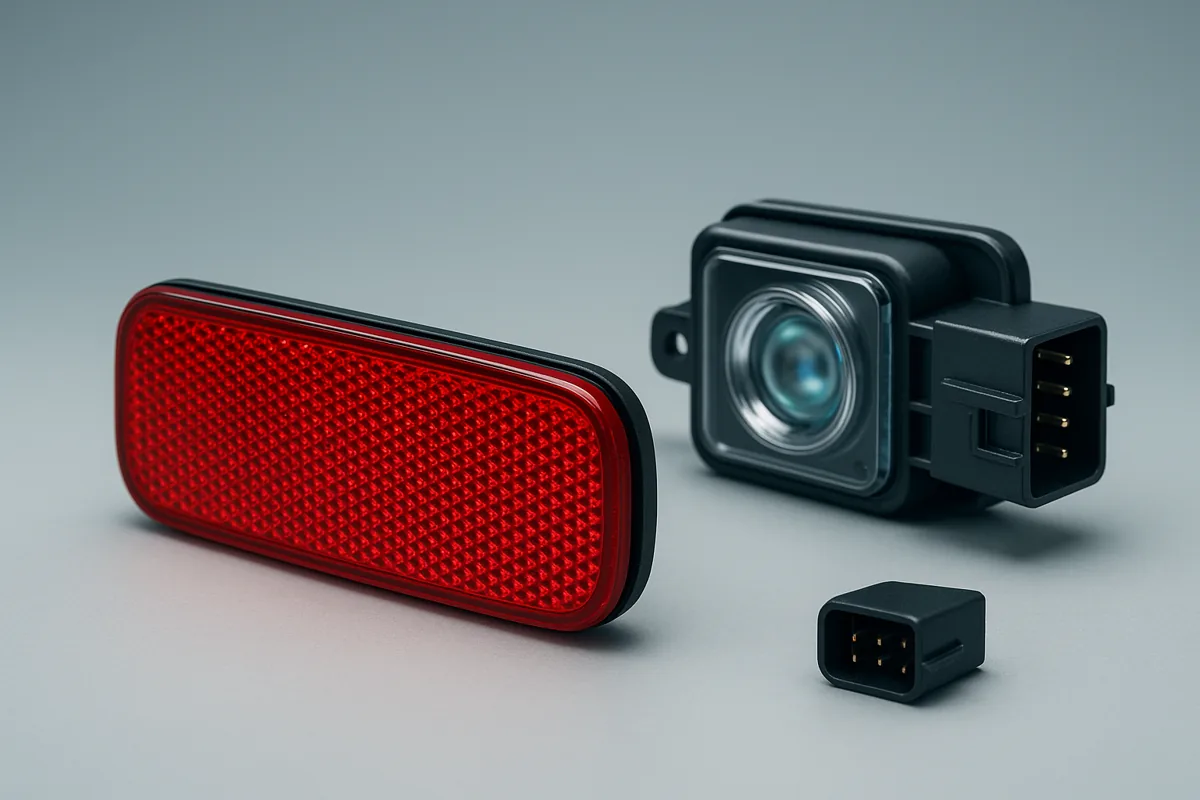
Popular Right Now
scroll for more →
Symptom Finder: What Is Actually Broken?
| What you see or hear | Part to check first |
|---|---|
| One headlamp completely dead | Headlamp driver module or the lamp assembly |
| Condensation or standing water in a lens | Lamp with a failed seal |
| Brake function missing while side lights work | Tail lamp assembly emitter string |
| Licence plate unlit on one side | Plate lamp or its connector |
| Lamp fault warning with the lamp apparently lit | Partial emitter failure reported by the module |
About Lighting
Lighting has changed more than almost any other part of a vehicle in the last decade, and the practical consequence is that bulbs have largely disappeared. Emitters mounted on heatsinks are fed regulated current by their own electronics, and the optics around them produce a beam whose upper edge is drawn so precisely that aiming a lamp slightly high turns useful illumination into glare for everyone coming the other way. Adaptive systems take that further, dimming individual portions of the high beam so an oncoming car sits in a pocket of shade while the rest of the road stays lit. At the rear, thin strips behind light guides allow shapes a bulb never could, which is why full width bars have become common. Almost all of it is sealed.
What to know before buying Lighting parts
Check the supply and the driver electronics before you order a whole assembly. The emitters themselves rarely fail outright, so a dead lamp is often a control fault.
Five child categories cover the vehicle. Headlights holds headlamps, fog lamps and their cushion pads and trims. Tail and brake lights holds rear clusters, centre sections, fog and reversing lamps and high mounted stop lamps. Indicators and side lights holds repeaters, position lamps, blind spot lamps and reflectors.
Interior and plate lights holds cabin, boot, courtesy and licence plate lamps in factory colours. Bulbs and control modules holds the driver electronics, which are often the real fault behind a lamp that has stopped working.
Before You Order: 5 Checks
- Check the supply, the earth and the driver module before ordering a complete lamp.
- Match the OE number, since one model is often sold with several lighting specifications.
- Arrange beam aiming, and calibration on adaptive units, before the lamp is fitted.
- Find the water path before fitting a replacement into a lamp aperture that has been wet.
- Order cushion pads, gaskets and clips, since none survives removal reliably.
What Changed and Why
Sealed construction has made lighting more durable and more expensive to repair, since a single failed emitter or a water damaged driver takes the whole assembly with it. Adaptive and matrix systems have added controllers managing dozens of individually switched segments, with what they are permitted to do varying by market. Full width rear bars are usually several separately supplied sections with baffles between them, which means damage to one part need not mean replacing the whole run, and that is worth checking before ordering the largest reference in the group.
Lighting: Frequently Asked Questions
My headlight is dead. Do I need a whole new lamp?
Not necessarily, and the order of investigation matters because the price gap is enormous. Confirm there is power and earth arriving at the lamp connector first, since a fuse or a chafed feed is the cheapest possible answer. Next comes the driver module or ballast, which is the item that actually fails most often in these assemblies, sitting hot and sometimes wet at the base of the housing. Only when supply is proven and the module is proven should you conclude that the emitters themselves have gone and buy the complete unit.
Is condensation in a lamp a problem?
Judge it by behaviour over a day rather than by a single glance. Lamp housings breathe through vents, so on a cold morning after rain a faint film on the inside of the lens is expected, and it should disappear within twenty minutes of the lamp being switched on. What is not acceptable is a pool in the bottom of the housing, droplets running down the glass, or a haze that is still there the next evening. That means the seal or a vent membrane has failed, and the electronics sitting at the low point will corrode next.
Do headlamps need aiming after replacement?
Yes, and it is a legal requirement as much as a courtesy. A modern low beam throws a hard horizontal cut off, and the whole design assumes that line sits at a specified height at a specified distance. Move the lamp a few millimetres in its mounting and that line rises into the eyes of everyone coming the other way, or drops so far that you see nothing. Setting is done on a beam setter against the manufacturer's figures. Adaptive and matrix units need an electronic calibration in addition, so the controller knows where its segments point.
Why does my dashboard report a lamp fault when the lamp works?
The car is not looking at the light, it is measuring the current. Every lighting output has an expected consumption, and the body controller compares what it sees against that window each time the circuit switches. On a cluster made of several emitter strings, losing one string barely changes the appearance from ten paces while changing the current measurably. The same warning appears if somebody has fitted a bulb of the wrong wattage or an unapproved emitter. Have the code read rather than dismissing the message, because it names the circuit and narrows the search.
Are aftermarket LED bulbs a sensible upgrade?
Only where the whole lamp is designed for them. A halogen reflector is a computed surface built around a glowing wire of known length in a known position. Put a flat emitter array where that wire was and the light leaves at angles the optics never intended, throwing glare above the cut off while leaving the road no brighter. Colour temperature also fools the eye into thinking there is more light than there is. A headlamp is road legal only as a complete assembly, so a converted halogen unit is generally not road legal.
Where do I find the OE number on a lamp?
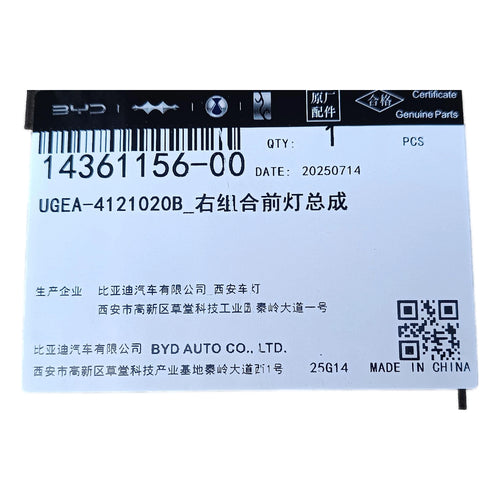
The OE number is usually printed on a label or moulded into the back of the housing, on the side that faces into the car. On a headlamp you usually need the bonnet open, and sometimes the bumper eased forward, before you can read the label. A rear cluster shows it once the boot trim panel is removed. Photograph the whole label, because it often carries codes from the lamp maker alongside the OE number. Type the OE number into the search box, or send the photo through the quote form if you are unsure which code is which, and we reply within 24 hours, usually sooner.
Will a headlamp from a left hand drive car work in the UK?
Not for the dipped beam. A low beam is asymmetric and throws its long reach towards the kerb. A lamp built for driving on the right therefore lifts light towards oncoming traffic on UK roads and fails the MOT. Most assemblies come in separate versions for each side of the road. They look identical on a shelf but carry different OE numbers, which is why matching the number on the old lamp matters more than matching its appearance. Check the label before ordering. If the car is a personal import, ask us through the quote form and we reply within 24 hours, usually sooner.
The mounting tabs on my headlamp are broken. Can it be repaired?
Sometimes. The tabs locate the lamp against the body. If one snaps, the lamp can shift under braking or vibration, which moves the beam, and a lamp the tester can rock will be marked down at the MOT. Some housings are designed to take bolt on repair tabs that replace a broken lug, and these are identified by their own OE numbers. Where the lug is moulded into the housing and no repair piece exists, glue or plastic weld close to hot electronics rarely lasts. Read the OE number on the old lamp and search for a matching repair tab before buying a whole unit.
One headlamp lens is yellow and hazy. Should I restore it or replace it?
It depends which side of the lens the haze is on. The lens is polycarbonate under a thin factory hard coat, and once sunlight breaks that coat down the outer surface turns chalky and yellow. That can be polished back, but only if a fresh UV resistant coat goes on afterwards, or it clouds again within months. Haze on the inside, heat marks, flaking reflectors and moisture staining cannot be reached in a sealed unit, so the lamp has to be replaced. Run a fingertip over the lens. If it feels rough, try restoration. If it feels smooth, take the OE number from the housing label and search for it.
Should I replace headlamps in pairs?
The law only needs the failed side replaced, but think about how the two will look together. A new lens is perfectly clear while the old one has years of sunlight on it, and the tint of the light can differ slightly between production batches, which shows on a garage door at night. Many owners replace the damaged side and restore the lens on the other. Performance is unaffected as long as both lamps carry the same OE number and are aimed correctly. Cars are often built with lamps that look alike but differ in function, so match the number on the old lamp rather than its appearance.
Why do my indicators flash fast after fitting a new rear light?
Rapid flashing means the car thinks an indicator has failed. The body controller measures the current on every pulse, and if the reading falls outside the expected window it doubles the flash rate as a warning. With an original cluster, the usual causes are a connector that has not fully latched, a terminal pushed back out of the plug, corroded pins, or a lamp that is the wrong version for the car. Fitting a load resistor, a common forum fix for converted bulbs, only hides the symptom and runs hot. Recheck the plug, then compare the OE numbers on the new and old units.
Part of my tail light has stopped working. Can I replace just that section?
Only down to the separate lamps the car was built with. Many rear designs split into an outer cluster on the body, an inner lamp on the tailgate and, on full width designs, a centre bar, and each of these has its own OE number. Within each lamp, the emitter strips, light guides and driver board sit behind a bonded lens and cannot be serviced separately. Before buying, check the connector and the earth, because a dark section is sometimes a supply fault rather than a lamp fault. Then read the OE number on the lamp that has failed and search for that unit.
My number plate or interior light has stopped working. Is it the lamp?
Often, but check the supply first. These small lamps are now sealed emitter units rather than bulb holders, and number plate lamps sit in one of the wettest places on the car. Corroded connectors are common, and so is chafed wiring where it passes through the tailgate hinge area. Many are powered directly by the body controller, which may keep an output switched off after a fault until the code is cleared. Measure the voltage at the connector with the light switched on. If voltage is present and the lamp stays dark, the unit has failed. Unclip it, read the OE number and search for it.
My headlights point at the road or bounce up and down. What causes that?
Check the levelling system before blaming the lamps. Cars with LED or adaptive headlamps level the beam automatically. A height sensor on a suspension arm, joined to the body by a short link rod, tells the controller the ride height, and a motor in each headlamp tilts the optics. If the link rod snaps or the sensor seizes, the controller gets a false height, and both beams sit too low or swing about. If only one lamp misbehaves, suspect its own motor. Have the codes read, inspect the linkage, then check the OE number on the failed part. After the repair, the levelling must be recalibrated.