Reduction Gear / E-Axle
Shop Reduction Gear / E-Axle by Part Type
Popular Right Now
scroll for more →Symptom Finder: What Is Actually Broken?
| What you see or hear | Part to check first |
|---|---|
| Whine that rises with road speed and changes with torque | Reduction gear or its bearings |
| Clunk when taking up drive or lifting off | Differential or drivetrain mounts |
| Oil weeping at the drive unit housing joint | Reducer repair kit seals |
| Metal flakes rather than paste on the drain plug | Reduction gear internals |
| Rumble present at constant speed under no load | Reduction gear bearing |
| Fluid level low with no visible external leak | Reducer seal between motor and gear sections |
About Reduction Gear / E-Axle
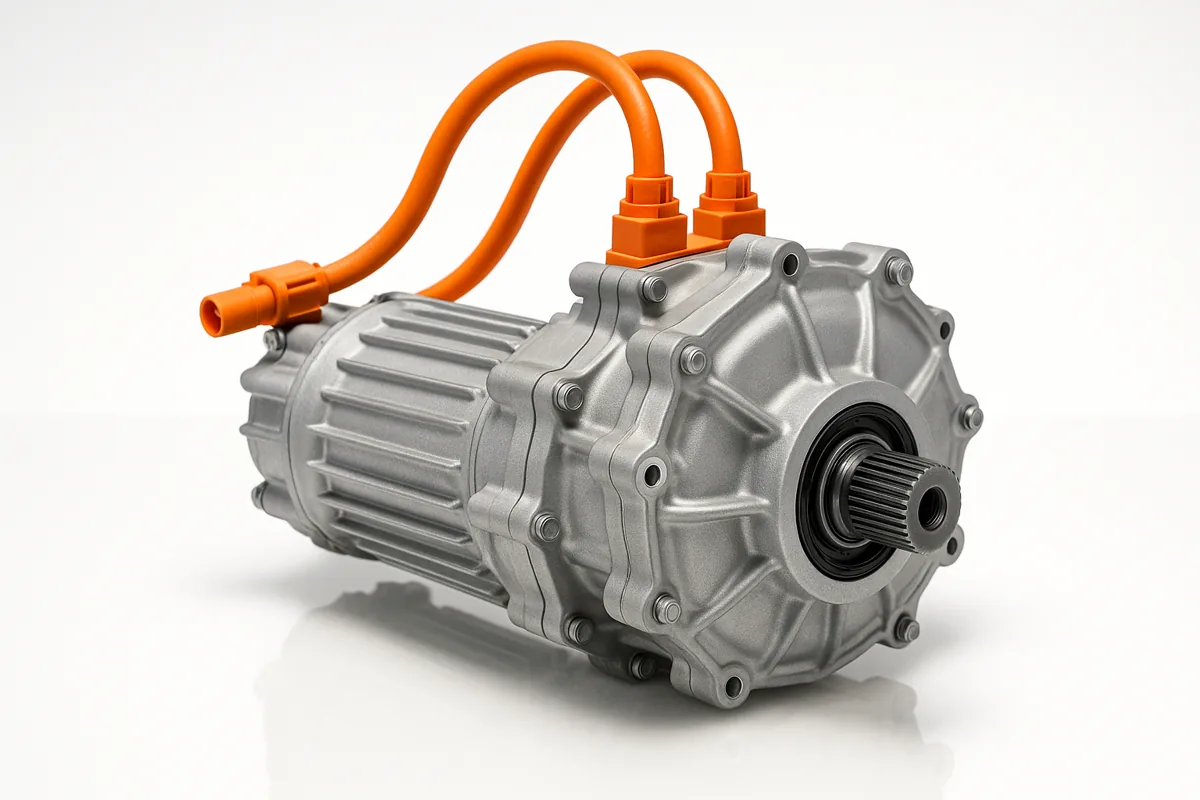
An electric motor makes useful torque from zero and spins far faster than any wheel should, so between the two sits a reduction gearset with a fixed ratio, typically somewhere around ten to one, and a differential to split drive between the wheels. There are no gear changes, no synchronisers and no clutch, which removes most of the things that wear in a conventional transmission. What remains is a permanently meshed pair or triple of helical gears, their bearings, the differential, and the oil that lubricates and often cools them. Because there is no engine noise to mask it, gear whine that would have gone unnoticed for decades is now audible in the cabin, which is why manufacturers grind these gears to tighter tolerances than a combustion gearbox ever required and pay close attention to housing stiffness.
What to know before buying Reduction Gear / E-Axle parts
Order this assembly by its OE number. Ratios and housing dimensions follow the drive unit rather than the vehicle. Model and year will not identify the right part.
Two service items are listed. The front drive motor and reducer repair kits gather the seals and small parts a reseal or service needs. The drain plug magnet collects the fine debris that normal gear wear produces. What it holds at each fluid change tells you whether the wear is normal paste or something worse.
For a complete e axle or an internal gear, use the quote form. It checks the factory catalogue and returns a current figure with availability. Anything without a price is quoted against the same factory number.
Agree high voltage isolation with the workshop before parts are ordered rather than on the day. It applies to any work on an integrated unit. The BYD group is covered most fully, and other brands follow as their catalogues load.
Before You Order: 6 Checks
- Check the drain plug magnet at each fluid change, since paste is normal and flakes are not.
- Match the OE number, because ratios and housing dimensions follow the drive unit rather than the vehicle.
- Use only the specified fluid, since it may share a housing with electrical windings.
- Distinguish road speed related noise from motor speed related noise before ordering.
- Confirm high voltage isolation before any work on an integrated drive unit.
- Use the quote form for complete assemblies and internal gears not shown as priced listings.
What Changed and Why
Integration is the defining trend here. Motor, reduction gearing and inverter increasingly share one housing and one cooling circuit, which saves weight and connections and means the assembly is supplied and diagnosed as a unit rather than as separable components. Two speed reduction gearboxes have appeared on a small number of performance and commercial applications to widen the efficient speed range, though single speed remains the norm. Gear noise control has become a design priority in its own right, driving tighter grinding tolerances and stiffer housings than combustion practice required.
Reduction Gear / E-Axle: Frequently Asked Questions
Do single speed reduction gearboxes need servicing?
Manufacturers vary, and the honest reading is that a lifetime fill means the life the manufacturer had in mind rather than yours. The unit holds a small quantity of oil, works under high torque from a standstill and shares its housing with bearings that would rather have clean lubricant. A change at a sensible interval costs little against the value of the assembly. The other benefit is inspection: pulling the drain plug lets you read the magnet, and fine grey paste is normal wear while visible flakes mean a bearing needs attention now.
What does the drain plug magnet tell me?
A great deal for a part that costs almost nothing. Fine grey paste is normal wear from gears bedding and running, and its presence is reassuring rather than alarming. Distinct flakes, curls of metal or bright fragments indicate something is failing, most often a bearing, and they justify further investigation before the debris circulates. Clean the magnet at every change and compare what you find with the previous one, since the trend matters more than any single inspection.
My electric car whines. Is that normal?
Some gear whine is inherent to helical gears and it is far more audible without an engine masking it, so a low level whine that has always been present is usually characteristic rather than faulty. What matters is change. A whine that has grown, that varies noticeably between drive and coast at the same speed, or that is accompanied by a rumble at constant speed, deserves investigation. Compare with another vehicle of the same model, which settles the question quickly.
How do I tell gear noise from bearing noise?
By how it responds to load and speed. Gear mesh noise changes between gentle acceleration and coasting at the same road speed, because tooth loading changes. Bearing noise stays broadly constant with speed regardless of load, and often has a rumbling rather than a whining character. Motor noise follows motor speed, which in a single speed drivetrain is proportional to road speed, so use load rather than speed as the discriminator when you are trying to separate them.
Can a reduction gearbox be rebuilt?
Where it is a separable unit, yes, and it is conventional gearbox work: bearings, seals, shims and careful measurement. Where the gearing shares a housing with the motor and inverter, the practical answer is usually an assembly, because opening it means dealing with a high voltage machine and reassembling to a cleanliness standard that a general workshop is not equipped for. The repair kit listed here covers seals and service parts for the work that is realistic.
What fluid should it take?
The specified product and nothing similar. Where the gearing shares a housing with an electric machine, the fluid contacts winding insulation, so its electrical properties matter as much as its lubricating ones, and a conventional gear oil in that position can lower insulation resistance and set a high voltage fault. Quantity matters too, since many units fill to a level rather than a capacity. Check the specification and the fill procedure before starting, and use a fresh sealed container.
What do these parts cost?
Routine attention here is cheap. A drain plug magnet, a seal set or a repair kit costs little, and a gear oil change is one of the least expensive things you can do for an electric drivetrain. Individual gears and bearings are moderate. A complete drive unit is a major purchase and is normally quoted. The live range for the category is shown above this text. Given the gap between the two ends, it is always worth having a whine investigated properly before anyone talks about replacing the assembly.
Is a clunk on lift off a gearbox problem?
Usually not. A clunk when torque reverses is the classic symptom of worn drivetrain mounts or driveshaft joints rather than the gearset, and electric drivetrains produce it more often because torque reverses sharply during regeneration. Check the mounts and the driveshaft joints first, since both are far cheaper and far more likely. Excessive differential backlash can produce a similar noise, but it is well down the list of candidates on a healthy unit.
Does regeneration wear the reduction gear?
It loads it in the opposite direction frequently, which is exactly what the gears were designed for, and the torque involved is well within their envelope. What changes is the number of load reversals, which works the backlash in the mesh and the drivetrain mounts more than a combustion drivetrain did. In practice this shows up as mount wear rather than gear wear. There is no case for driving differently to protect the gearset.
Will a drive unit from another version fit?
Only where the OE number agrees. Reduction ratios differ between vehicles and even between trim levels, motor ratings differ with them, and the mounting, cooling connections and driveshaft interfaces all follow the specific unit. Fitting a different ratio changes the vehicle's speed and range calculations as well as its performance. Read the number from the unit, quote your vehicle identification number, and have the reference confirmed before anything is dispatched.
Why is gear noise such an issue on electric cars?
Because the loudest source was removed. On a combustion vehicle, engine noise masked gear whine so completely that manufacturers could tolerate looser grinding tolerances. Remove the engine and the same whine sits alone in a quiet cabin, at a frequency the ear finds easy to notice. That is why current drive units use ground helical gears held in stiff housings, and why acoustic packs around the drive unit are specified parts rather than optional insulation.
The part I need shows no price. Can I still order it?
Yes. Complete reduction gears and e axle assemblies are quoted, and so are most of the internal components, because they are ordered rarely and the reply confirms availability along with the figure. Send the number and the vehicle identification number. Where the complaint is whine rather than a hard failure, ask about the repair kit and the oil before the assembly. Bearings, seals and a fresh fill resolve a good share of noise complaints, and the drain plug magnet tells you which way the diagnosis should go: fine paste is normal wear, flakes are not.