Inverter & Power Electronics
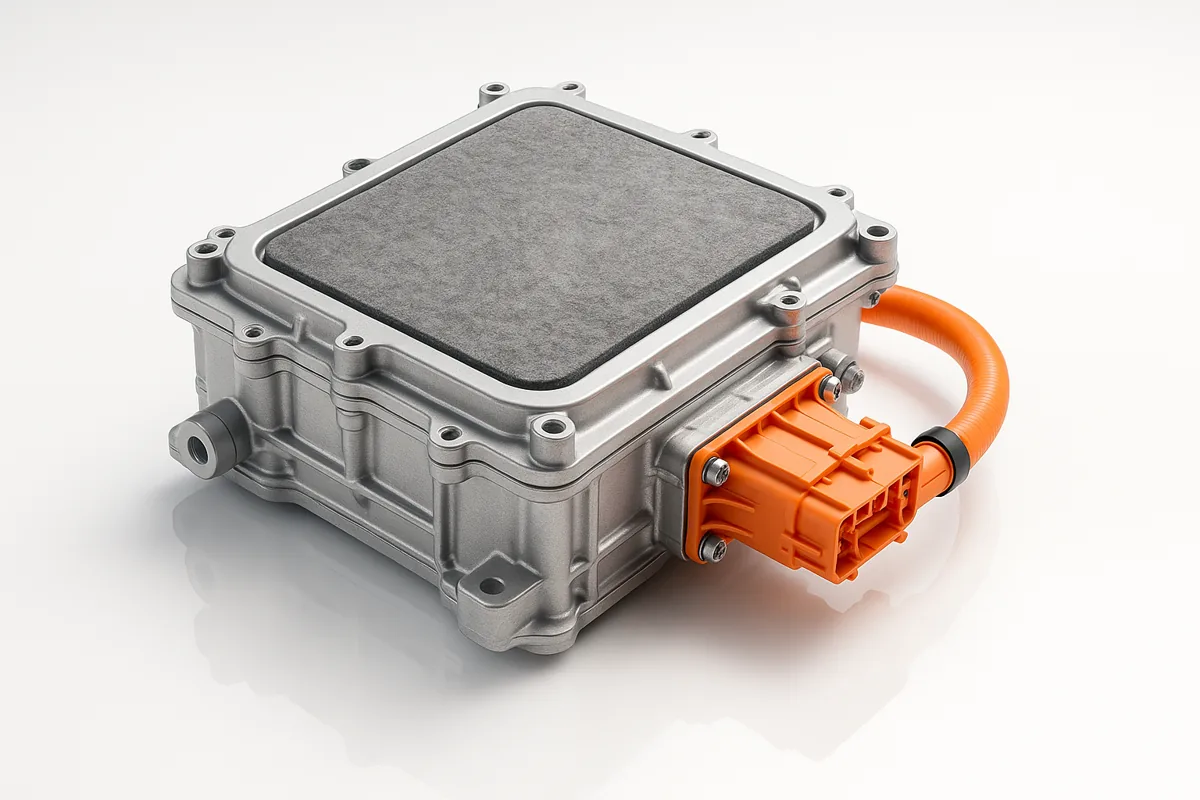
Shop Inverter & Power Electronics by Part Type
Popular Right Now
scroll for more →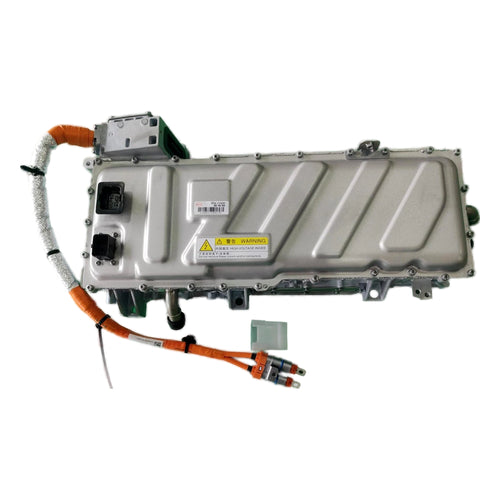
Symptom Finder: What Is Actually Broken?
| What you see or hear | Part to check first |
|---|---|
| Vehicle powers up but will not move | Drive motor controller |
| Reduced power with a drive system fault stored | Drive motor controller |
| Power limited progressively as the drivetrain warms | Inverter cooling path or controller |
| Regeneration unavailable while drive still works | Motor controller |
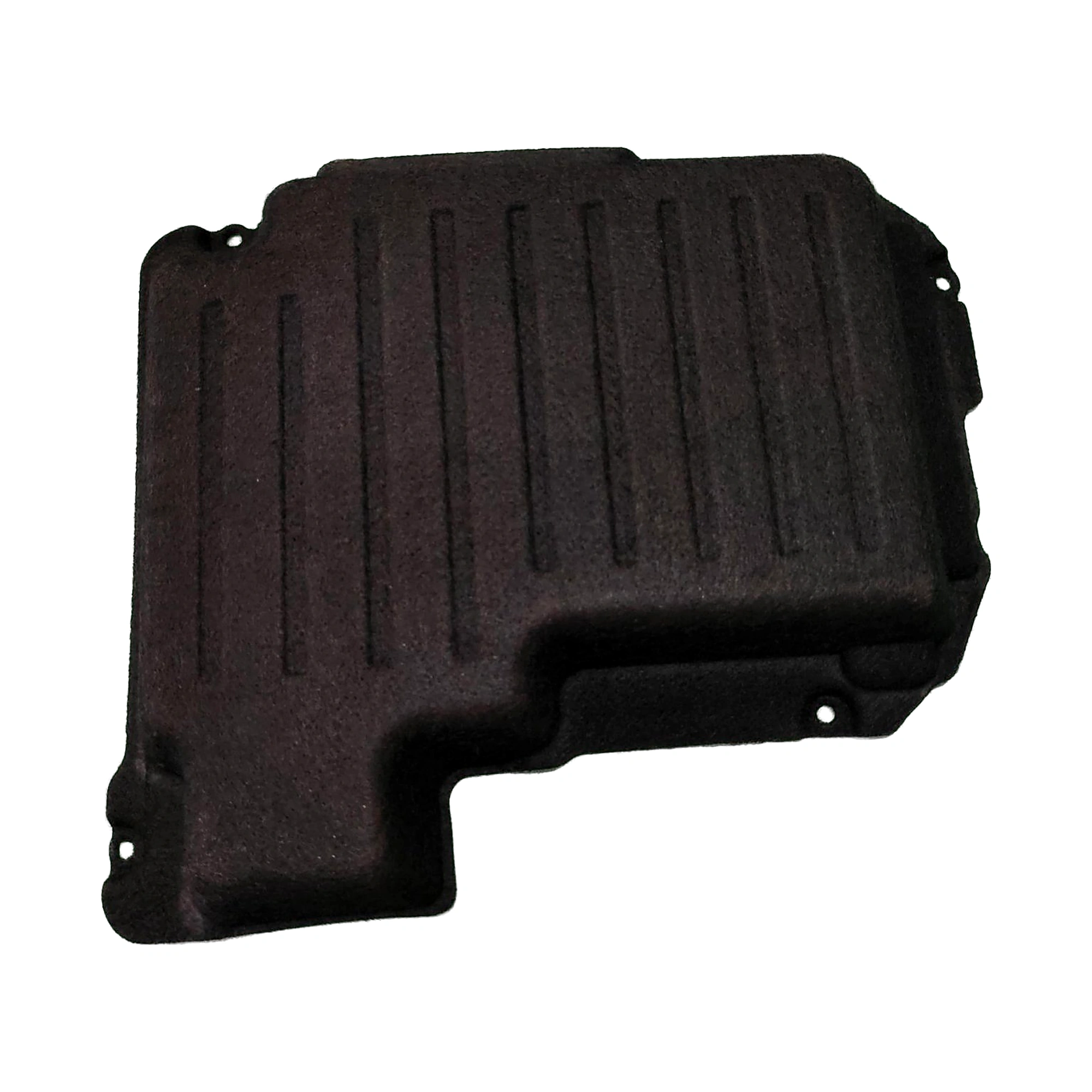
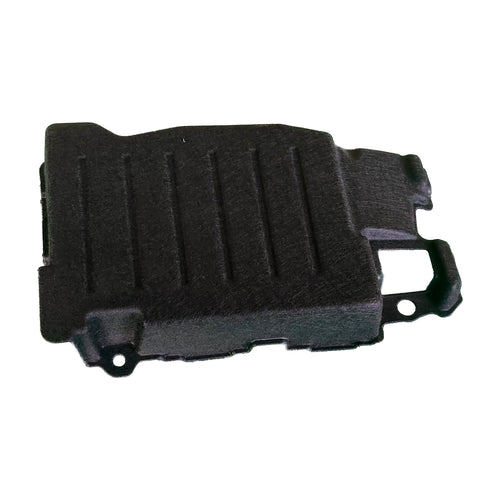
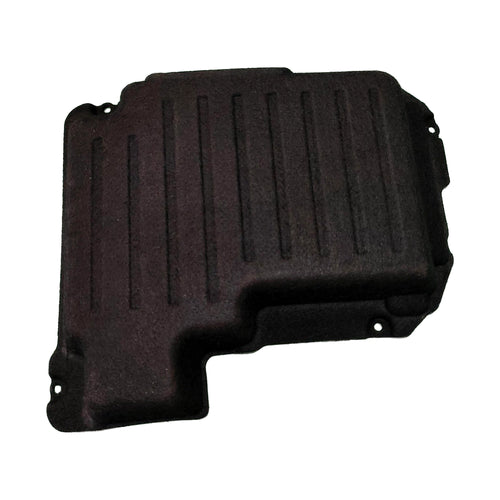
| High frequency whine more noticeable than before a repair | Motor controller upper cover acoustic pack |
| Insulation fault appearing after coolant work | Controller with moisture at a connection |
About Inverter & Power Electronics
The inverter is where an electric drivetrain does its thinking. The battery supplies direct current at a fixed polarity. A motor needs alternating current whose frequency and amplitude change constantly with speed and demand. Power transistors inside the inverter switch that direct current on and off thousands of times a second, synthesising three phases whose shape and timing the control electronics adjust from moment to moment, guided by rotor position and current measurements. The same hardware runs in reverse during regeneration, taking alternating current from the motor and returning direct current to the pack. Silicon carbide devices have displaced older silicon transistors in many applications because they switch faster with lower losses, which improves range. All of this generates heat in a small volume, so the inverter shares the drive unit's coolant loop and is one of the first components to limit power when cooling is impaired.
What to know before buying Inverter & Power Electronics parts
Before you order a controller, check the coolant loop, the high voltage connections and the service disconnect. Each of those can produce symptoms that look exactly like a controller fault. Each also costs a fraction as much to put right.
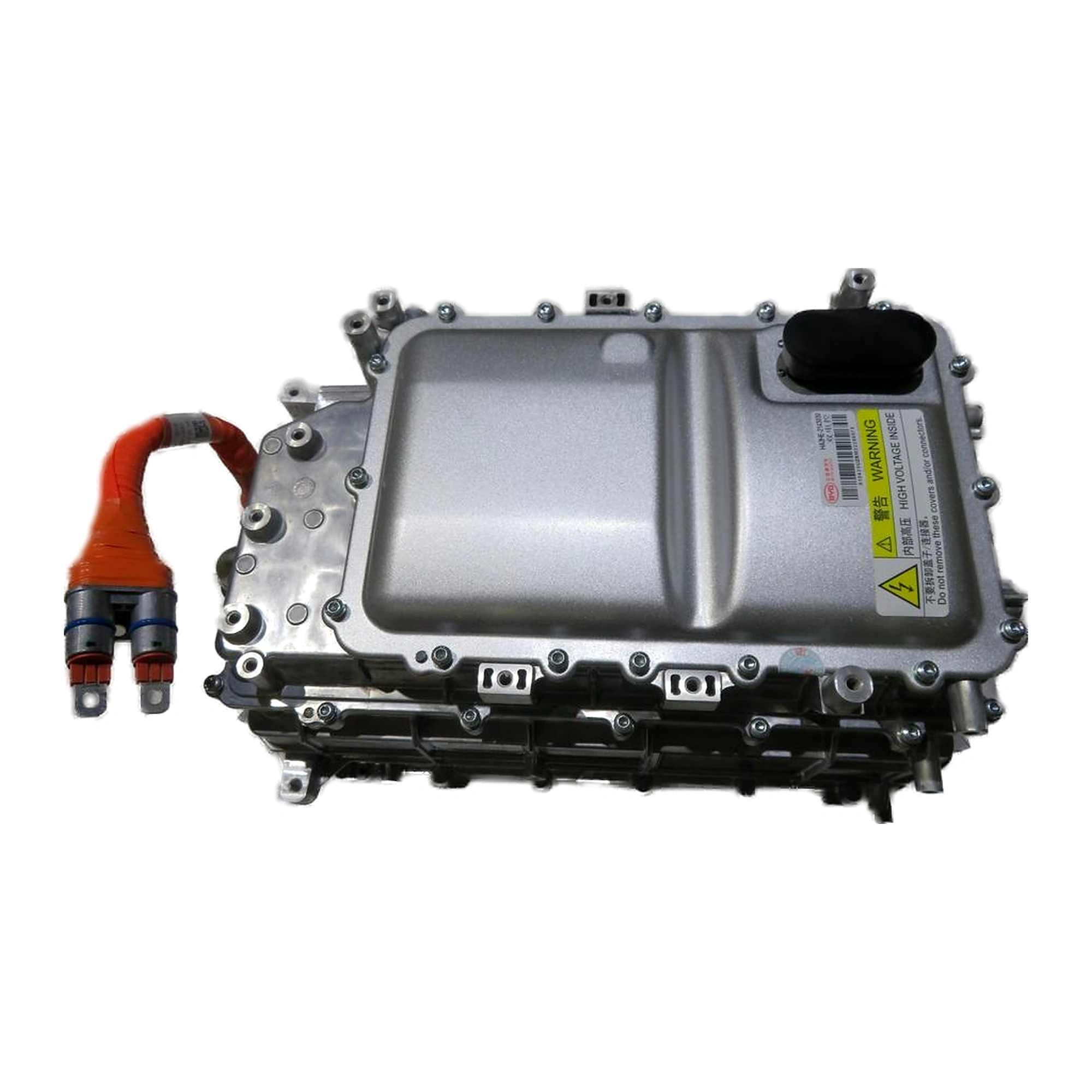
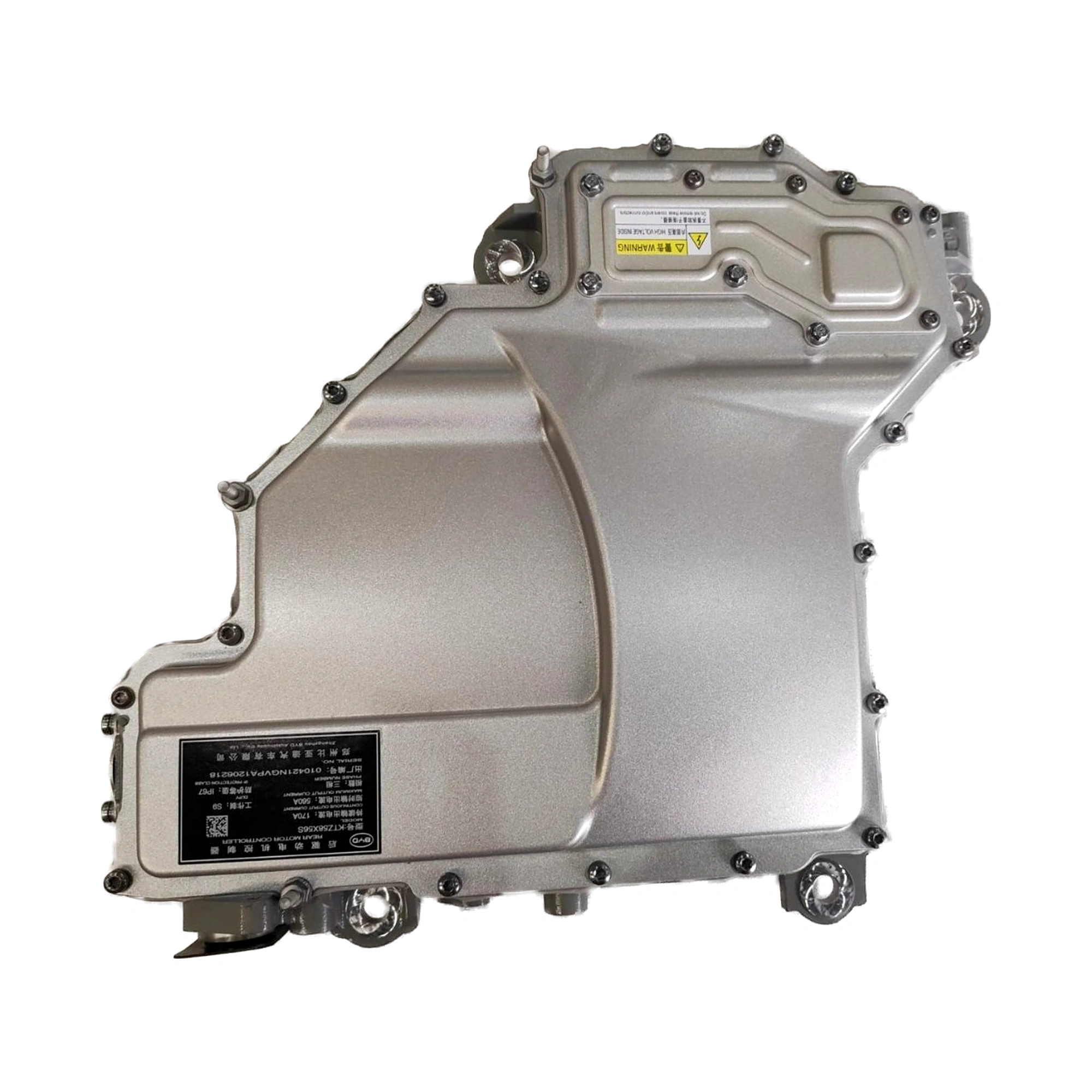
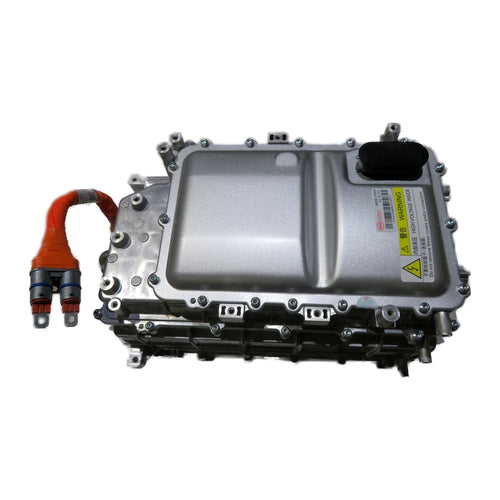
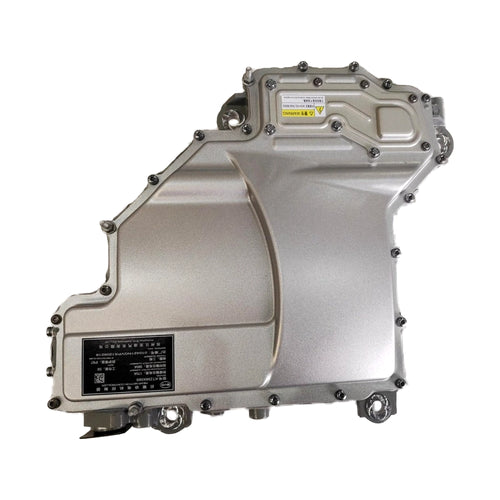
Listed here are drive motor controllers and dual inverter controllers, the latter for cars with a machine on each axle. Also listed are the acoustic packs that fit over the controller cover. They damp the high frequency noise that switching produces. They are inexpensive and easy to leave off after a repair, which is a common reason a car sounds different afterwards.
Controllers are high value units, matched to a specific motor rating and software level. Order by the OE number, never by appearance, as fit is confirmed against the part number. Fitting is a workshop job involving isolation, coolant work and coding.
A published figure means you can proceed at once. Controllers are commonly quoted, which also confirms availability before a workshop booking is made. Our BYD group listings are the fullest and widen as further catalogues load.
Before You Order: 6 Checks
- Have the fault codes read with high voltage diagnostic access before ordering a controller.
- Match the OE number and confirm against the vehicle identification number, since software level follows the variant.
- Check the coolant loop and pump first, because thermal limiting mimics a controller fault.
- Inspect the high voltage connections and the service disconnect before condemning the unit.
- Refit the acoustic packs after any controller work, since they damp switching noise.
- Confirm your workshop can code the replacement before the part is ordered.
What Changed and Why
Silicon carbide power devices have moved from premium applications into mainstream vehicles because they switch faster and lose less energy as heat, which translates directly into range and allows higher pack voltages. Eight hundred volt architectures have followed, cutting charging times and current in the cabling. Integration is the other direction of travel, with inverter, motor and reduction gear increasingly sharing one housing and one coolant loop, which reduces the number of high voltage connections and means faults are diagnosed and parts supplied at unit level rather than component level.
Inverter & Power Electronics: Frequently Asked Questions
How do I know whether the inverter or the motor has failed?
By diagnosis rather than deduction, because the symptoms overlap almost entirely. A vehicle that powers up and will not move, or that limits power with a drive system fault, can be either. A workshop with high voltage access reads the stored codes, checks insulation resistance, measures the phase outputs and looks at the temperature and current data the controller reports. The controller fails more often than the machine it drives, which is worth knowing before assuming the expensive outcome.
Why does my car limit power when it gets hot?
Because the inverter protects itself. Power electronics generate concentrated heat and their semiconductor junctions have a firm temperature limit, so the control strategy reduces available torque rather than allowing damage. That is why a cooling fault presents as a car that pulls normally at first and then progressively less, particularly on a long climb or during rapid charging. Check the coolant level, the electric pump and the radiator path before assuming the controller itself is at fault.
Can an inverter be repaired?
Specialist repairers exist, and the manufacturer route is replacement of the unit. Inside are power modules, a large capacitor bank, current sensors and control electronics, all in a sealed and cooled housing, and diagnosing which has failed requires equipment and knowledge that few workshops have. Where a repair service is available and reputable it can be far cheaper than a new unit. What is not viable is opening an inverter without training, since the capacitors hold a lethal charge after shutdown.
Why is there an acoustic pack on the controller cover?
Because switching thousands of times a second produces high frequency noise, and the cover of a controller is a large flat panel well placed to radiate it. The acoustic pack damps that panel and absorbs the noise before it reaches the cabin. It is inexpensive, it is easy to leave off during a repair, and its absence is a common reason a vehicle sounds different afterwards. Refit it, or order a replacement where the original was damaged during removal.
What does an inverter cost?
It is one of the most expensive electronic assemblies fitted to an electric vehicle, and controllers are generally quoted rather than carrying a listed figure. Acoustic packs and mounting hardware, by contrast, are inexpensive. The band overhead shows the current range for the category. Two points worth weighing before you commit. The diagnostic time needed to separate an inverter fault from a motor or sensor fault costs a fraction of the part. And where coolant has entered the housing, the leak that caused it has to be found, or the replacement follows the original.
Does a replacement controller need coding?
Yes, without exception in current practice. The unit arrives without the vehicle's configuration, and its software level has to match both the motor it will drive and the rest of the network, so it is coded and its parameters set before the vehicle will operate. Some vehicles also require calibration of the rotor position reference. Confirm that your workshop has the diagnostic access and the correct software before the part is ordered, since an uncoded controller leaves the car immobile.
Is it safe to work near the inverter?
Not without training and equipment. The unit sits directly on the high voltage bus, and its capacitors store enough energy to be lethal for a period after the vehicle is shut down and isolated, which is why the correct procedure includes a waiting period and a verified zero voltage measurement. Orange cables mark high voltage circuits. Coolant work, mount inspection and connector visual checks can be done by anyone competent, but opening the unit cannot.
What is silicon carbide and does it change anything for me?
It is the semiconductor material used in newer power modules, and it switches faster with lower losses than the silicon devices it replaces, which shows up as slightly better range and less waste heat. For an owner it changes nothing about operation. For a repairer it matters because it comes with higher pack voltages on some platforms, which brings its own safety and equipment requirements, and because a controller specified for one device technology is not interchangeable with the other.
My regeneration has stopped but the car still drives.
That points at the controller or its inputs rather than the motor, since regeneration uses the same hardware in the opposite direction and a mechanical fault would affect both. Common causes are a pack too full or too cold to accept current, which is normal behaviour rather than a fault, a fault in the braking control that manages the blend, or a controller fault. Have the codes read, and note the pack state of charge and temperature when the symptom occurs.
Will a controller from another vehicle work?
Only where the OE number and the software variant agree. A controller is matched to a specific motor rating, a specific pack voltage and a specific vehicle configuration, and units that look identical frequently differ in software. Fitting a mismatched controller either refuses to code or drives the motor incorrectly. Read the number from your existing unit and have the reference confirmed before anything is dispatched.
How long do inverters last?
There is no service interval and no expected wear point in normal use, since nothing rotates and nothing rubs. What ends an inverter's life is usually thermal stress from a compromised cooling loop, moisture at a connection, or a fault elsewhere in the high voltage system that damages it. Keeping the coolant loop healthy and having insulation faults investigated promptly is effectively all the maintenance available, and it is worth doing given the replacement cost.
The part I need shows no price. Can I still order it?
Yes. Inverters are high value assemblies matched to a particular motor and a particular software level, so an enquiry is the normal route and it confirms availability at the same time. Give the number from the unit label. Before committing, get the diagnosis pinned down. Coolant intrusion into the housing, a failed current sensor or a damaged three phase connection all present as a controller fault, and the cheapest of those is a coolant hose. Ask about the acoustic pack and the mounting hardware too, since neither is reusable once disturbed.