Exhaust Manifold & Downpipe
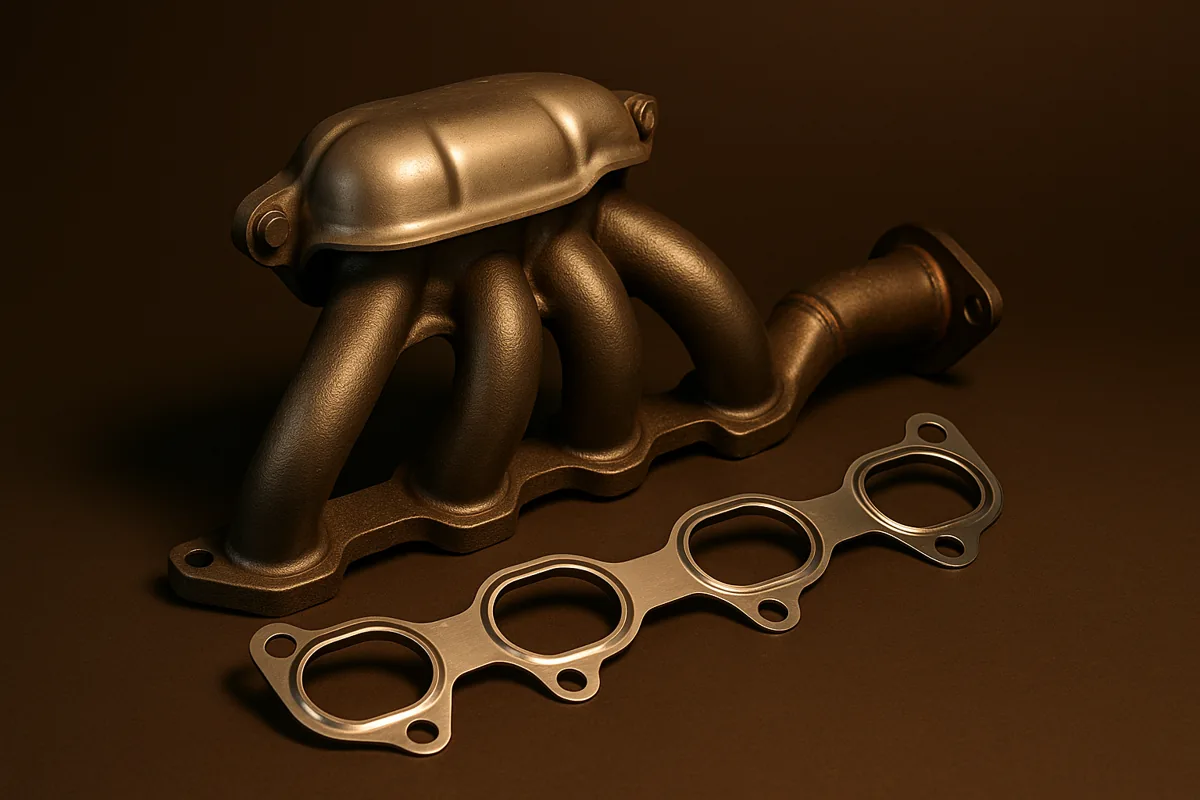
Shop Exhaust Manifold & Downpipe by Part Type
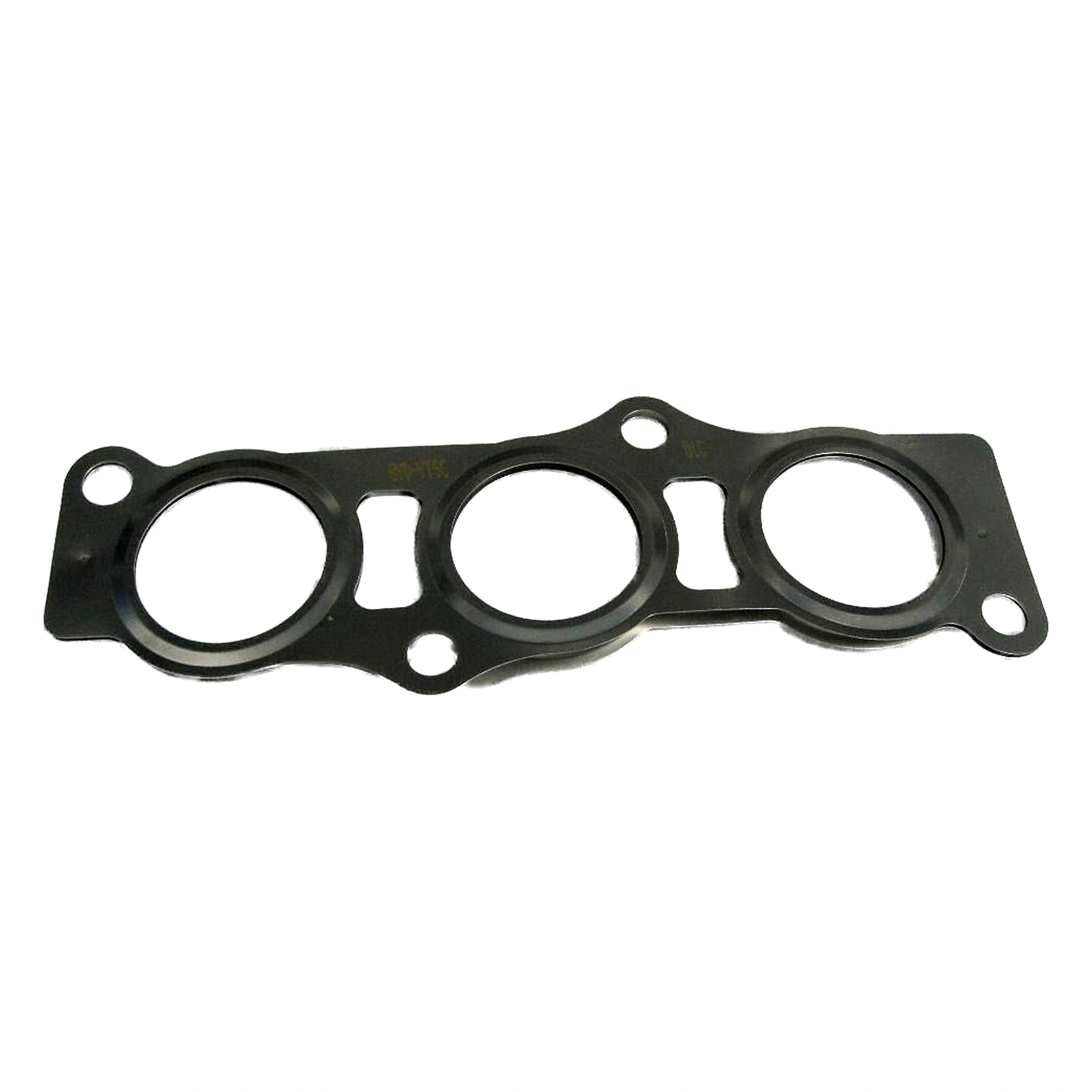
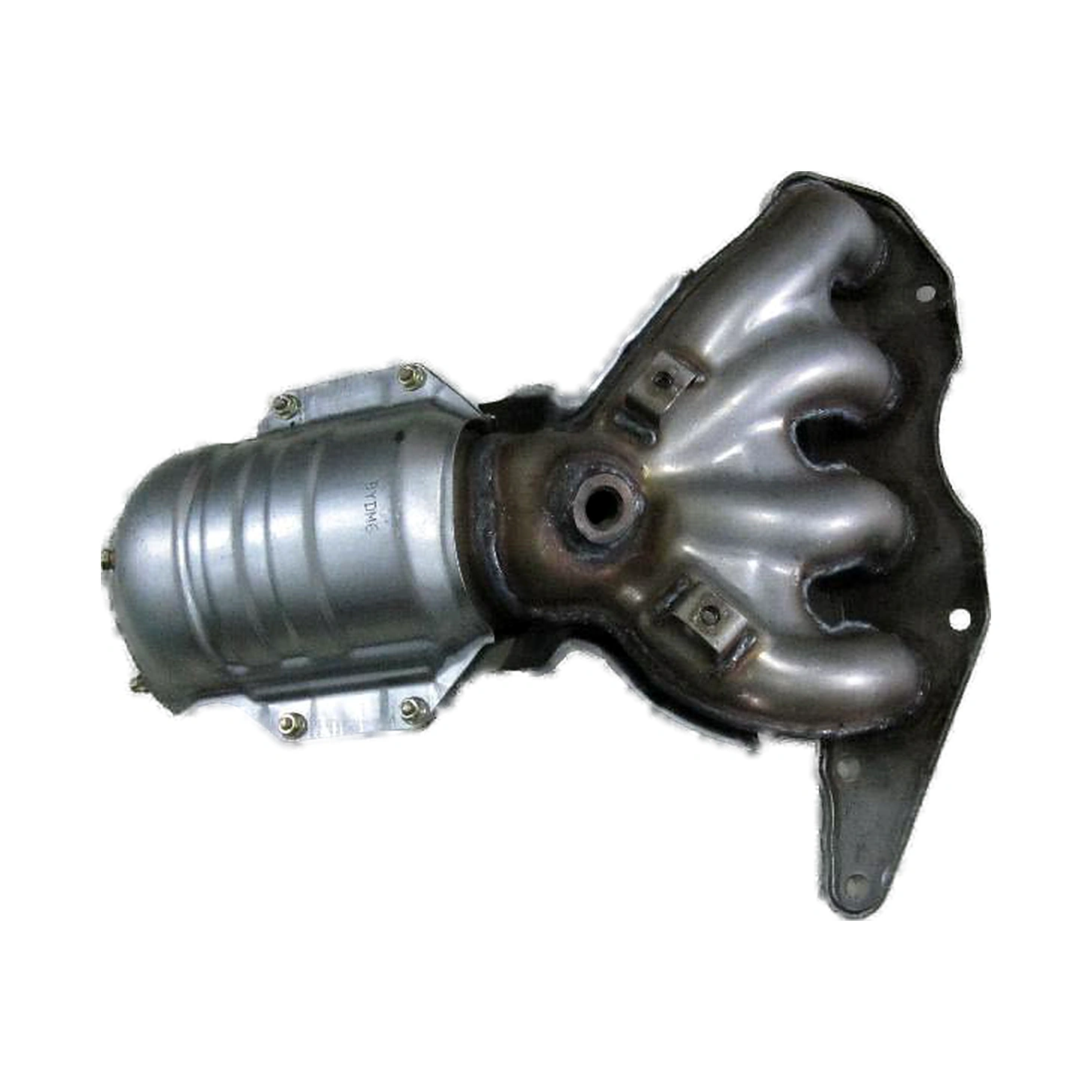
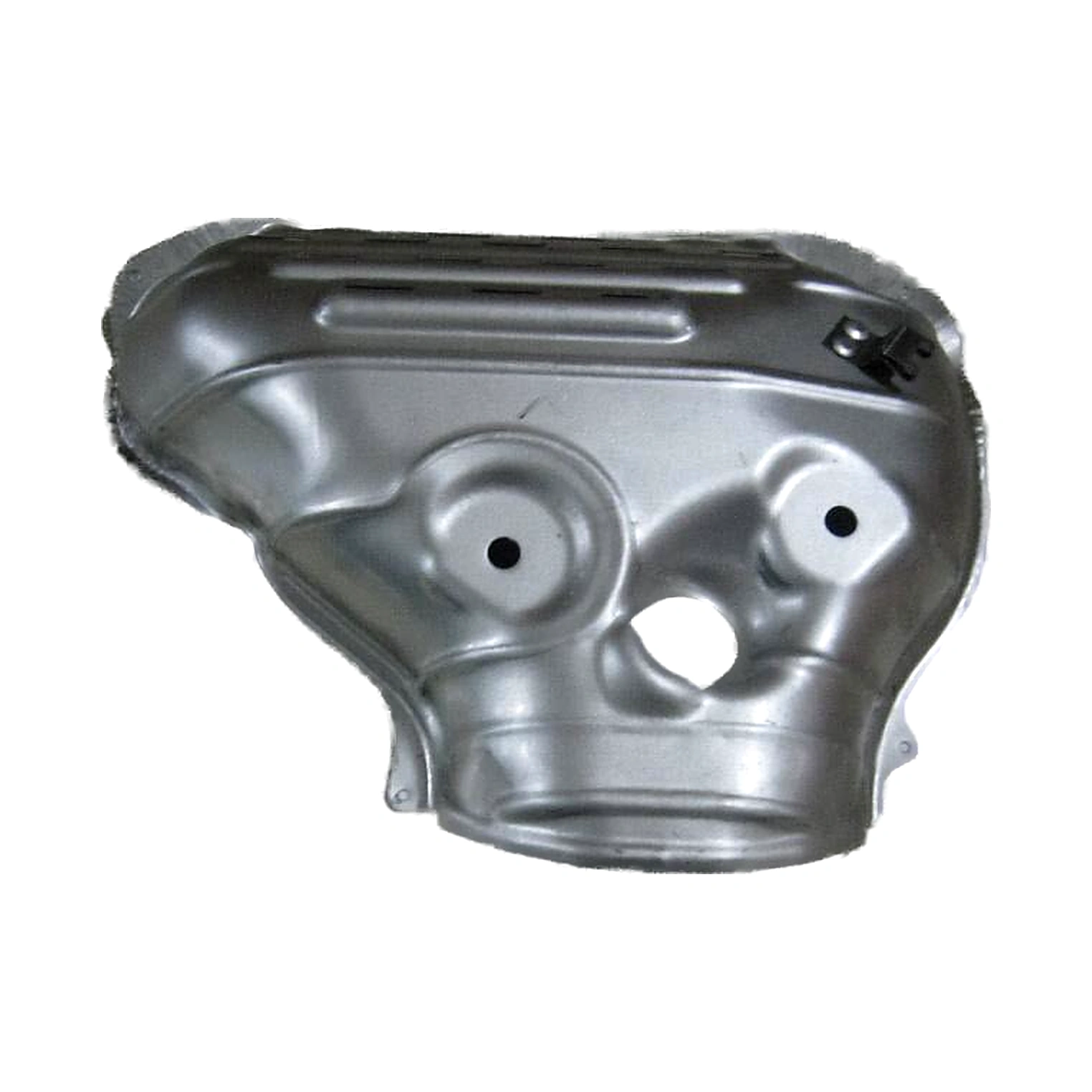
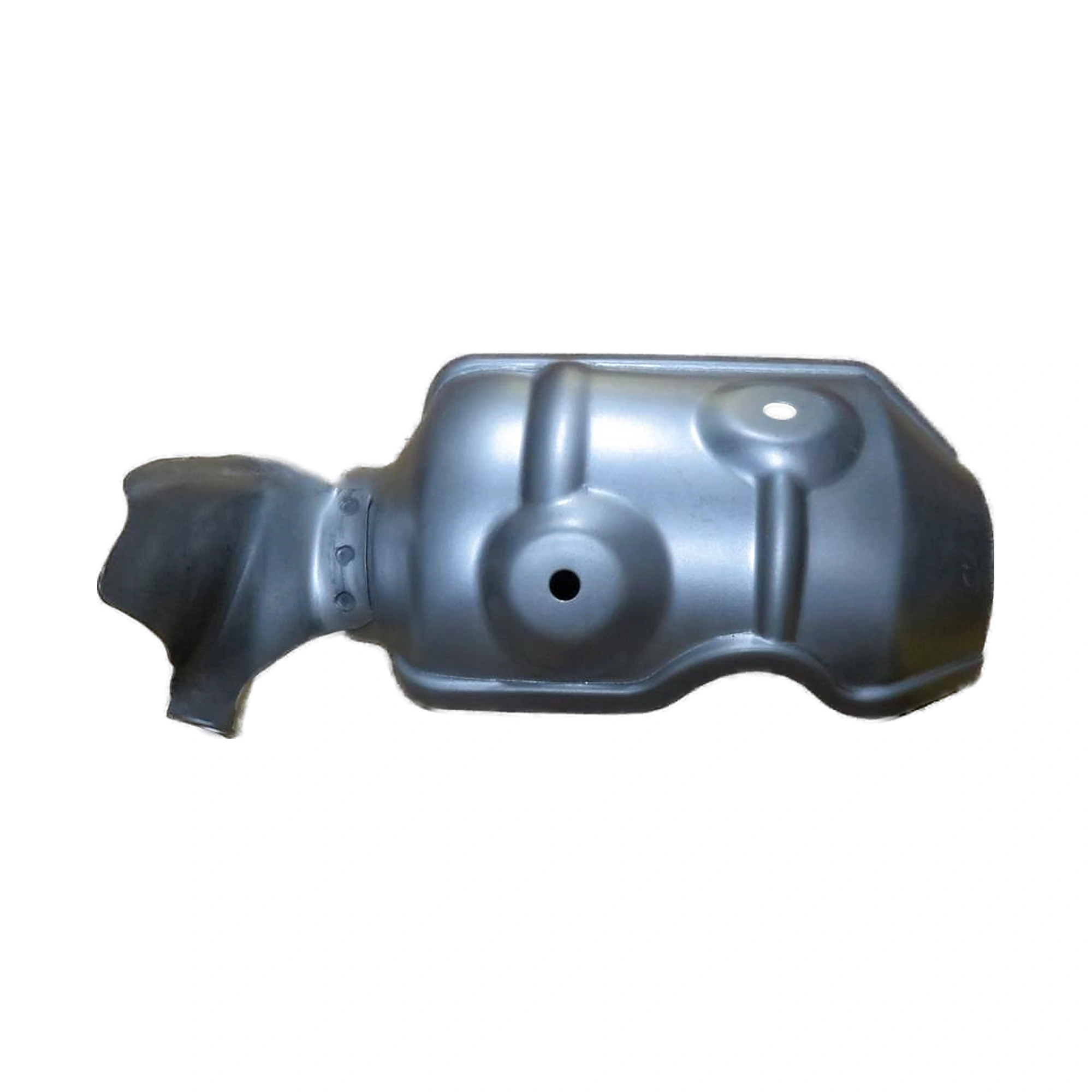
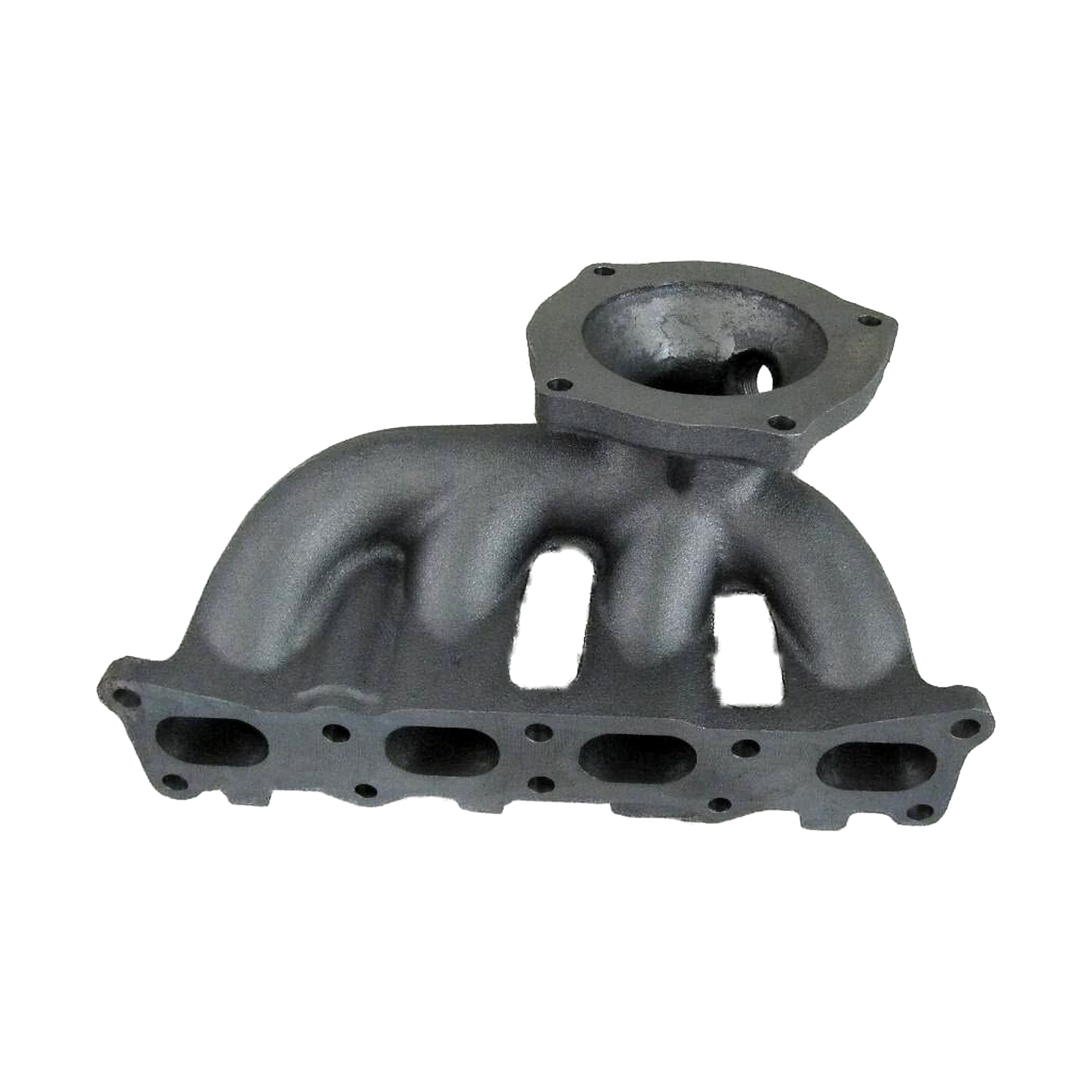
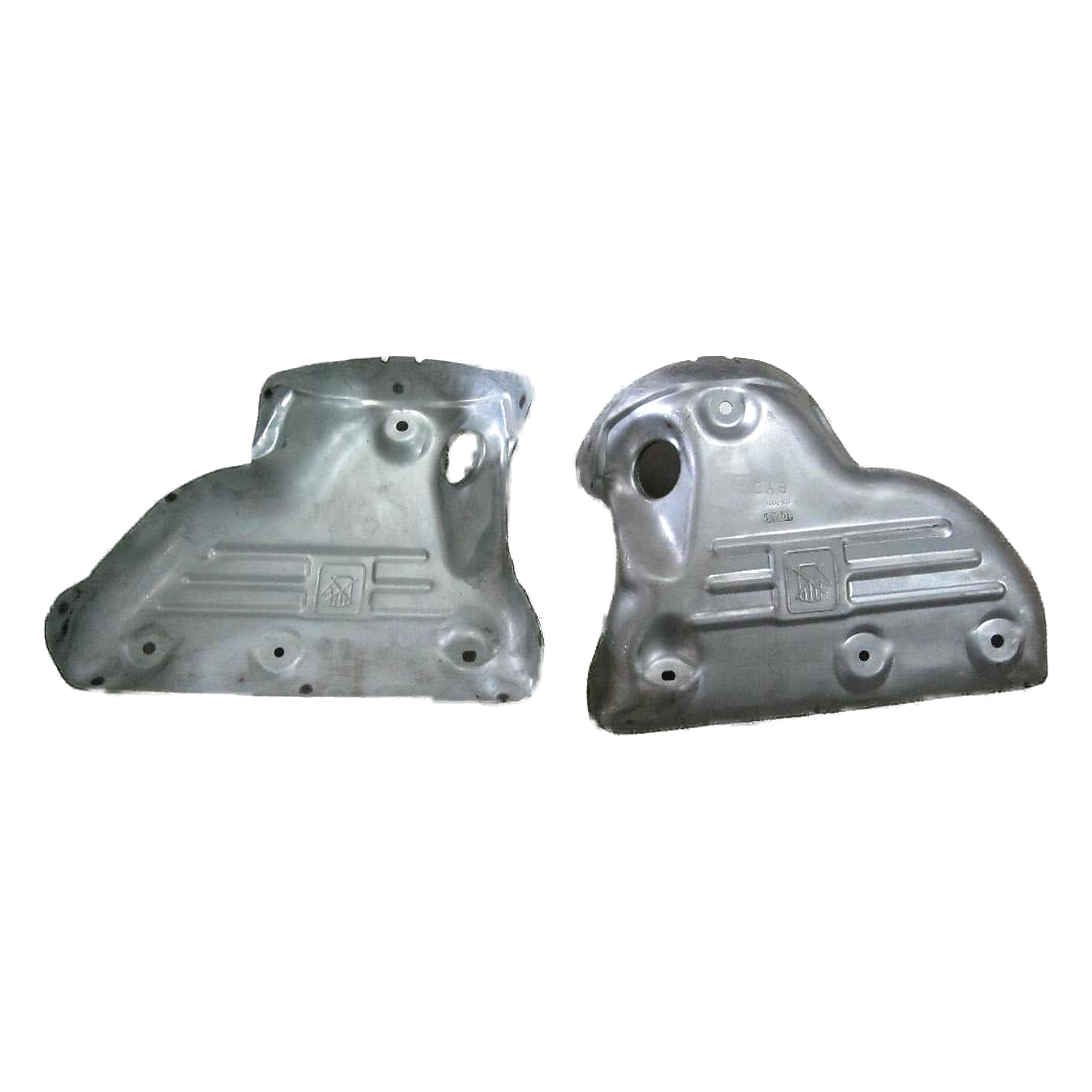
Symptom Finder: What Is Actually Broken?
| What you see or hear | Part to check first |
|---|---|
| Ticking from the front of the engine that fades as it warms | Exhaust manifold gasket |
| Exhaust smell in the cabin at idle | Exhaust manifold gasket or cracked manifold |
| Loud rasping under acceleration with no rear silencer fault | Exhaust manifold |
| Rattle from the engine bay that changes with revs | Exhaust manifold heat shield |
| Fuel trim running lean with no intake leak found | Exhaust manifold gasket leaking ahead of the sensor |
| Discoloured or scorched wiring near the manifold | Front upper heat shield assembly |
About Exhaust Manifold & Downpipe
The exhaust manifold takes gas leaving each cylinder at temperatures that can exceed eight hundred degrees Celsius and merges it into a single flow. That duty explains almost everything about how the part behaves. It expands and contracts by a measurable amount every time the engine is used, which works the studs and the gasket joint continually, and it is the reason cast manifolds crack and studs shear rather than simply loosening. Around it sit heat shields whose job is to keep radiated heat away from wiring, hoses and the bonnet, and they rattle once their fixings corrode. Manifold design also affects how well the engine breathes, since the length and merging of the runners determines the pressure waves that help scavenge each cylinder, which is why manufacturers cast rather than fabricate them to a specific geometry.
What to know before buying Exhaust Manifold & Downpipe parts
Order the gasket with new studs and nuts. Exhaust fasteners corrode and seize into the head, and they often shear on removal. A joint rebuilt with two good studs and one broken one will leak again immediately.
The group is a tight one. It covers exhaust manifolds and manifold assemblies, exhaust manifold gaskets, and the heat shields that mount around them. Front upper heat shield assemblies and numbered manifold shields are listed too. Gaskets are ordered far more often than anything else here, because a leaking manifold joint is the commonest exhaust fault on any engine. It announces itself clearly.
Add heat shields to any manifold order. Their fixings corrode away long before the shield itself fails. A shield left hanging will eventually scorch whatever it was protecting.
Use the OE number to confirm fit, since manifold geometry and sensor boss positions follow the engine variant. Parts with a standing price can be bought without waiting. Anything without a price is quoted against the same factory number, which is the usual route for heavy engine specific castings. The BYD group is covered most fully, and further catalogues are still loading.
Before You Order: 6 Checks
- Order new studs and nuts with any manifold gasket, since exhaust fasteners commonly shear on removal.
- Match the OE number, since manifold geometry and sensor boss positions follow the engine variant.
- Check the head and manifold faces for flatness before refitting.
- Inspect the manifold for hairline cracks between runners, which open when hot.
- Replace missing heat shield fixings rather than leaving a shield hanging.
- Allow the engine to cool completely before working, and use penetrating oil on studs well in advance.
What Changed and Why
Manifolds have been absorbed into other components on many current engines. Integrating the manifold into the cylinder head casting shortens the path to the catalyst so it lights off sooner from cold, which matters under test cycles that measure emissions from a cold start, and it lets coolant carry heat away rather than an exhaust shield. Turbocharged applications go further, casting the manifold as part of the turbine housing. Where a separate manifold remains, stainless fabricated designs have displaced cast iron on some engines for weight and thermal reasons, and they crack at the welds rather than in the castings.
Exhaust Manifold & Downpipe: Frequently Asked Questions
My engine ticks when cold and quietens when warm. What is that?
A classic exhaust manifold gasket leak. When the metal is cold the joint has its largest gap, so gas escapes with a sharp tick in time with the engine. As everything expands the gap closes and the noise fades. It is easy to mistake for a valvetrain tick, so listen for whether it changes with temperature rather than with load. Left alone it worsens, and the escaping gas eventually erodes the gasket and the flange faces, which turns a cheap job into a longer one.
Can a cracked manifold be welded?
Cast iron manifolds can be welded by a specialist with preheating and controlled cooling, and success is mixed because the casting has been through years of thermal cycling and is often cracked in more places than are visible. Stainless fabricated manifolds weld more predictably. The honest assessment is that a welded manifold frequently cracks again nearby, so where a replacement is available at a reasonable cost it is the better answer. Have the flange faces checked for flatness either way.
How do I deal with sheared manifold studs?
Expect them, and prepare. Soak the studs in penetrating oil for a day or two before starting, warm the area gently, and back the nuts off in small increments rather than pulling hard in one direction. When one shears, the options are drilling and extracting with the head in place, which is awkward but often possible, or removing the head. Order a full set of new studs and nuts with the gasket, because the ones that survive removal are as tired as the one that broke.
Why does a manifold leak affect fuelling?
Because a leak ahead of the oxygen sensor lets air into the exhaust stream during the pressure pulses between exhaust events. The sensor reads that extra oxygen and reports a lean mixture, so the control unit adds fuel that the engine did not ask for, which shows as positive fuel trim and can eventually set a lean code. That is why chasing a lean fuelling fault should include a look at the manifold joint, since an intake leak and an exhaust leak produce the same trim signature.
What do manifold parts cost?
Gaskets and heat shields sit at the bottom of the range and are among the cheaper parts on the site. Exhaust manifolds and manifold assemblies cost considerably more, since they are heavy castings or fabrications specific to the engine. The live minimum and maximum are shown in the band at the top of this page. Given how often the gasket is the actual fault, diagnosing before ordering keeps most manifold jobs at the inexpensive end of that range.
Is a rattling heat shield worth fixing?
Yes, for two reasons beyond the noise. A shield hanging by one fixing eventually detaches completely, and it exists to keep radiated heat off wiring, hoses and the underbody, so its absence shows up later as scorched insulation or a hardened hose. Clamping a loose shield with a large washer works where the shield itself is sound and the fixing has corroded away, and where the shield is cracked or distorted, replace it. They are inexpensive parts.
Can I fit a manifold gasket myself?
It is a realistic job on an accessible engine, and the difficulty is entirely in the fasteners rather than the technique. Work on a completely cold engine, soak the studs well in advance, remove the heat shields first, and clean both faces carefully without gouging them. Check flatness with a straight edge before reassembly, fit new studs and nuts, and torque in the specified sequence from the centre outward. Retorque after a heat cycle where the manual calls for it.
Should I use sealant on an exhaust gasket?
No. Exhaust gaskets are designed to seal by compression between two flat faces at high temperature, and sealants either burn away, leaving a gap, or hold the gasket off its seat. If a joint needs sealant to hold, the faces are not flat and that is the actual problem. Have the manifold flange machined or replaced. The only legitimate use of exhaust paste is on a slip joint further down the system, never on a flanged gasket joint.
Why do integrated manifolds exist?
Because casting the manifold into the cylinder head shortens the distance to the catalyst, so the catalyst reaches operating temperature sooner from a cold start, which is where most emissions are produced. It also lets the coolant jacket carry away exhaust heat, reducing the need for enrichment to protect components at high load. For owners, the consequence is that there is no separate manifold to leak or crack, and no manifold gasket to replace, since the exhaust joint moves further downstream.
Will a manifold from another engine variant fit?
Only where the number agrees. Port spacing may be common within an engine family while runner geometry, flange angle and sensor boss positions differ between variants, and a manifold with a sensor boss in the wrong place puts the oxygen sensor where its readings will be wrong. Turbocharged and naturally aspirated versions share nothing. Read the casting number where legible, match it, and use the quote form where the reference brings back no result.
How tight should manifold fasteners be?
To the specified torque, in the specified sequence, and no tighter. Overtightening distorts the flange and cracks the casting, both of which are certain to cause a leak, and it also makes the next removal harder. Use a torque wrench rather than judgement, work from the centre outward, and where the manual specifies a retorque after a heat cycle, do it. A small amount of high temperature anti seize on the stud threads makes the job far easier next time.
The part I need shows no price. Can I still order it?
Yes. Manifolds and downpipes are cast or fabricated for one engine variant and one emissions specification, and the number of bosses for oxygen sensors differs between them, so plenty of these references are quoted rather than priced. Send the reference and mention how many sensor ports your old part carries. A downpipe with the wrong boss count leaves you either blanking a hole or losing a sensor the control unit expects. Put the manifold gasket, the studs and the nuts on the same request, because those come off in pieces and never go back.