Service & Maintenance Items
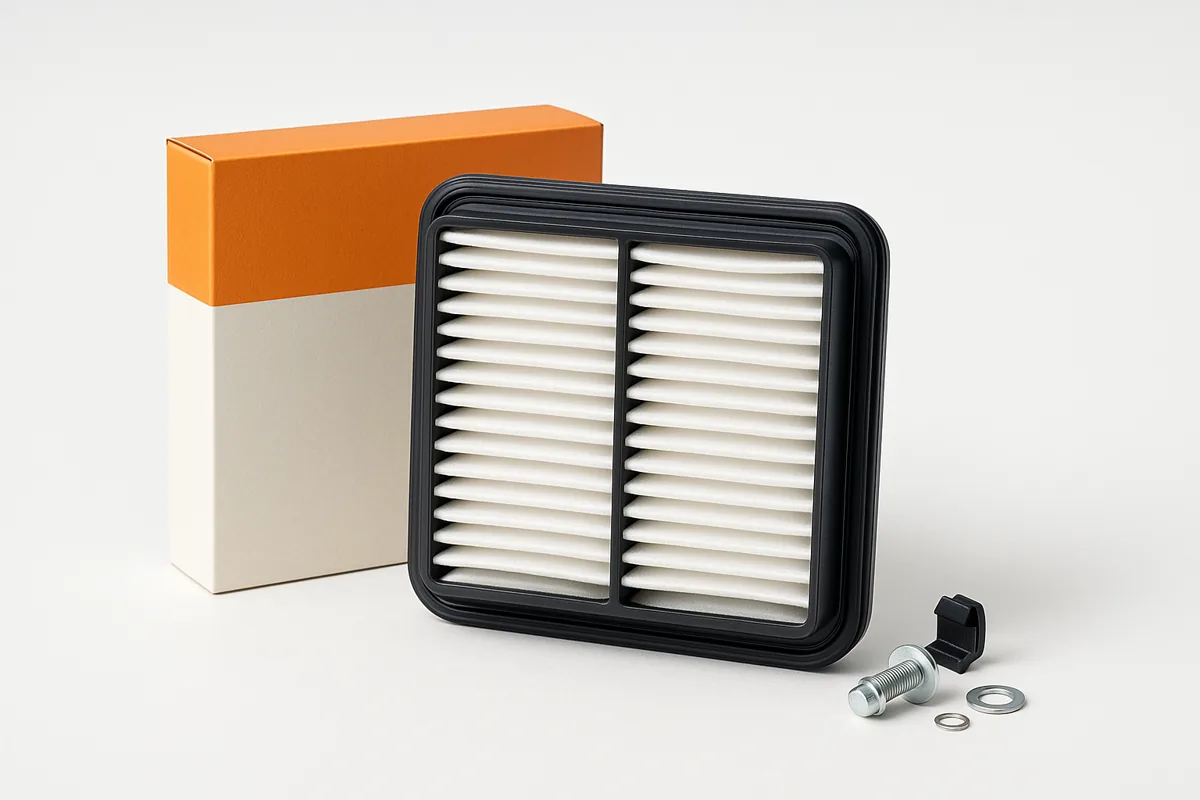
Shop Service & Maintenance Items by Part Type
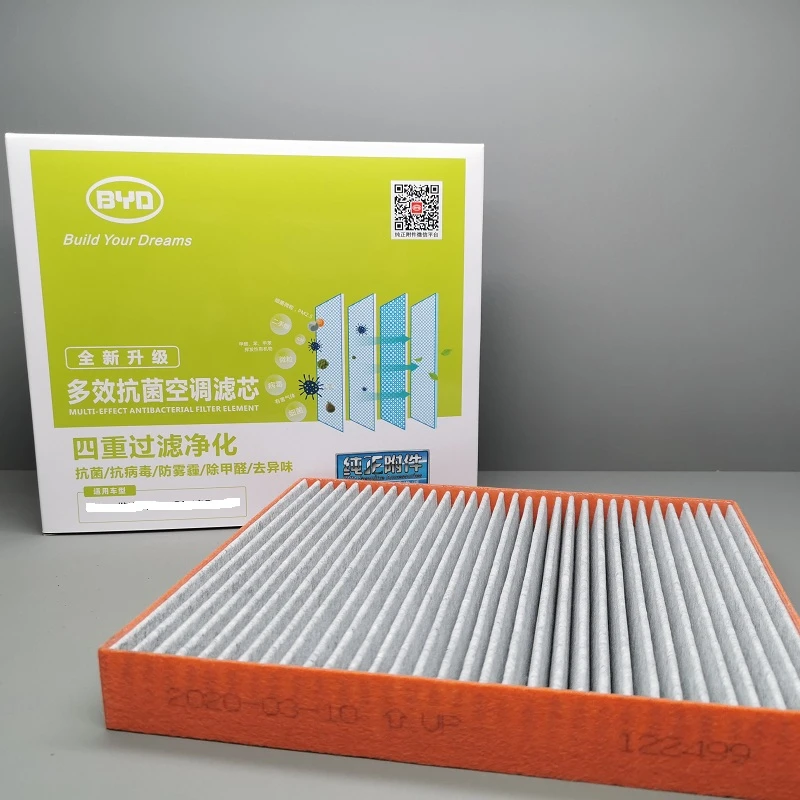

Popular Right Now
scroll for more →
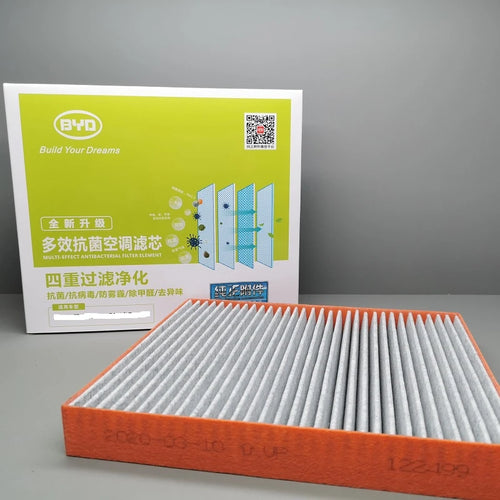
Symptom Finder: What Is Actually Broken?
| What you see or hear | Part to check first |
|---|---|
| Reduced performance with a visibly dirty element | Engine air filter element |
| Airflow reading drifting from expected values | Air filter element restricting flow |
| Dust visible downstream of the filter housing | Filter element seated incorrectly |
| Housing lid not closing squarely | Filter element of the wrong dimensions |
| Filter medium collapsed or torn | Air filter element |
| Leaf debris and insects packed into the pleats | Air filter element due early |
About Service & Maintenance Items
Filtration is one of the least glamorous and most consequential aspects of vehicle maintenance. An engine air filter has to remove particles down to a few microns while presenting so little restriction that the engine breathes freely, and it does that with a pleated medium whose folds give a large surface area in a small frame. Efficiency and restriction pull against each other, which is why the medium is engineered rather than simply fine, and why a filter that looks similar can perform quite differently. Filters also work better as they load, since captured particles narrow the paths and catch smaller ones, until restriction rises far enough to matter. The seal around the frame is as important as the medium: air that bypasses the element carries everything it was meant to remove.
What to know before buying Service & Maintenance Items parts
Order high efficiency engine air filter elements and service filters by OE number, not by measuring the old one. The listings identify them by their dimensions. Dimensions only get you a filter that occupies the space. The medium, the pleat count and the seal profile decide whether it filters and seals. None of that is visible.
Fit the element the right way up where an arrow or a face is marked. Seat it fully so the seal contacts all the way round. Close the housing without forcing it, because a distorted lid lets dirt past the filter.
Never clean and reuse a paper element. Compressed air enlarges the pores and leaves a filter that looks clean and performs worse.
Anything showing a price can be ordered straight away, and the rest is quoted. BYD group models are covered in most detail, and more catalogues are loading. Order your whole service list in one request. These are small items where lead time matters more than price.
Before You Order: 6 Checks
- Order by OE number rather than by measuring the old element.
- Check the housing and seal face for debris before fitting the new filter.
- Fit the element the correct way up where a face or arrow is marked.
- Do not clean and reuse a paper element with compressed air.
- Shorten the interval if the vehicle operates in dusty conditions.
- Inspect the intake duct for splits while the housing is open.
What Changed and Why
Filtration requirements have risen rather than eased. Direct injection engines are less tolerant of ingested dust because their intake valves are not washed by fuel, and turbocharged applications push more air through the same filter area, so manufacturers specify higher efficiency media and, in some cases, shorter intervals than a comparable older engine used. On electric vehicles the engine air filter disappears entirely while cabin filtration becomes the focus, with media rated to fine particulate standards fitted as standard rather than as an option.
Service & Maintenance Items: Frequently Asked Questions
How often should the air filter be changed?
At the manufacturer's interval, and sooner where conditions are dusty, since intervals are set for average use rather than unsurfaced roads or building sites. A visual check tells you a great deal: hold the element up to a bright light and see how much passes through the medium, and look at how much leaf debris and insect material has packed into the pleats. A filter that has stopped passing light has stopped passing air just as effectively.
Can I clean and reuse a paper filter?
No, and the attempt makes matters worse. Compressed air blown through a paper element drives captured dust deeper into the medium and enlarges the pores, so what you fit back is a filter that looks visibly cleaner and filters measurably worse, passing exactly the fine particles that cause wear. Tapping out loose debris to check condition is fine. Anything more aggressive is a false economy on a part that costs very little to replace properly.
Does a dirty filter really cost performance?
Less than folklore suggests on a modern engine and more than nothing. Because the control unit measures the air actually entering, it adjusts fuelling to match rather than running rich, so a restricted filter mostly costs the ability to draw full airflow at high load rather than causing a rich mixture. What it does cost reliably is protection, since a filter at the end of its life is also close to the point where its efficiency and its structure begin to suffer. Replace it on schedule.
Why order by number rather than by measuring?
Because the dimensions are the least demanding part of the specification. Two elements of identical size can differ in medium, pleat count, efficiency and seal profile, and only one of them was validated for your engine's airflow and its filtration requirement. A filter that fits the housing and seals imperfectly is worse than no filter at all in one respect, since it creates a bypass path that carries dust straight into the intake. Match the reference and the dimensions follow.
What happens if the element is fitted the wrong way up?
On many designs it will not seal, and on some it will not seat at all, which is a useful design feature. Where an element has a marked face, an arrow or an asymmetric seal, that orientation places the sealing lip against the correct face of the housing and directs airflow through the medium in the intended direction. Fitted the other way, the lid may appear to close while leaving a gap that lets unfiltered air past the edge of the element.
What do service filters cost?
Filters are the least expensive consumables on the vehicle and that is the whole argument for changing them on schedule. A cabin filter and an air filter element together cost less than most single mechanical parts in the catalogue. Housings and seal frames, where they are supplied separately, are slightly more. The band at the head of the page shows the current figures. The real cost of a neglected filter is elsewhere: a restricted air filter upsets fuelling, and a saturated cabin filter loads the blower and blocks the evaporator.
Is a performance filter worth fitting?
On a standard engine, rarely, and there are downsides. Oiled cotton and foam elements typically pass more fine dust than a paper medium, and over oiling contaminates the air mass sensor, which produces fuelling faults that are far more annoying than the notional gain. Manufacturers size the intake so that the filter is not the restriction at standard power. If the aim is a healthy engine rather than an induction noise, the factory element remains the better purchase.
Do electric vehicles need any of these?
Not an engine air filter, since there is no engine drawing air. What matters instead is the cabin filter, which is listed with the climate parts, and which arguably matters more on a quiet vehicle where occupants notice smells and where cabin air quality is increasingly specified rather than incidental. The filters in this category serve the combustion and hybrid vehicles in the catalogue. Check which applies to your vehicle before ordering.
Should I clean the housing when changing the filter?
Yes, and it takes a minute. Leaf debris, insects and dust collect in the bottom of the air box, and anything left there is downstream of the new element as soon as it is disturbed. Wipe the housing out with a damp cloth rather than blowing it with compressed air, which simply relocates the debris, and check the seal face is clean and undamaged so the new element seats properly. Inspect the intake duct for splits while you are there.
Can a filter cause a fault code?
Indirectly. A severely restricted element changes the relationship between throttle position and measured airflow, which can produce fuelling or airflow plausibility codes, and a filter that has collapsed or torn can allow debris to reach the air mass sensor and corrupt its reading. Neither is common with a filter changed on schedule. Where a fuelling fault appears on a vehicle with an unknown service history, checking the filter is a quick and cheap first step.
Will a filter from a related engine fit?
Only where the number agrees. Housings are shared across engine variants far more often than filters are, so an element that occupies the same space may be specified for a different airflow with different medium efficiency. Fitting it will not produce an obvious symptom, which is precisely the problem, since the shortfall shows as engine wear over years rather than as a fault today. Match the OE number and use the quote form if the reference brings back nothing.
The filter I need shows no price. Can I still order it?
Yes, though it is uncommon here, since service items sell steadily and are priced early. Where a figure is missing it is usually a filter for an older or lower volume application. Send the number and one comes back. Order the set rather than the single item if the car is due a service anyway, because the labour overlaps and a cabin filter changed at the same time as an air filter costs almost nothing extra in time. Measure the depth of the old element if you are matching from a used part, as several share the same footprint.