Maintenance & Hardware
Shop Maintenance & Hardware by Part Type
Popular Right Now
scroll for more →
Symptom Finder: What Is Actually Broken?
| What you see or hear | Part to check first |
|---|---|
| Trim panel loose after being refitted | Trim clip or retaining fastener |
| Joint weeping after reassembly | Sealing washer or a reused single use bolt |
| Hose slipping at a spigot after being disturbed | Spring band hose clamp |
| Reduced performance with a visibly dirty element | Engine air filter |
| Bolt turning without tightening | Stretched fastener or damaged thread |
About Maintenance & Hardware
Two kinds of part sit here, and both are undervalued until a job stops. Fasteners appear identical to one another and are nothing of the sort, since diameter, thread pitch, length, head form and above all the strength grade of the steel decide how much clamp load one can produce before it gives way, and the grade is the one thing you cannot see. Many are intended to be used once, stretched deliberately beyond their elastic range so the load they hold is repeatable, which is precisely what a reused one cannot offer. Trim clips are engineered for a single assembly cycle and are expected to break on removal. The other kind is consumables: filters whose media, pleat count and seal profile decide whether they actually filter.
What to know before buying Maintenance & Hardware parts
Order these parts with the job rather than after it. A workshop slot lost to a single missing clip costs more than the whole order.
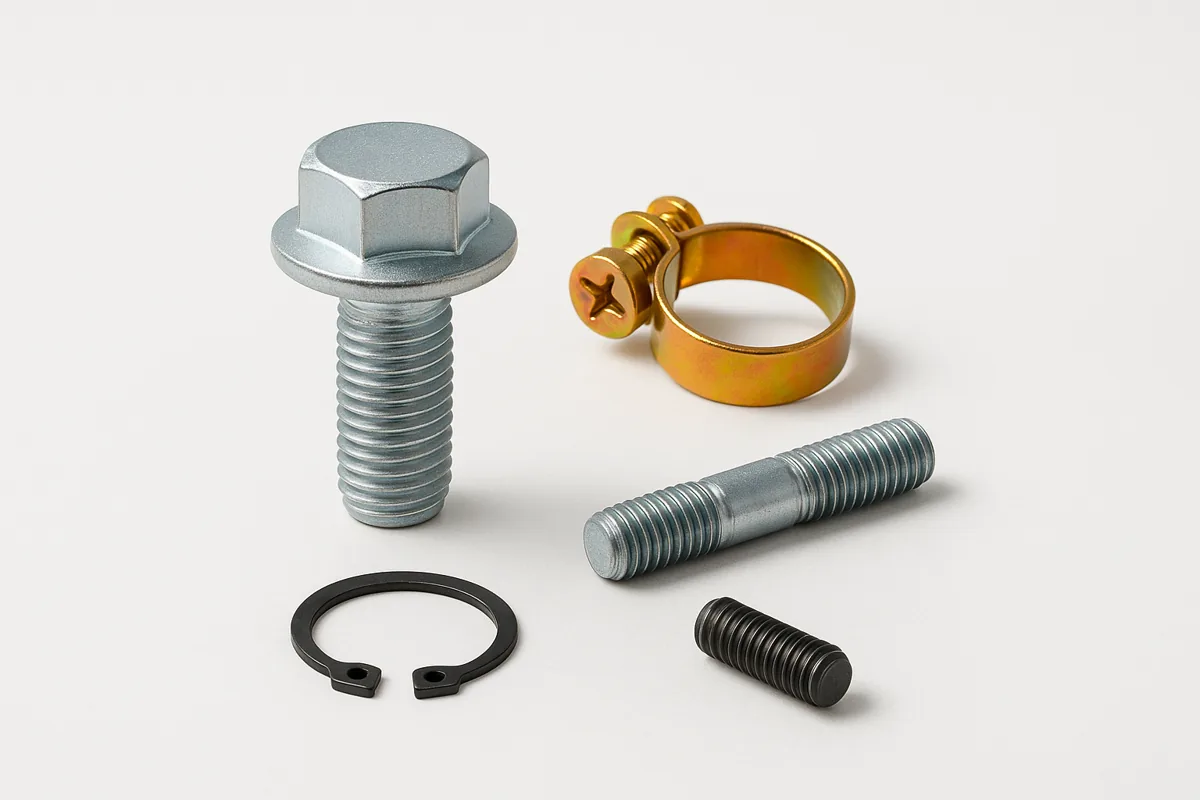
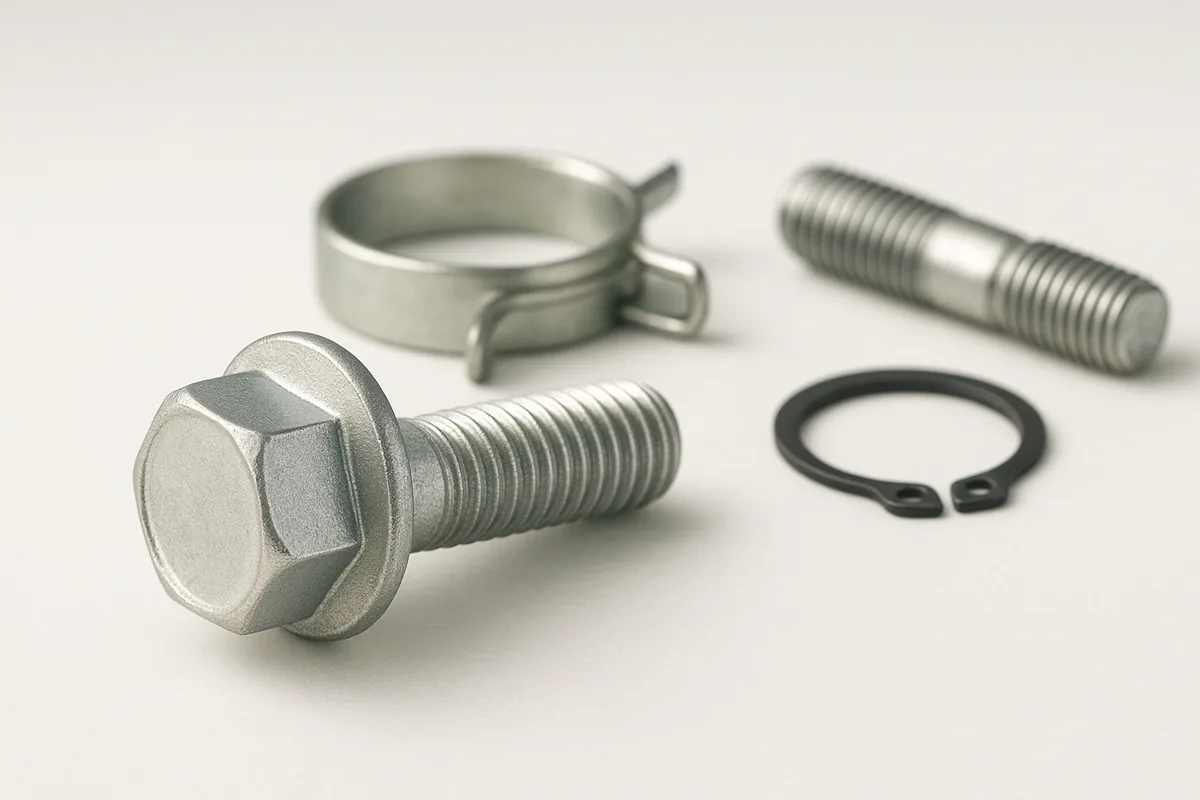
Two child categories cover the group. Fasteners, clips and adhesives holds bolts, studs, circlips, Torx screws, washers, hose clamps and trim retainers. Order them by OE number, because grade and pitch are invisible on the part.
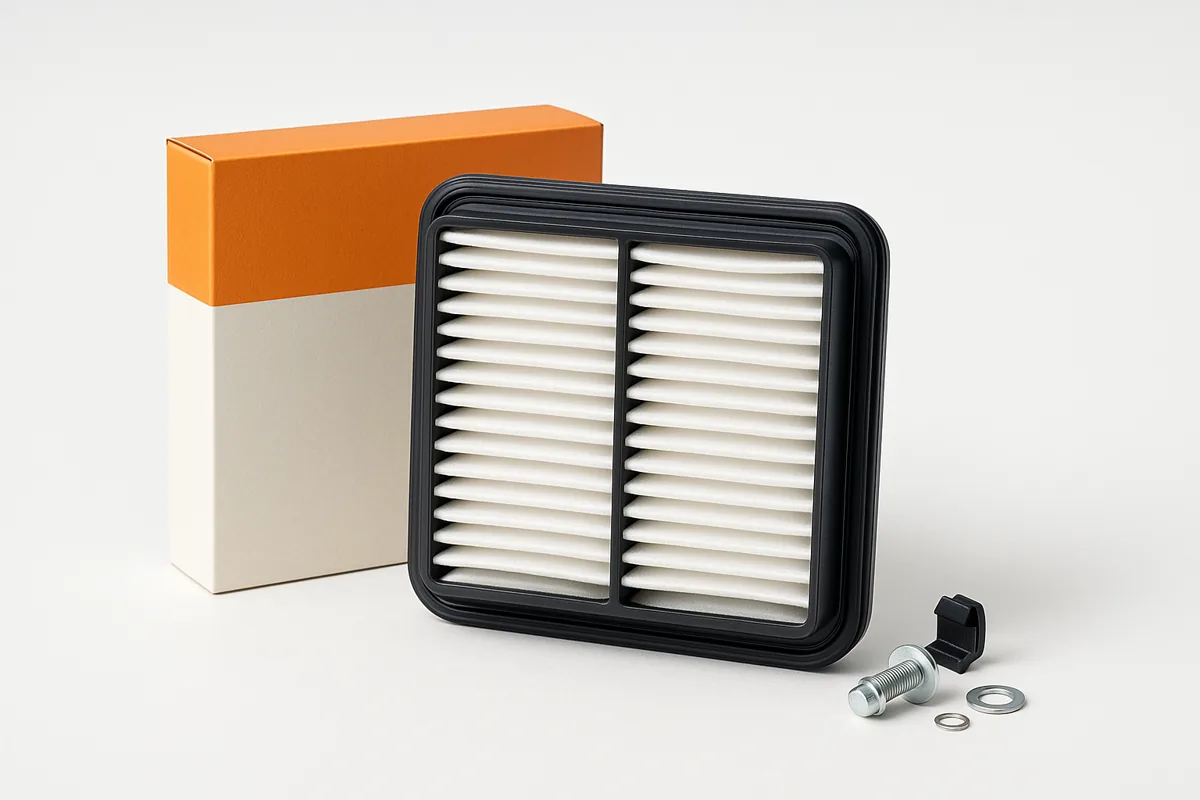
Service and maintenance items holds engine air filter elements and service filters. Order these by reference rather than by measuring the old one. The dimensions get you a filter that fits, but the medium decides whether it works.
Before You Order: 5 Checks
- Match fasteners by OE number, since grade, length and pitch are not visible.
- Replace torque to yield bolts rather than reusing them.
- Order clips and fasteners with the job, not after it.
- Order filters by reference rather than by measuring the old element.
- Fit fresh sealing washers on any joint that seals with one.
What Changed and Why
Joining methods have shifted. Structural adhesive and rivet bonding now sit alongside welding on mixed material bodies that cannot be welded together, with the manufacturer specifying the product and process for each seam, while interior assembly has gone almost entirely to clips designed for a single cycle to speed production. Filtration has moved the other way, with higher efficiency media specified because direct injection engines are less tolerant of ingested dust and turbocharged applications push more air through the same filter area.
Maintenance & Hardware: Frequently Asked Questions
Why can I not use a bolt from a hardware shop?
Size is the easy part. Strength is what you cannot see. Vehicle fasteners are specified to a property class, and the markings on the head that tell you which one are easy to overlook. A general purpose bolt in the same thread can be less than half as strong as the original, so it yields at a torque the correct part handles without complaint. Plating matters too, since an unplated bolt in a wet location seizes and shears the next time anyone touches it. On suspension, brakes, steering or anything structural, buy the specified item.
Which bolts are single use?
The rule of thumb is that anything holding a critical joint at a stretched preload gets replaced. In practice that means cylinder head bolts, connecting rod and main bearing bolts, driveshaft nuts, many suspension through bolts and the bolts securing a subframe to the body. Manufacturers publish the list per vehicle and it varies more than people assume. Check the procedure rather than the appearance, since a reused bolt looks identical to a new one and gives no warning before it lets go. Order them with the part they secure, not afterwards.
Why do trim clips always break?
Because breakage is designed in, in a sense. The fixing has to survive vibration, temperature swings and a decade of road use without loosening, and the cheapest way to achieve that in moulded plastic is a barbed shank that bites into the panel. Removal shears the barb. Treat clips as consumables and stock the common patterns, since a workshop that has to stop and order three clips loses more in time than a full box costs. Where a clip is metal rather than plastic, it can often be reused if the spring arms are undamaged.
Can I clean and reuse an air filter?
No. Shaking loose leaves and grit out of the housing is fine and tells you whether the element is due, but that is where it should stop. A paper element cannot be restored: compressed air enlarges the pores and drives the fine dust deeper, and any washing softens the medium so the pleats close up and airflow drops. What you end up with looks presentable and filters badly, which is the worst of both. Cabin filters are the same story, with the added point that a damp one grows exactly what you then breathe.
Do sealing washers really need replacing every time?
Yes, and they cost almost nothing. A sealing washer works by deforming to conform to the sealing face, so it has done its job once and will not do it again, which is why a sump plug reused across several services eventually weeps. Reusing it also tempts overtightening, which strips the thread in an aluminium sump and turns a trivial job into an expensive one. Order a few with your filters so there is always one to hand.
How do I read the numbers stamped on a bolt head?
Metric bolts carry a property class such as 8.8, 10.9 or 12.9 on the head. Multiply the first figure by one hundred to get the minimum tensile strength in megapascals. The second figure tells you what fraction of that strength the bolt can take before it yields and stays stretched. A 10.9 bolt is much stronger than an 8.8 of the same size, so the two cannot be swapped for each other in either direction. Nuts carry a matching class number on a face or flat. Before ordering, read both the stamp and the OE number on the old part, then enter the number in the search box.
Should I oil or grease threads before tightening a bolt?
Only when the procedure tells you to. Most of the torque you apply to a bolt goes into overcoming friction in the threads and under the head. Only the remainder stretches the bolt and creates clamp load. Oil, copper grease or anti seize cuts that friction, so the same reading on the wrench produces far more tension and can yield or snap the fastener. Service data states whether a torque figure is dry or lubricated and which compound to use. Keep grease off wheel bolt threads unless it is specified. If you are unsure, ask a qualified mechanic to check the procedure for that joint.
Can I reuse a bolt with a coloured patch on the threads, or a nylon insert nut?
The coloured band is a locking compound applied at the factory. It is either an adhesive that cures after assembly or a nylon coating that grips the mating thread. Adhesive types lock once and lose most of their hold when they are broken free. Nylon patches and nylon insert nuts keep some grip for a few cycles, but the locking torque falls each time and you cannot see how much is left. On brakes, steering, suspension and driveline, fit new ones. Order by the OE number on the old part so the new fastener arrives with the correct patch already applied.
How can I tell whether a bolt is a stretch bolt?
Look at the tightening procedure rather than the bolt. A stretch bolt is tightened to a modest torque and then turned through one or more set angles, such as a quarter turn, because angle controls stretch far more consistently than torque alone. Some stretch bolts have a waisted shank that is thinner than the thread, which is a strong hint. A few manufacturers allow reuse if the bolt is still within a published maximum length, but that needs the limit and accurate measurement. If the joint is angle tightened, treat the bolt as single use and order it by the OE number on the old part before you start.
Which way round does a cabin filter go?
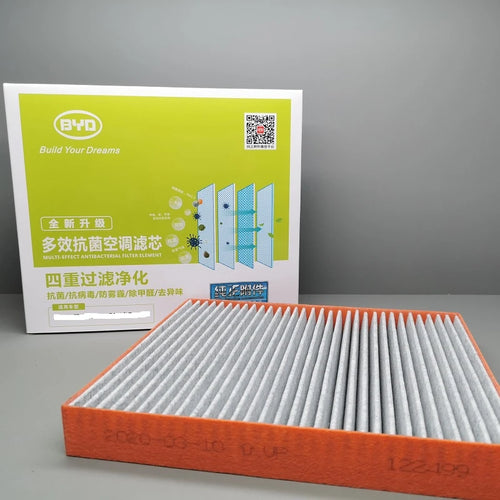
Follow the arrow on the frame. It shows the direction of airflow, not which side faces up. Air travels from the intake to the blower and on into the cabin, so on most cars the arrow points towards the fan. Housings differ, so note how the old filter sat before you pull it out. A filter fitted backwards can have its pleats pulled towards the fan and can shed the dust it has collected into the cabin. On carbon elements the dark layer usually faces the cabin side. Confirm the OE number on the old filter before ordering a new one.
How often should the cabin filter be changed on an electric car?
Go by time as much as distance. An electric car draws air through its cabin filter whenever the climate system runs, including preconditioning while parked, so the element can clog on a car that covers few miles. Many manufacturers specify a change every year or every two years, and sooner in city traffic, near roadworks or during pollen season. Warning signs are a musty smell at start up, weak airflow at full fan and windows that are slow to clear. The filter also keeps debris off the heat pump evaporator. Check the service schedule, then order by the OE number on the old element.
What is the difference between a standard and an activated carbon cabin filter?
A standard element physically traps particles such as dust, pollen and soot. A carbon element adds a layer of activated charcoal that absorbs gases and odours, including exhaust fumes in queuing traffic. The carbon becomes saturated before the pleats clog, so odour control fades while airflow still seems fine. That is why a carbon filter should be changed on schedule rather than when it looks dirty. The two types often share a frame size but differ in thickness and resistance to airflow, which affects how much air the fan delivers. Fit the type your car was built with, identified by the OE number on the old filter.
How do I remove trim clips without damaging the panel?
Use plastic trim levers, never a screwdriver. Lever as close to each clip as you can so the force goes through the fixing rather than bending the panel. Find the clip positions first, by feeling along the edge or checking the procedure, because pulling between clips cracks the mounting posts moulded into the back of the panel. In cold weather, warm the area first, since cold plastic snaps easily. Some fixings are screws hidden under caps, or rivets whose centre pin must be pushed through before they release. Keep the broken clips, read any OE number moulded into them and order replacements before you refit the panel.
Can I refit a badge or trim strip with ordinary double sided tape?
It will hold for a while and then let go. Exterior trim is bonded with acrylic foam tape that stays flexible through heat, frost and pressure washing. It only reaches full strength on a surface cleaned of wax and old adhesive, often with an adhesion promoter wiped on first. Household tape slowly slips under load, lets water in behind the part and leaves the trim lifting at one corner. Remove old residue with a plastic scraper or an eraser wheel, not a blade. If the replacement part comes with tape already applied, order it by the OE number so the tape matches the part's shape.
The filter or clip looks the same as mine but will not fit. Why?
Small differences decide fit. Filters vary in seal shape, frame depth and corner shape, and a gasket a few millimetres out leaves a gap that air flows through instead of the filter. Clips vary in shank diameter, head size and the panel thickness they are made for, so a lookalike rattles or pulls through. Designs sometimes change partway through production, and for those parts the build date on the identification plate decides which version fits. Read the OE number on the old part and enter it in the search box. If the number is unreadable, send photos through the quote form and we reply within 24 hours, usually sooner.