On-Board Charger (OBC)
Shop On-Board Charger (OBC) by Part Type
Popular Right Now
scroll for more →
Symptom Finder: What Is Actually Broken?
| What you see or hear | Part to check first |
|---|---|
| Alternating current charging fails while rapid charging works | On-board charger |
| Charging starts then stops after a short period | On-board charger with a thermal or supply fault |
| Charging current far below the rated figure | On-board charger derating |
| Charging fault stored with the inlet reporting normally | On-board charger |
| Export or vehicle to load function unavailable | Bidirectional on-board charger |
| Charging fault after coolant work | On-board charger cooling path |
About On-Board Charger (OBC)
Alternating current from a wall socket or a charge point cannot go into a battery, so every electric vehicle carries a converter that rectifies it, raises or lowers the voltage to match the pack, and controls the current precisely as the state of charge climbs. That is the on board charger, and its rating sets the maximum speed at which the vehicle can accept alternating current, which is why two cars plugged into the same charge point can charge at very different rates. Rapid charging bypasses it entirely, since a direct current charger performs the conversion itself and feeds the pack directly. Bidirectional units add an inverter stage so the flow can reverse, taking energy from the pack and producing clean alternating current for a load, a household supply or, where regulation permits, the grid.
What to know before buying On-Board Charger (OBC) parts
Prove the fault before you order. Try a different cable and a different charge point first. Supply and cable faults account for a large share of reports, and they cost nothing to rule out. The inlet and the lock can also stop charging. From the driver's seat all of these look identical.
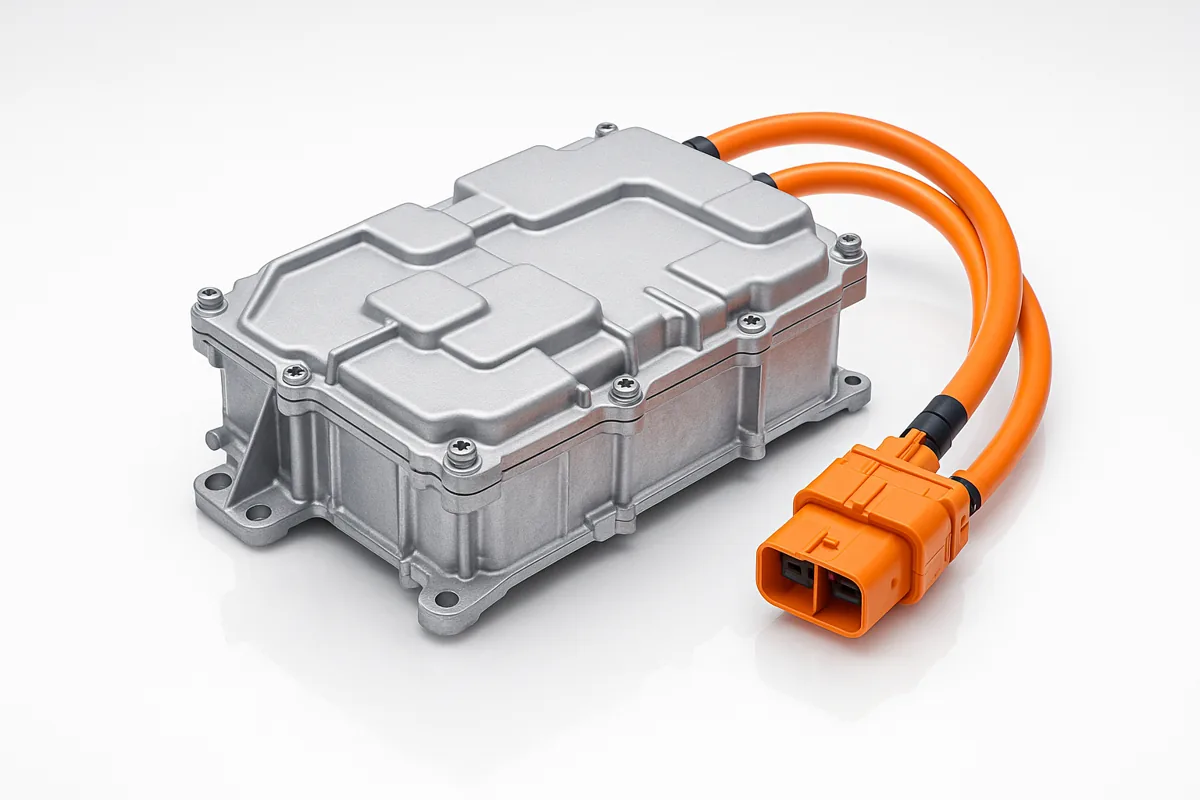
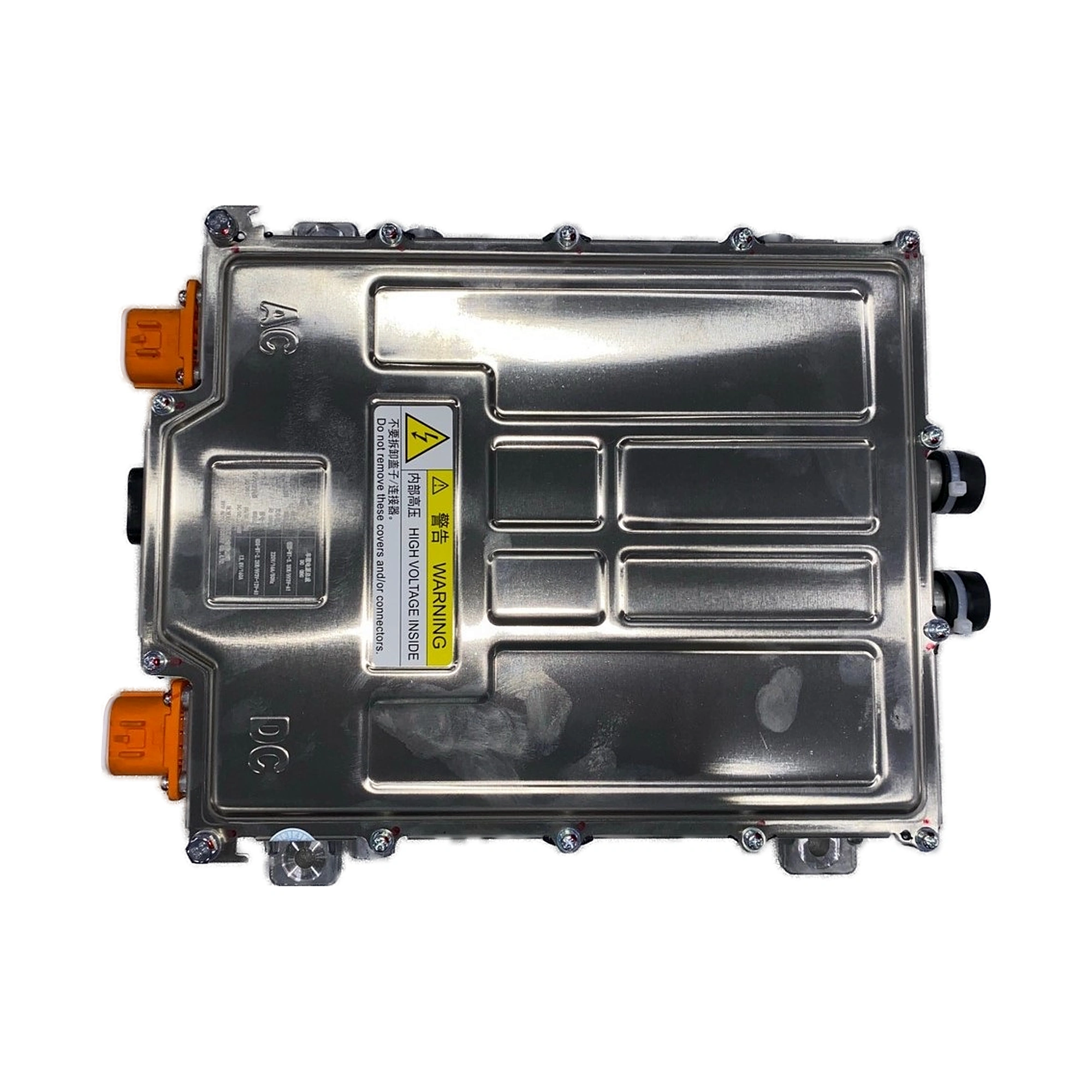
The category is narrow by nature and carries the bidirectional on board charger as a unit. Nothing inside is field serviceable. The assembly combines power electronics, magnetics, control circuitry and its own cooling in a sealed housing. It connects directly to the high voltage system.
Order against the OE number, because fit is confirmed against the part number. Charger rating, communication protocol and software level all follow the specific build. Fitting is a workshop operation. It needs isolation, coolant work on many vehicles and coding afterwards.
Where no standing price is loaded, the quote form returns a current figure and availability. Our BYD group listings are the fullest, and they widen as further catalogues load.
Before You Order: 6 Checks
- Confirm the fault is the charger rather than the inlet, lock, cable or supply before ordering.
- Test with a different charge point and cable, since supply faults are common and cost nothing to exclude.
- Match the OE number and confirm against the vehicle identification number, since rating and software follow the build.
- Check the cooling path, because thermal derating reduces charging current without any fault message.
- Confirm the workshop can code the replacement before the part is ordered.
- Treat the unit as a high voltage component throughout, with isolation and verified zero voltage.
What Changed and Why
Bidirectional charging is the most significant recent change in this component. Vehicle to load, which powers appliances directly from the car, is now widely available. Vehicle to home and vehicle to grid are advancing more slowly because they depend on regulation, metering and equipment outside the vehicle as much as on the charger itself. Ratings have risen alongside, with eleven kilowatt three phase units common where supplies allow. Silicon carbide devices are appearing here for the same reason they appear in traction inverters, since lower switching losses mean less heat in a tightly packaged unit.
On-Board Charger (OBC): Frequently Asked Questions
Why does my car charge slower than the charge point can supply?
Because on alternating current the vehicle sets the limit, not the charge point. The on board charger has a fixed maximum rating, so a car with a seven kilowatt charger plugged into a twenty two kilowatt point will draw seven, and a single phase charger on a three phase supply uses one phase only. That is normal rather than faulty. If your vehicle has always charged at a given rate and now charges more slowly, the question becomes whether it is derating, which is different.
Rapid charging works but home charging does not. What does that mean?
That the fault is on the alternating current path, which the on board charger owns. Rapid charging bypasses the charger entirely, feeding the pack directly from the charge point's own converter, so a vehicle that rapid charges normally has a healthy pack and healthy contactors. Look at the alternating current pins in the inlet, the charging cable, the supply itself and then the charger. Test with a different cable and charge point first, since supply faults are common.
My charging starts and then stops. Why?
Several possibilities, and the charging log usually names the stage. A supply that cannot sustain the current trips its own protection. A charger that is derating because it or the pack is too hot reduces current and may stop. A communication fault between the vehicle and the charge point ends the session cleanly. A fault in the charger itself stops it abruptly. Try a different charge point before anything else, since domestic supply and installation problems account for a great many of these reports.
Can an on-board charger be repaired?
Specialist repairers handle some units, and the manufacturer route is replacement. Inside are power semiconductors, magnetics, capacitors and control electronics in a sealed cooled housing connected directly to the high voltage system, and diagnosing to component level requires equipment few workshops have. Where a reputable repair service exists it can be considerably cheaper. What is not viable is opening the unit without training, since it sits on the high voltage bus and retains charge after shutdown.
What is vehicle to load and does every car have it?
It is the ability to take energy out of the pack and produce ordinary alternating current for appliances, tools or camping equipment, usually through an adapter that plugs into the charging inlet or through a socket in the vehicle. It requires a bidirectional charger and the software to support it, so it is a feature rather than a given. Where a vehicle offers it, the same unit that charges the pack runs in reverse, which is why this category names the charger as bidirectional.
What does an on-board charger cost?
A charger sits alongside the other high voltage electronics in value, above a sensor or a contactor and below a traction pack, and it is usually quoted rather than priced as a standing listing. The head of this page carries the live range for the category. Before committing to one, get the charging fault properly attributed. A damaged inlet, a tripped supply, a failed pilot circuit or a cable fault all present as a car that will not charge, and each of those is a much smaller bill than the charger itself.
Does a replacement charger need coding?
Yes on current vehicles. The unit arrives without the vehicle's configuration, and its software has to match the rest of the network and the vehicle's charging strategy, including any bidirectional functions the car supports. Some vehicles also require the charging parameters to be set for the market. Confirm that your workshop has the diagnostic access and correct software before the part is ordered, since an uncoded charger will not charge the vehicle at all.
Why is charging slower in cold weather?
Because the pack limits what it will accept, not because the charger has weakened. Cold cells accept current poorly, so the vehicle reduces the rate to avoid damaging them, and it may spend energy warming the pack before raising the current. This is most obvious on rapid chargers. Preconditioning while still plugged in, or driving to the charger with preconditioning active where the vehicle supports it, removes most of the delay by bringing the pack to temperature first.
Can I use a domestic socket safely?
With the portable cable supplied for the purpose, and with an installation that is up to it. A domestic socket was never designed to deliver near its rated current continuously for hours, so the risks are in the socket and the wiring rather than in the vehicle. Use a socket in good condition on a dedicated circuit, avoid extension leads and reels, and if the plug or socket becomes warm, stop and have the installation checked. A dedicated charge point is the better answer.
Will a charger from a related model fit?
Only where the OE number and software variant agree. Charger rating follows the vehicle specification, communication protocols follow the platform, and the mounting, cooling connections and high voltage terminations follow the installation. A unit that fits mechanically but reports a different rating either refuses to code or charges incorrectly. Read the number from the existing unit, quote your vehicle identification number, and have the reference confirmed before anything is dispatched.
How long do on-board chargers last?
There is no service interval and no wear mechanism in the mechanical sense, since nothing moves. What ends their life is thermal stress, moisture at a connection, or damage from a supply side fault such as a severe voltage surge. Keeping the cooling path healthy, using sound charging equipment and dealing with charging faults rather than repeatedly retrying are the only meaningful things an owner can do, and they are worth doing given the replacement cost.
The part shows no price. Can I still order it?
Yes. On board chargers are ordered by number and by market, because single phase and three phase units differ and so does the software behind them, which is why an enquiry is the usual route. Send the label reference with the vehicle identification number. Confirm what the workshop needs to do afterwards, since many replacements require configuration before the vehicle will accept alternating current at all. If the fault appeared after a charging incident, ask for the input fuse and the connector as well, because damage at the inlet frequently accompanies a failed charger.