HV Charging & Distribution
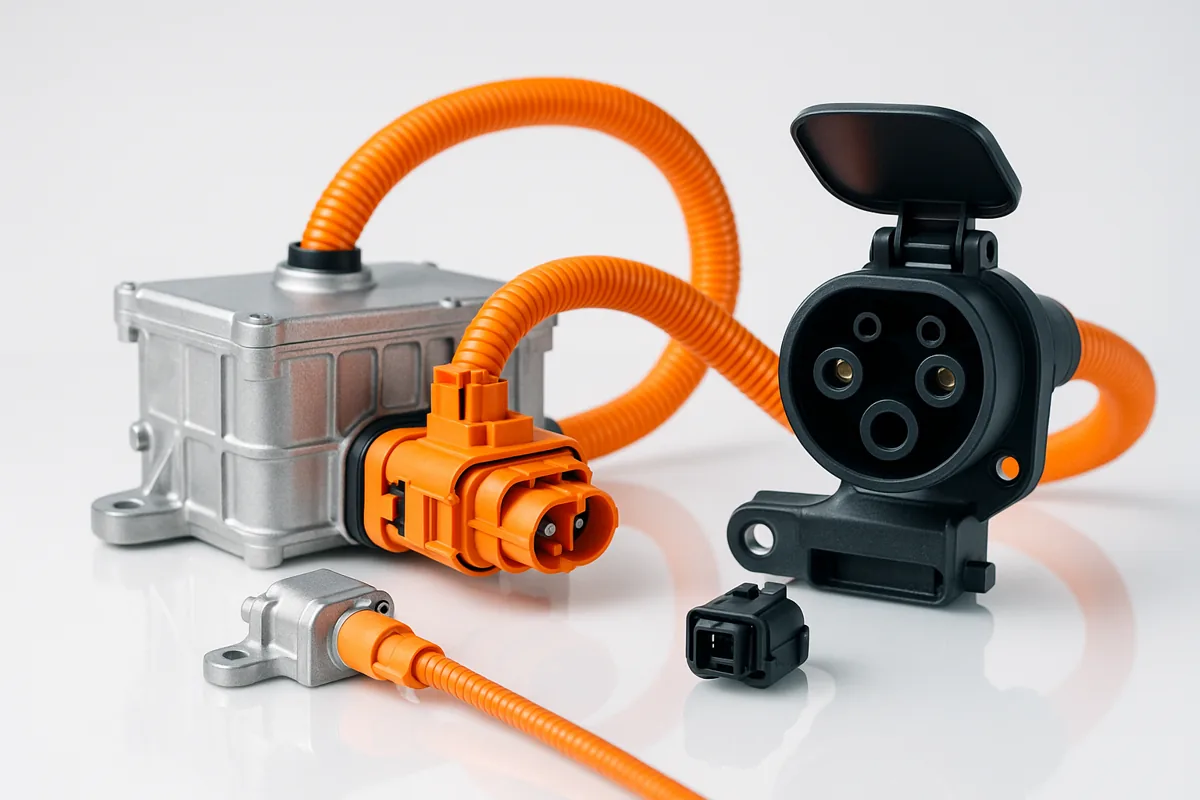
Shop HV Charging & Distribution by Part Type
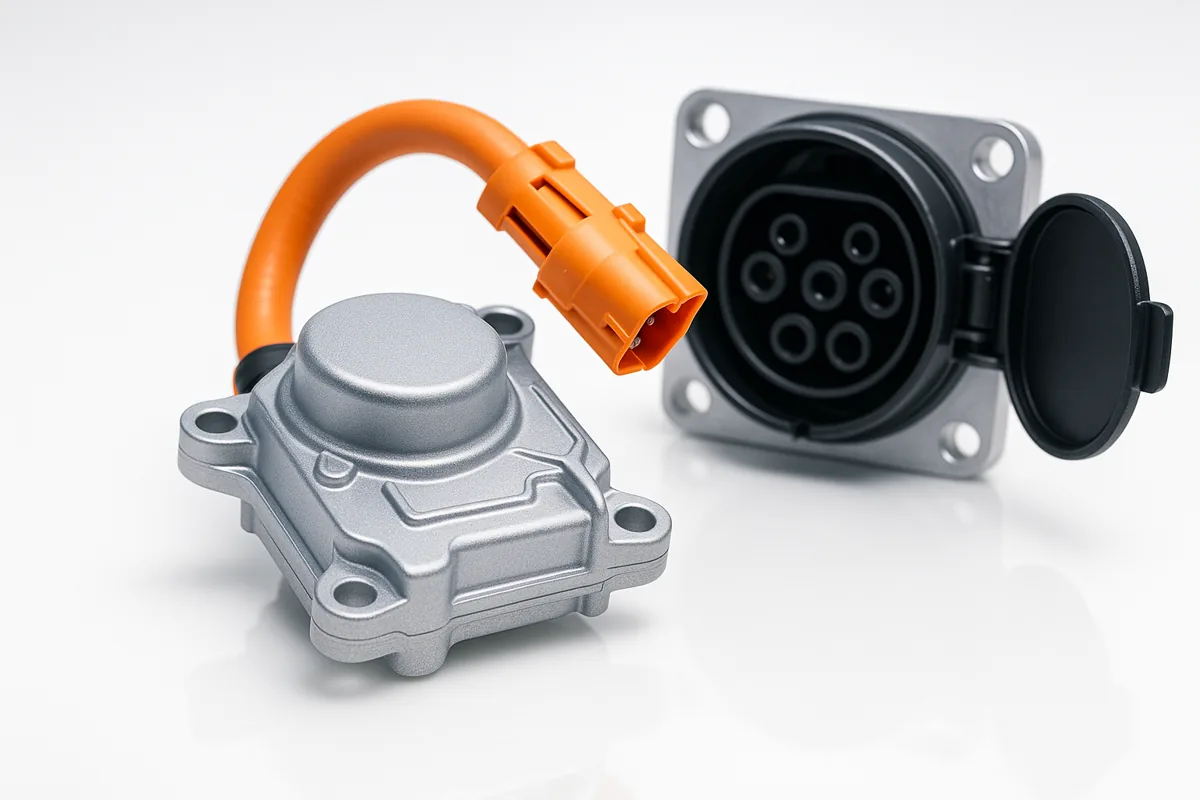
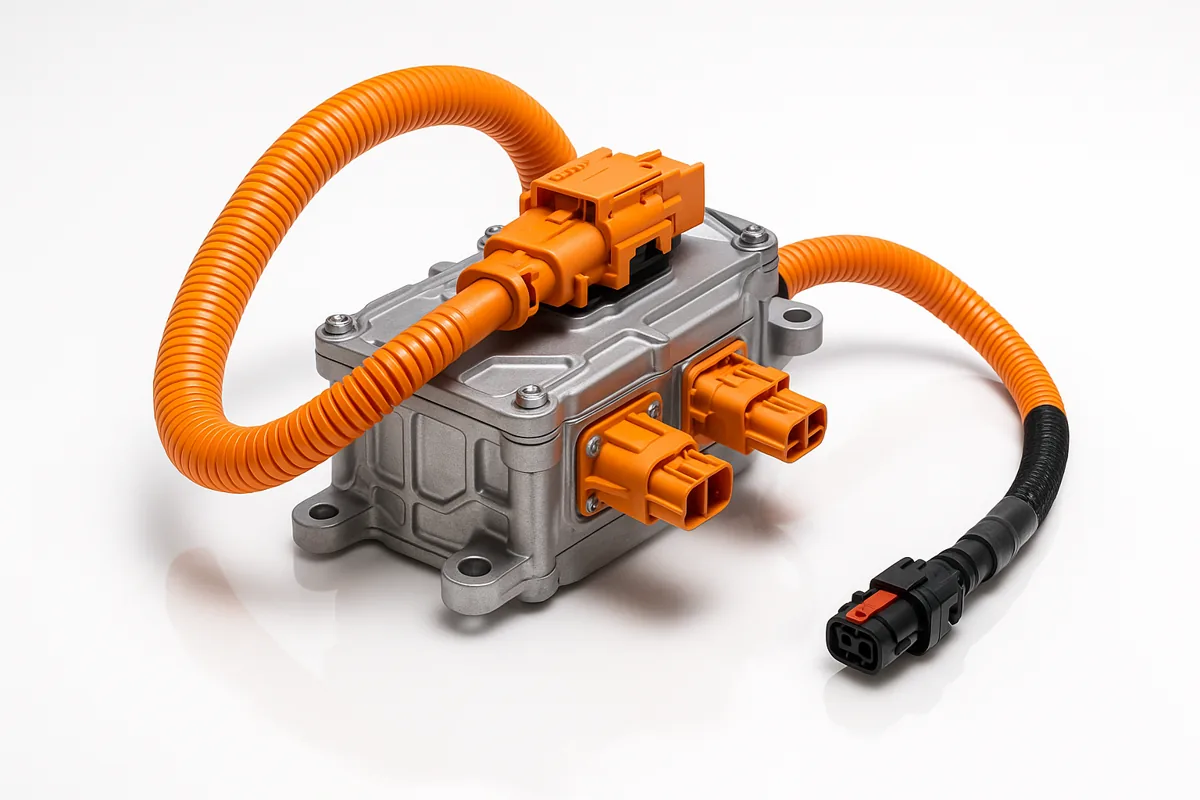
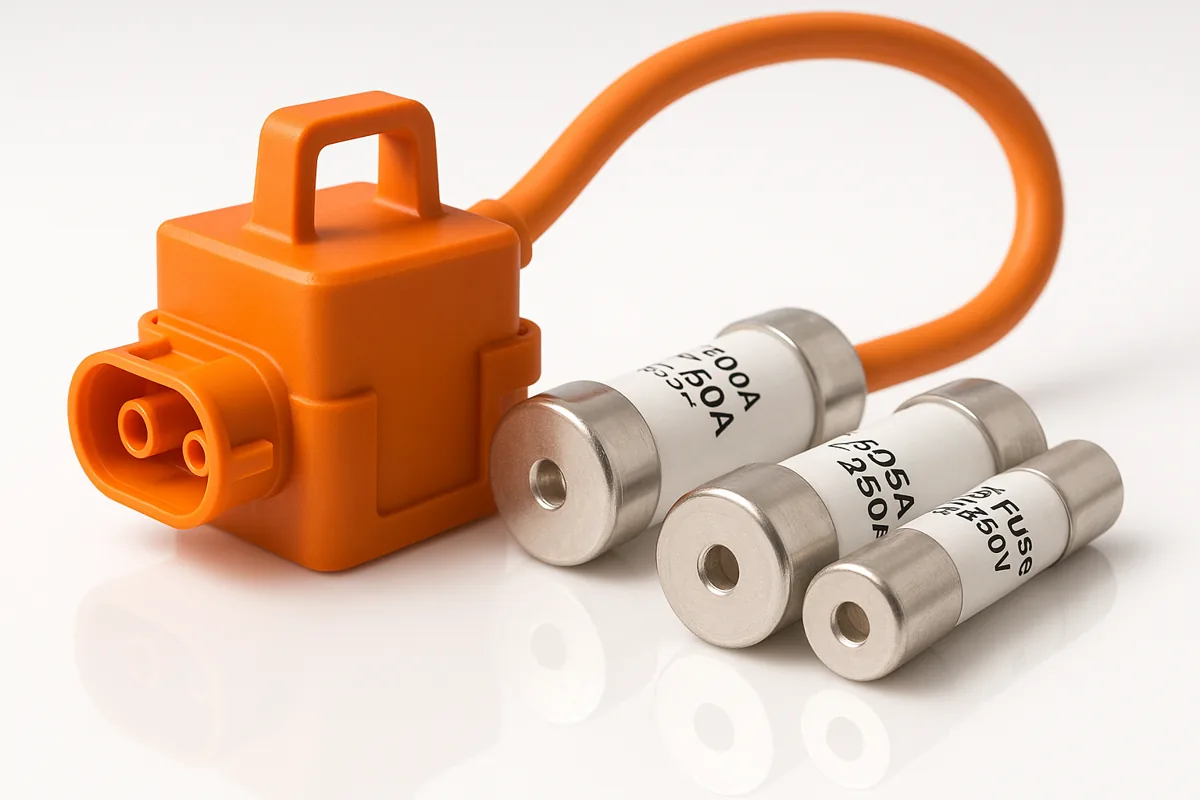
Popular Right Now
scroll for more →
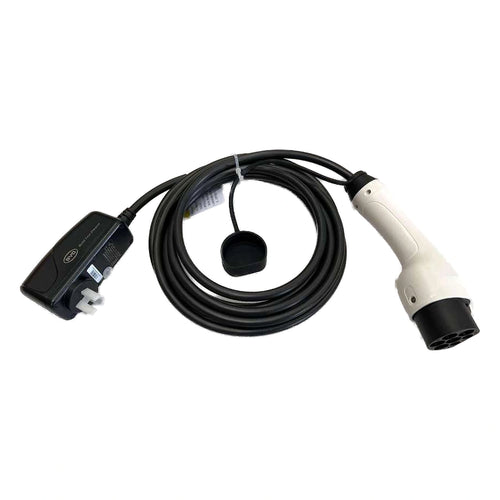
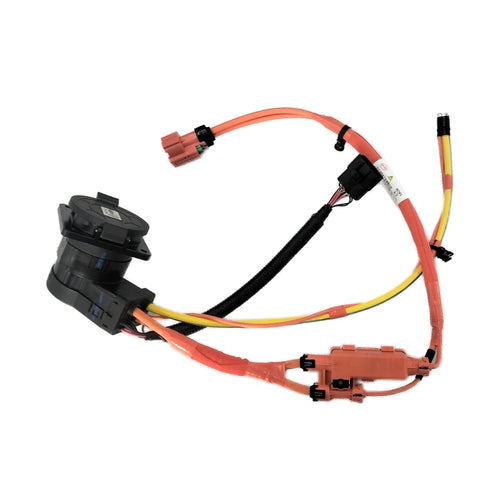
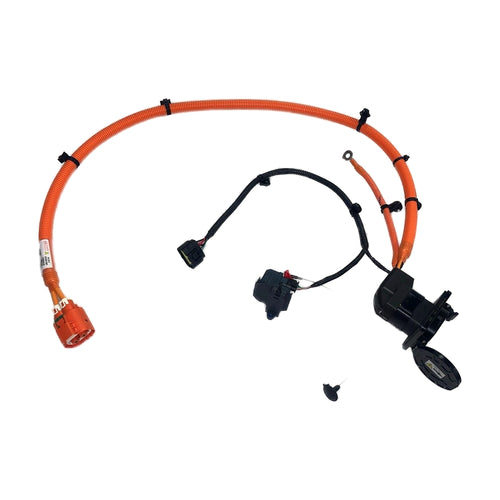
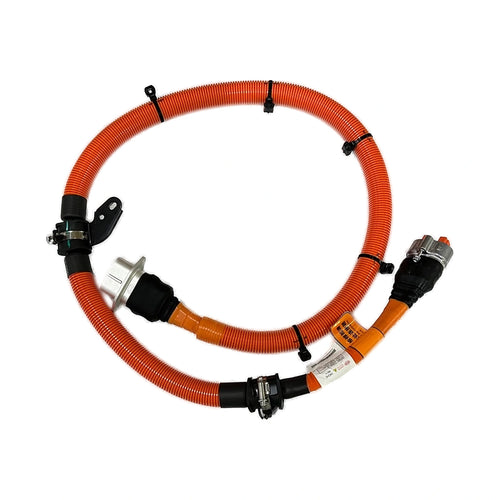
Symptom Finder: What Is Actually Broken?
| What you see or hear | Part to check first |
|---|---|
| Charging never starts and the cable will not lock | Charge port electronic lock |
| Rapid charging fails while home charging works | DC charging path or inlet |
| Home charging fails while rapid charging works | On-board charger |
| Vehicle will not power up with a healthy low voltage supply | Contactor or precharge circuit |
| Insulation resistance fault disabling drive | High-voltage cable or a connector |
About HV Charging & Distribution
Charging and distribution are two halves of the same problem: getting energy into a pack safely and taking it out again to everything that needs it. At the inlet, signalling lines negotiate with the charging equipment before any power flows, and a lock actuator captures the plug so it cannot be pulled free while current is flowing. Alternating current passes through an on board charger that rectifies and regulates it. Direct current charging bypasses that entirely and feeds the pack through its own path. Inside the vehicle, a distribution unit links the pack to the inverter, the compressor, the heater and the converter through busbars, fuses and contactors, with a precharge circuit that brings capacitor voltage up gently before the main contactor closes. Every connector carries an interlock loop so disconnection is detected instantly.
What to know before buying HV Charging & Distribution parts
Treat all of this as high voltage work. The vehicle must be isolated and proved to be at zero volts before anyone starts. Most references here are quoted, so availability and coding requirements can be confirmed first.
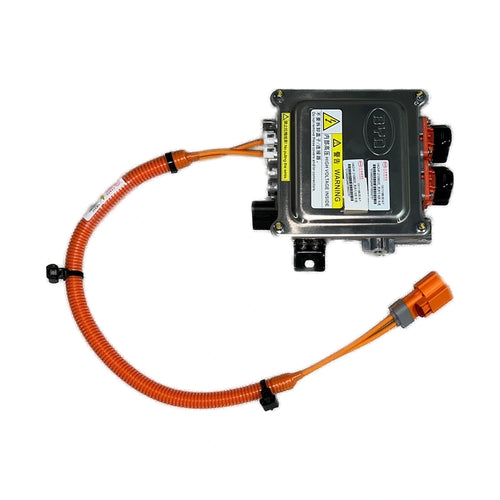
Charge port and lid holds inlets, electronic locks and flap actuators. On board charger holds the units that convert alternating current for the pack. Power distribution unit holds the boxes and combined modules that link everything together.
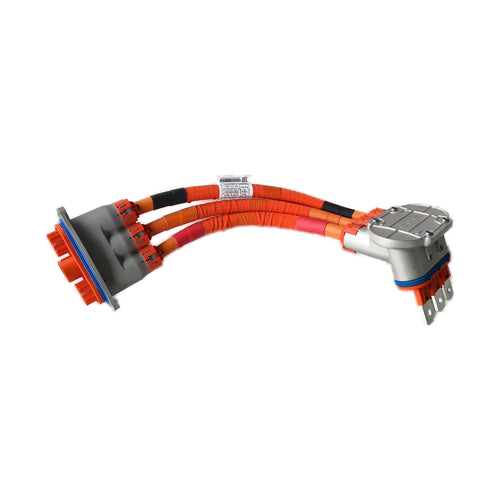
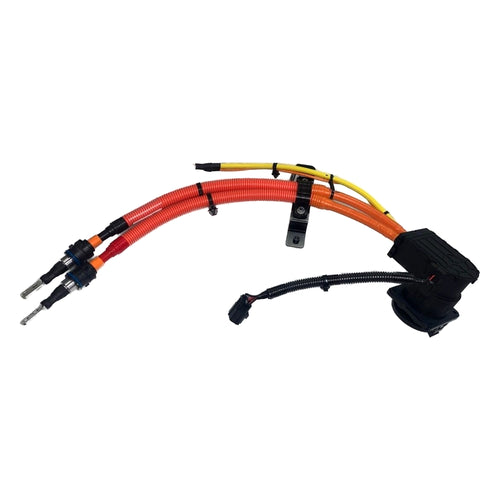
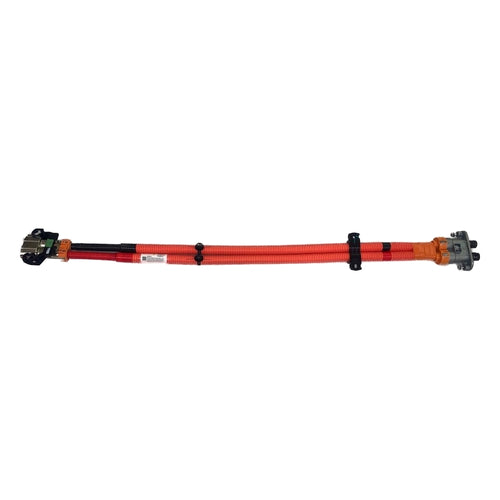
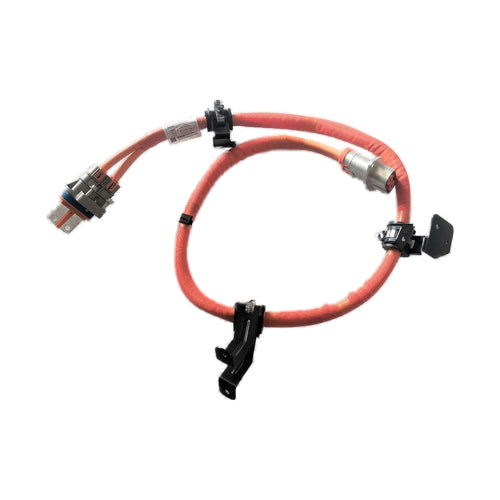
HV cabling and connectors holds the formed harnesses, busbars and conduit clamps. HV fuses and service disconnect holds the rated fuses and the manual disconnect used during isolation.
Before You Order: 5 Checks
- Check the low voltage battery first, since contactors and control units depend on it.
- Test with a different cable and charge point before ordering charging components.
- Match the OE number and the market variant, since charging standards differ by region.
- Never attempt a field repair on a high voltage cable, and never substitute a fuse rating.
- Confirm isolation, verified zero voltage and coding capability before parts are ordered.
What Changed and Why
Pack voltages are rising, with eight hundred volt architectures moving into the mainstream because halving the current for a given power allows thinner cable, less heat and much faster charging. Integration is pulling the other way, with distribution, the converter and the on board charger increasingly combined into one module that removes high voltage connections and is diagnosed at unit level. Bidirectional charging is spreading, so the inlet and the charger now see sessions running in both directions and for longer periods than charging alone ever demanded.
HV Charging & Distribution: Frequently Asked Questions
My car will not charge. Where do I start?
With the cheapest possibilities and the ones outside the vehicle. Try a different cable and a different charge point, since supply and cable faults account for a large share of reports and cost nothing to exclude. Then note which type of charging fails: if rapid works and home charging does not, the fault is on the alternating current path and the on board charger owns it, while a failure that stops both before the session begins usually points at the inlet lock or the communication lines.
Why does the low voltage battery matter to high voltage faults?
Because the contactors that connect the pack are held closed by the twelve volt supply and every controller managing the high voltage system runs on it. A weak auxiliary battery therefore produces a vehicle that will not power up, will not charge and reports faults across several systems, while everything high voltage is perfectly healthy. It is by far the most common cause of the symptoms people attribute to the pack, and it costs nothing to exclude with a load test.
Can a high voltage cable be repaired?
Replace it. An orange cable is not just a conductor with thick insulation: the insulation thickness and material are specified for the working voltage, the braided screen around it has to be continuous and bonded properly at both connectors to keep interference in and to make the interlock work, and the crimps are made with tooling calibrated for the job. A soldered joint and heat shrink reproduces none of that, and the result passes a continuity test while failing everything that matters. Factory assemblies arrive pre formed to the correct route with connectors already fitted.
Why can I not substitute a high voltage fuse?
Because current rating is only one of its parameters. These fuses are also defined by voltage rating, body construction and speed characteristic, and interrupting a direct current fault at several hundred volts is difficult because there is no natural zero crossing to extinguish the arc. A fuse rated for a lower voltage may fail to clear the fault and continue conducting through a plasma arc. Match every parameter, and find out why the original cleared before fitting another.
Is any of this safe to inspect myself?
Visual inspection only. Looking for damaged orange sheathing, missing conduit clamps, corrosion or chafe marks after underbody contact is useful and worth doing. Everything beyond looking requires isolation, verified zero voltage, insulated tooling and correct protective equipment, because inverter capacitors hold charge after shutdown and the pack itself cannot simply be switched off. Report what you find and let a workshop trained for high voltage work take it from there.
The charging cable is stuck in the car. What should I do?
Do not pull hard, because the lock pin is designed to hold against force and the inlet housing will break before it gives. End the session on the charge point or the screen, release the door locks with the key and try again after a few seconds. Pushing the plug firmly inward while releasing can take load off a sticking pin. If nothing moves, suspect a weak twelve volt battery or a failed lock actuator, and use the manual release described in the handbook. A repeat offender usually needs a new actuator, so read the OE number on the old one and enter it in the search box.
Why does charging start and then stop after a few seconds?
A session that begins and then drops usually means one side withdrew permission after the handshake. The charge point checks earth continuity and the pilot signal throughout, and the vehicle monitors inlet temperature, supply voltage and its own charger health. A poor earth at home, a damaged cable, a corroded signal pin in the inlet or an on board charger that faults under load can all produce it. Test on another charge point first. If it follows the car only on alternating current, the charger is the likely cause, so check the OE number on its label and ask a qualified mechanic to confirm.
The inlet pins look brown or melted. Is that serious?
Yes. Discoloured or deformed pins mean a contact has been running hot, usually because a worn plug, a loose pin or dirt raised the resistance at that joint. Heat then oxidises the surfaces further and the problem accelerates. Many inlets carry temperature sensors and the car may cut charging speed or refuse to charge once they trip. Cleaning cannot restore a heat damaged contact, so the inlet assembly needs replacing and the plug that mated with it should be inspected too. Read the OE number from the inlet label and use the search box, with fitting left to a high voltage trained workshop.
What does an insulation or isolation fault warning mean?
The system constantly measures resistance between the high voltage circuits and the car body, which should be very high. When moisture, a chafed cable or a failing component lets it fall, the car warns and may refuse to charge or drive. Faults that appear after rain, washing or deep water often trace to a connector seal or a charge inlet taking in water. Finding the leak means isolating circuits one at a time with an insulation tester, which is workshop work. Once the faulty item is found, check its OE number and use the quote form if it is hard to find, and we reply within 24 hours, usually sooner.
An interlock fault appeared after other work on the car. What causes it?
The interlock is a low current loop threaded through every high voltage connector, and a short pin in each connector breaks the loop before the power pins separate. If any plug is not fully seated or its locking lever is left open after a repair, the loop stays open and the car will not go ready. Bent interlock pins, a cracked connector housing and chafed loop wiring cause the same result. The first step is for the workshop to recheck every connector disturbed during the job. If one is damaged, read the OE number on the cable or component it belongs to and search for that assembly.
What does a precharge fault mean?
Before the main contactor closes, a resistor and a small contactor charge the inverter capacitors gradually, and the controller watches the voltage rise. If it climbs too slowly, stalls part way or never starts, the controller aborts and logs a precharge fault, and the car will not go ready. Causes include a failed precharge resistor or contactor inside the distribution unit, a short in a downstream load such as the heater or compressor, and contactors worn by repeated switching. A workshop can read the voltage profile to tell these apart. If the distribution unit is at fault, take the OE number from its label and search for it.
Does a crash fuse need replacing after an accident?
Often, yes. Many packs and distribution units contain a pyrotechnic disconnect that the crash signal fires in a collision, cutting the high voltage path permanently with a small charge. Once fired it cannot be reset, and the car will not go ready until it is replaced, even when the visible damage is minor. Some systems also need the crash data cleared in the controllers afterwards. After any impact that deployed airbags, ask the repairer to check whether the disconnect has fired, then read the OE number on the unit or on the assembly that contains it and search for that number.
How do I make sure a replacement on board charger is the right one?
Chargers that look identical can differ in power rating, in whether the DC to DC converter is built into the same housing, in the number of phases they accept and in their software. The dependable identifier is the OE number on the label of the unit you are removing. Where the part changed during production, the build date on the identification plate settles which version applies. After fitting, some chargers need configuring with a diagnostic tool before they will charge. Enter the OE number in the search box, or send it through the quote form and we reply within 24 hours, usually sooner.
Why will the charge flap not open or stay shut?
Most powered flaps use a small actuator that pushes the lid open and a latch that holds it closed, both driven from the body controller. Ice, road dirt in the hinge or a broken return spring are common and cheap causes, so clear those first. If you hear no click, suspect the actuator or its connector, and if the lid releases but will not latch, the catch is usually worn. The lid and actuator are often separate parts with their own numbers. Read the OE number from the part you intend to replace and use the search box.