Body, Glass & Interior
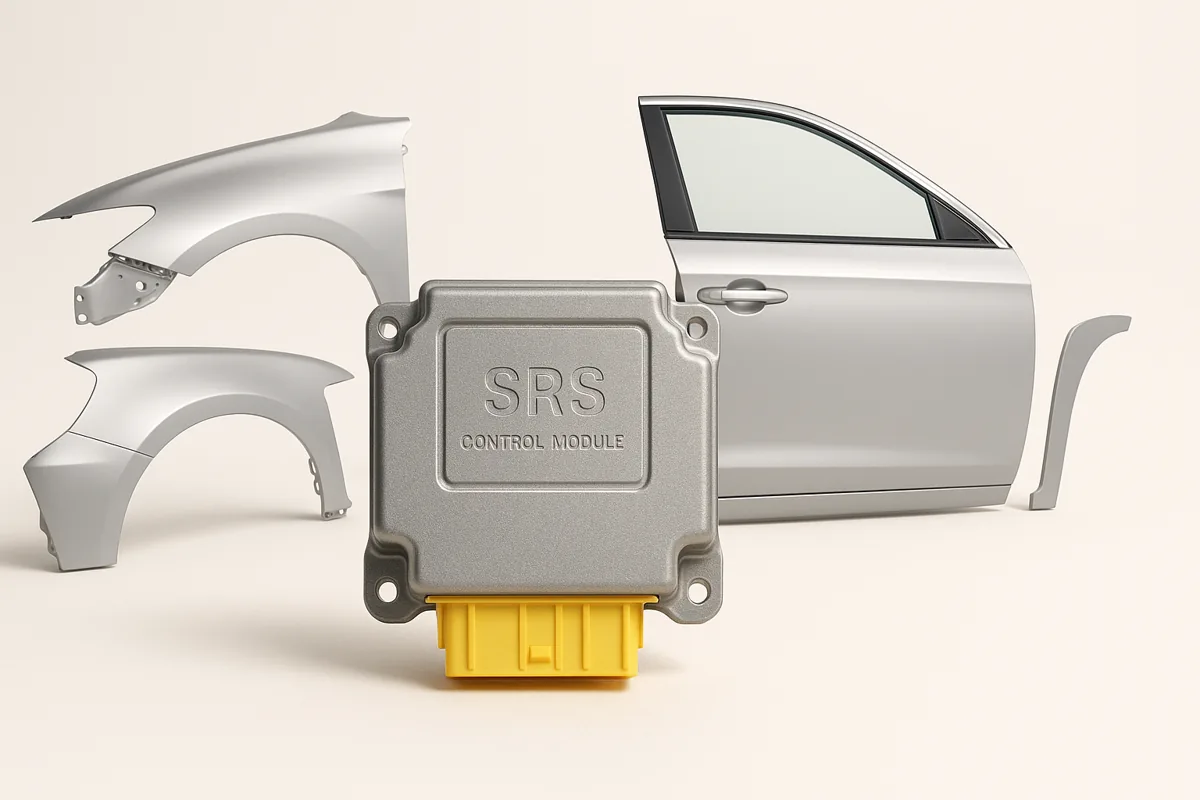
Shop Body, Glass & Interior by Part Type
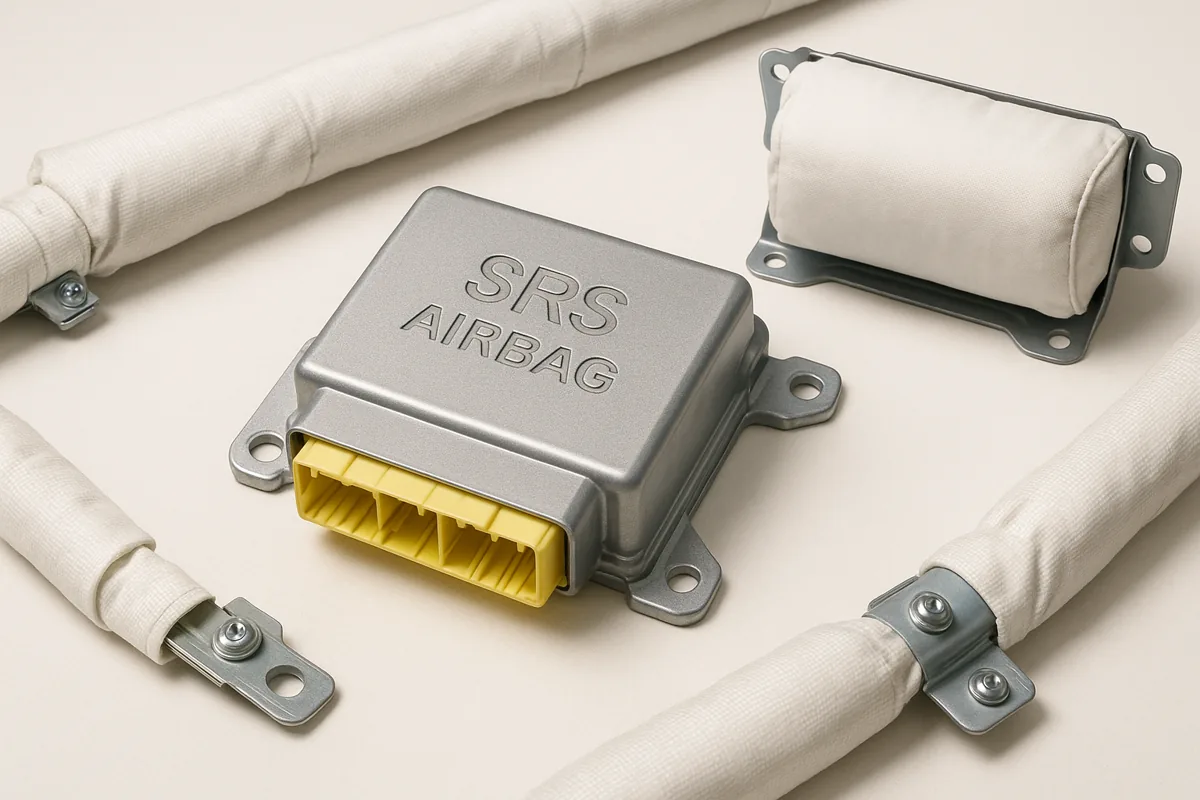
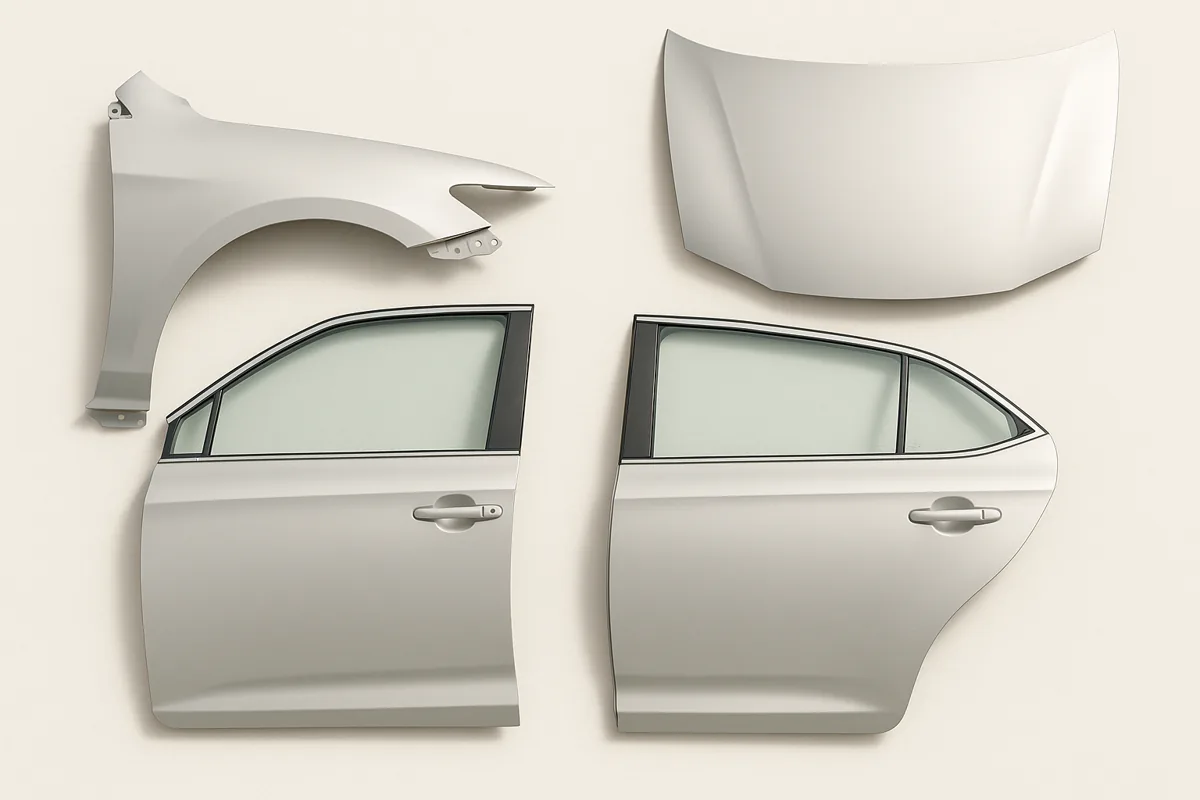
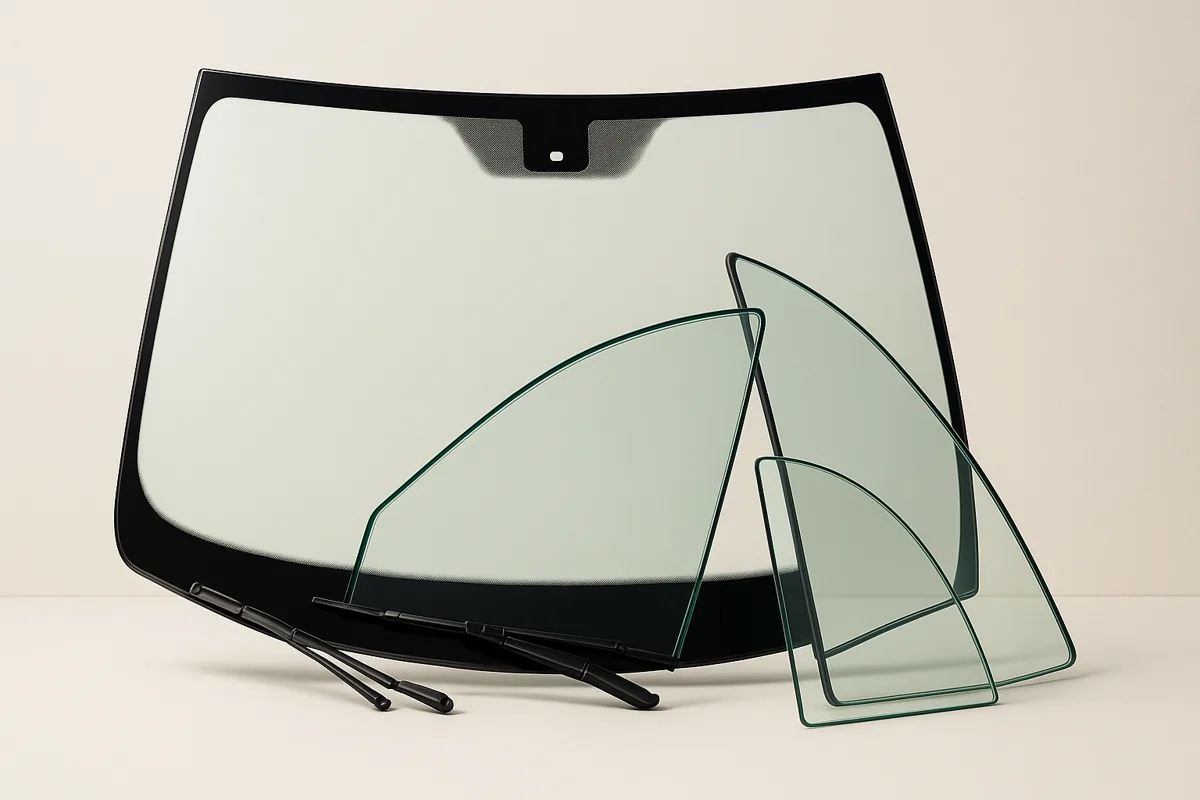
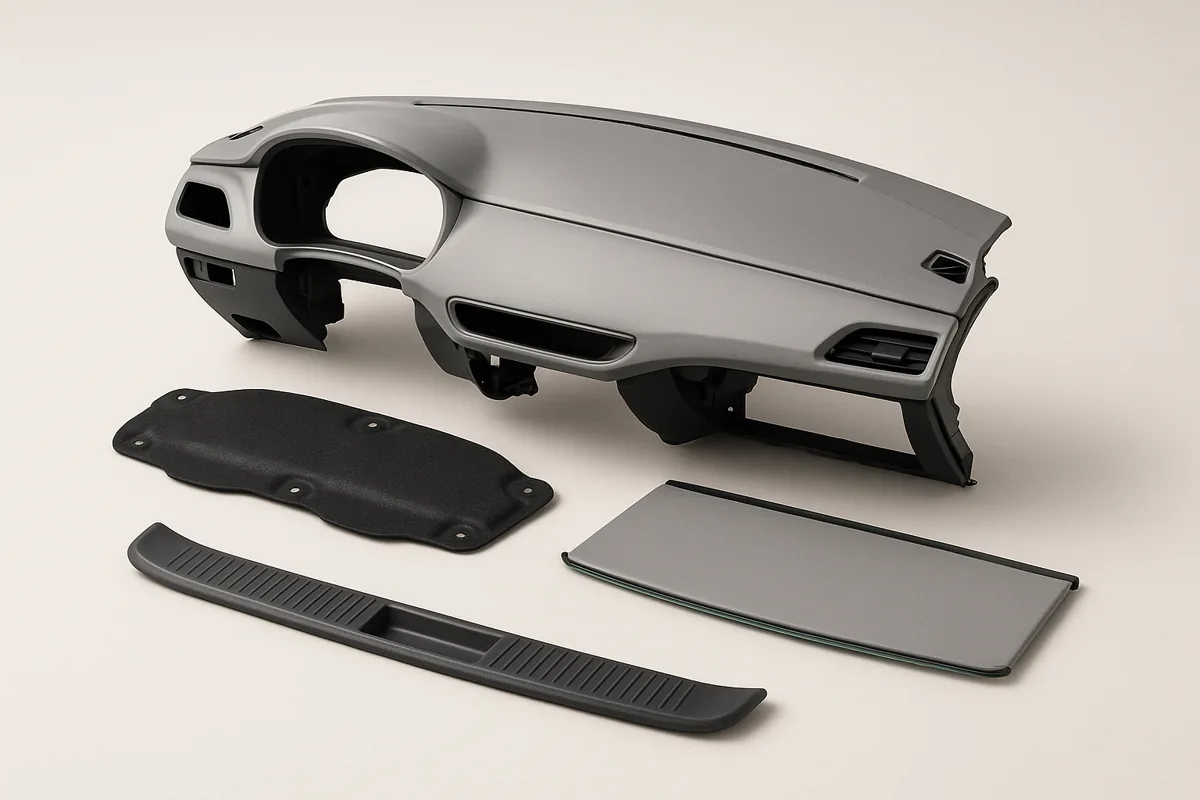
Popular Right Now
scroll for more →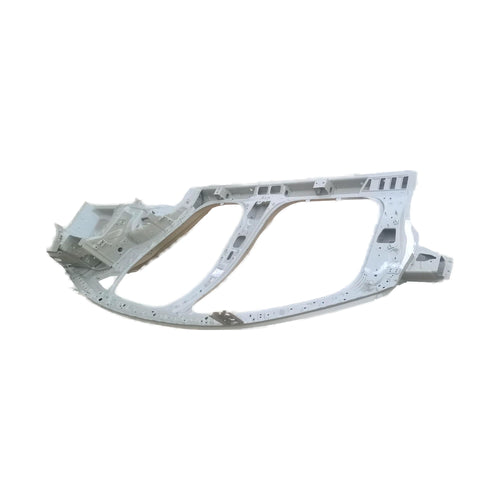
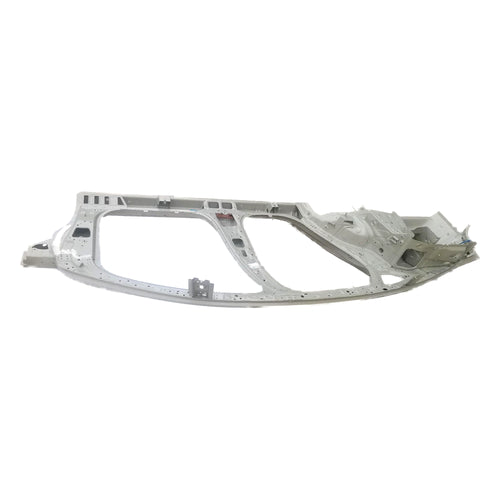
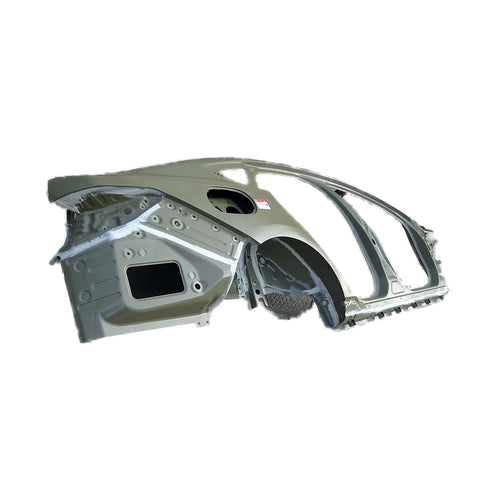
Symptom Finder: What Is Actually Broken?
| What you see or hear | Part to check first |
|---|---|
| Airbag warning lamp lit | Restraint sensor, clock spring or control unit |
| Panel gaps uneven after an impact | Structural section requiring measurement |
| Wind noise appearing at motorway speed | Aperture weatherstrip or glass run channel |
| Trim panel rattling after being refitted | Trim clips |
| Window falling into the door | Window regulator |
About Body, Glass & Interior
This is the part of a vehicle people interact with constantly and think about only when something breaks. It divides into four quite different disciplines. Restraint hardware is safety equipment governed by regulation, monitored continuously and largely single use once deployed. The exterior spans a welded structure that folds in a designed sequence during an impact, a bolt on layer of panels that absorbs most low speed damage, and a detail layer of trims, mirrors and fittings that supplies most of the actual orders. Glass has become structural at the front and a sensor mount besides. The cabin is hundreds of separate mouldings, several of which are doing safety work behind their finish. What ties all of it together is that fit is decided by factory reference rather than by appearance.
What to know before buying Body, Glass & Interior parts
Match the OE number before you order anything from this group. Facelifts and option content change parts that look identical from the outside. On anything visible inside the cabin, match the interior colour name as well.
The group splits into airbags, seat belts and safety, which covers the restraint system. Body and exterior covers panels, doors, bumpers, mirrors and the underbody guards. Glass and wipers covers screens, seals, regulators and the wiper system. Interior and trim covers seats, dashboard, trim panels, headliners and insulation.
Where a reference shows a price, you can order it straight from the listing. Where it does not, ask us and we will quote you. Our cover across the BYD group is the strongest.
Before You Order: 5 Checks
- Match the OE number rather than the model and year, since facelifts changed parts invisibly.
- Match interior colour names on anything visible in the cabin.
- Order a clip and fastener set with every panel, inside or out.
- Isolate the twelve volt supply before working near any airbag.
- Expect exterior panels to arrive primed and require painting to your colour code.
What Changed and Why
Construction has become mixed material and correspondingly more prescriptive. Hot formed steels in sills and pillars cannot be heated or straightened, aluminium has spread into bonnets and tailgates, and manufacturers publish sectioning points and joining methods that insurers audit against. Glass has become a sensor platform requiring calibration after replacement. Inside, acoustic specification has risen because a quiet cabin is one of the clearest advantages of an electric drivetrain, and ambient lighting has turned simple mouldings into electrical components.
Body, Glass & Interior: Frequently Asked Questions
Why does the OE number matter so much in this group?
Because this group covers three families of parts that all vary invisibly. Body panels change with a facelift that never reached the brochure. Glass differs by tint, by heating, by acoustic layer and by whether a camera bracket is bonded to it. Interior parts exist in every colour the factory offered. A photograph resolves none of that, and neither does a model name with a year against it. Take the reference from the old part and the guesswork disappears along with most of the returns.
Which parts here are safety related?
More than most people expect. Everything in the restraint category, obviously, but also the dashboard upper panel that the passenger airbag opens, the pillar trims covering curtain airbags, the seats carrying side airbags and belt anchorages, the windscreen that supports airbag deployment and roof crush resistance, and the welded structure that folds in a designed sequence. All of those are matched by factory reference and none should be repaired with filler, general purpose clips or improvised fixings.
Do exterior panels arrive painted?
No, they come in primer, which is the industry norm and works in your favour. A factory paint line matches a colour code under controlled conditions. A warehouse cannot hold every shade of every model and would supply something close rather than right. So the panel arrives grey and your body shop sprays it to the code on the vehicle plate, blending into the panels either side so the repair does not announce itself. Unpainted textured items are the exception. Arch liners, lower valances and black trim strips are fitted straight from the box.
How much of this can I do myself?
A surprising amount. Bumper covers, arch liners, mirrors, badges, trims, lamps, weatherstrips and door glass are within reach with trim tools, a fresh clip set and patience. Doors, wings and tailgates are heavier and need careful alignment and paint. Anything welded belongs in a body shop with measuring equipment, and anything near an airbag needs the twelve volt supply isolated first. The dividing line is usually whether the part bolts or clips on rather than how large it is.
What should I check after a collision before ordering?
Have the shell measured on a bench against factory data before ordering any panel. Uneven door and bonnet gaps, a steering wheel that sits off centre while the car tracks straight and wind noise that appeared after the impact all suggest the structure moved, and the measurement tells you which section is genuinely out rather than which merely looks damaged. Ordering panels before that report is how repairs end up needing a second parts order.
Will a new windscreen need the camera recalibrating?
Almost always, if the car has a forward camera behind the glass. The camera reads lanes, signs and vehicles through the screen. A new screen changes its view, and a fraction of a degree of misalignment becomes a large error further down the road. Calibration is either static, with a target board set in front of the car in a workshop, or dynamic, driven at set speeds on well marked roads. Some vehicles need both. Order the screen by the OE number, which already accounts for the camera bracket and heating, and book calibration with a qualified glass fitter or mechanic at the same time.
Can a seat belt be reused after a crash?
Not if the pretensioner fired. Modern belts use a small pyrotechnic charge that snaps the webbing tight in the first moments of an impact, and it works once. A belt that stays locked or will not retract has almost certainly deployed and must be replaced as an assembly, along with any buckle pretensioner on that seat. Webbing that carried crash loads can also be stretched even where nothing fired. Read the OE number from the label on the retractor or the webbing tag and search it. Then have a qualified mechanic fit the belt and clear the fault from the airbag control unit.
Why is the airbag light on after I removed a seat or some trim?
Usually because a connector was disturbed. Front seats carry side airbags, buckle sensors and often an occupant sensor, all wired through plugs beneath the cushion that dislodge easily. Steering wheel work involves the clock spring, the coiled ribbon cable that keeps the driver airbag connected while the wheel turns. The control unit stores a fault and keeps the light on until it is read and cleared with a diagnostic tool. With the battery disconnected, check each plug is fully latched. If a clock spring or sensor has genuinely failed, search the OE number from its label and have a qualified mechanic clear the code.
How do I know which mirror glass I need?
Look at the glass and its back plate. Heated glass has an element bonded behind it and electrical terminals on the plate, and some show a small heater symbol on the face. Beyond heating, glass varies by side, by flat, convex or aspheric curvature, by auto dimming and by whether a blind spot warning lamp is built in. Fitting unheated glass to a heated mirror leaves live wires loose inside the housing. The OE number is usually moulded or printed on the back plate, so unclip the old glass carefully, read the number and enter it in the search box.
Should I reuse the trim clips when I remove a panel?
Replace the plastic ones as a matter of course. Many are designed for a single fitting, and a clip that has been levered out loses grip, which is the usual reason a refitted door card rattles or sits proud. Undamaged metal clips can generally go back. Clips differ by head size, stem length and panel thickness, so a general purpose assortment rarely holds as the original did. On pillar trims covering curtain airbags, the correct clip and tether matter for deployment. Search the OE number of the trim panel to find its matching clips, or ask through the quote form. We reply within 24 hours, usually sooner.
Water is getting into the footwell. Which part do I need?
Find the source before ordering, because several parts cause the same puddle. A torn or unstuck membrane behind the door card lets rain that runs inside the door reach the carpet, and staining along the bottom of the card gives it away. A hardened or split door weatherstrip leaks along the sill. Blocked sunroof or scuttle drains overflow down the pillars, and a failed windscreen bond shows at the upper corners. Clear the drains first, since that needs no parts at all. Then read the OE number on the failed seal or membrane and search it, or ask a qualified mechanic to smoke test the cabin.
My wipers judder. Do I need new blades or new arms?
Start with the blades. Rubber hardens and takes a set after heat, frost or long periods parked, and a bent edge chatters instead of flipping over at each change of direction. If new blades still judder, look at the arm. A weak spring presses the blade too lightly, and a twisted arm presents it at the wrong angle, so even fresh rubber skips. Wax or polish residue on the glass causes the same symptoms, so clean the screen first. Blades differ by length, connector and whether a washer jet is built in, so read the OE number on the old blade or arm and enter it in the search box.
What needs replacing after an airbag has deployed?
More than the airbag itself. The fired module is single use, and depending on the vehicle the job can also include the seat belt pretensioners, the clock spring, the dashboard upper panel or pillar trims the bag burst through, the headlining where curtain bags fired, and the impact sensors. The control unit stores crash data, and on many vehicles it must be reset or replaced before the system will arm again. Second hand modules of unknown history are best avoided. Collect the OE numbers from the labels on each affected part and send them through the quote form. We reply within 24 hours, usually sooner.
Where do I find the OE number on glass, trim and panels?
It depends on the part. Glass carries a printed mark in one lower corner, and the factory reference is often within it or on a small label nearby. Plastic trims, arch liners and bumper covers have the number moulded into the back face, often beside the material code. Mirrors, lamps and belt retractors carry a printed label. Steel panels such as wings and doors may have a sticker inside a flange or nothing at all. Photograph the number clearly and enter it in the search box. Where none can be found, send photos and the build date from the identification plate through the quote form. We reply within 24 hours, usually sooner.