Fluids & Chemicals
Shop Fluids & Chemicals by Part Type
Popular Right Now
scroll for more →
Symptom Finder: What Is Actually Broken?
| What you see or hear | Part to check first |
|---|---|
| Brake pedal going soft after sustained braking | Brake fluid past its useful life |
| Blocked passages after topping up with a different product | Coolant of an incompatible chemistry |
| Insulation resistance fault after a fluid change | Fluid of the wrong electrical specification |
| Coolant discoloured or containing debris | Coolant with depleted inhibitors |
| Freezing damage after a cold spell | Coolant mixed below its rated concentration |
About Fluids & Chemicals
What matters in a fluid is its chemistry, not the colour it happens to be or the number on the front of the container. Brake fluid deliberately draws moisture out of the air, holding it in suspension so that water never collects in one place and eats a bore from within, and the price of that behaviour is a boiling point which falls a little every year. Coolant lowers the freezing point, raises the boiling point and carries corrosion inhibitors protecting a circuit built from several dissimilar metals, and it is the inhibitor chemistry that makes one coolant incompatible with another. Gear oil relies on additives forming a protective layer on tooth flanks under boundary conditions. Electrification added a further demand: fluids near or inside high voltage components must also behave electrically.
What to know before buying Fluids & Chemicals parts
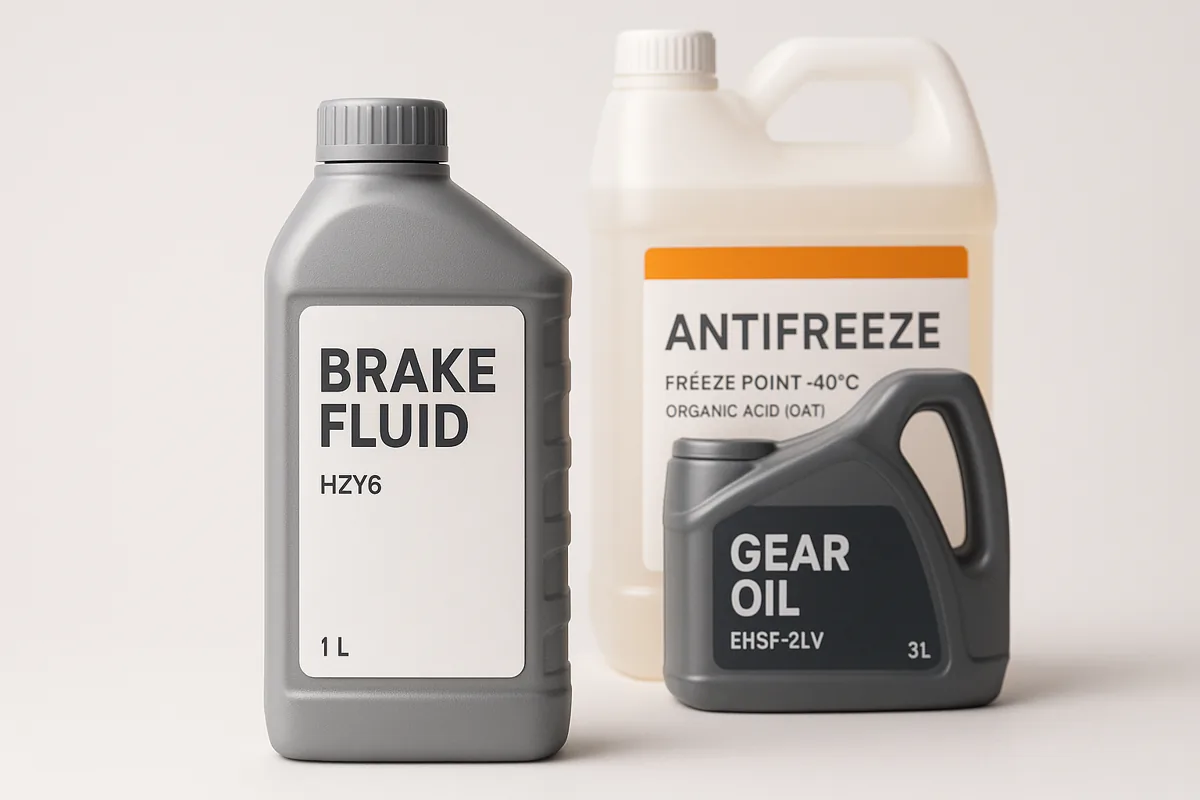
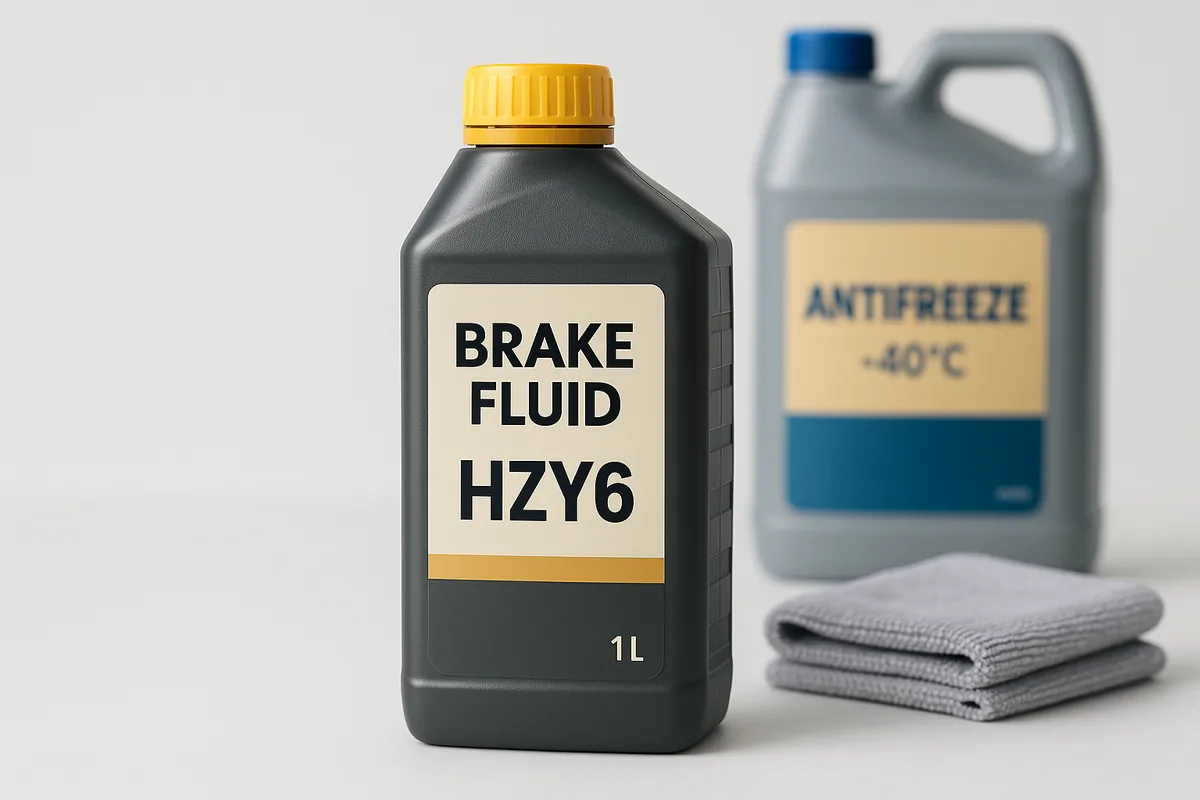
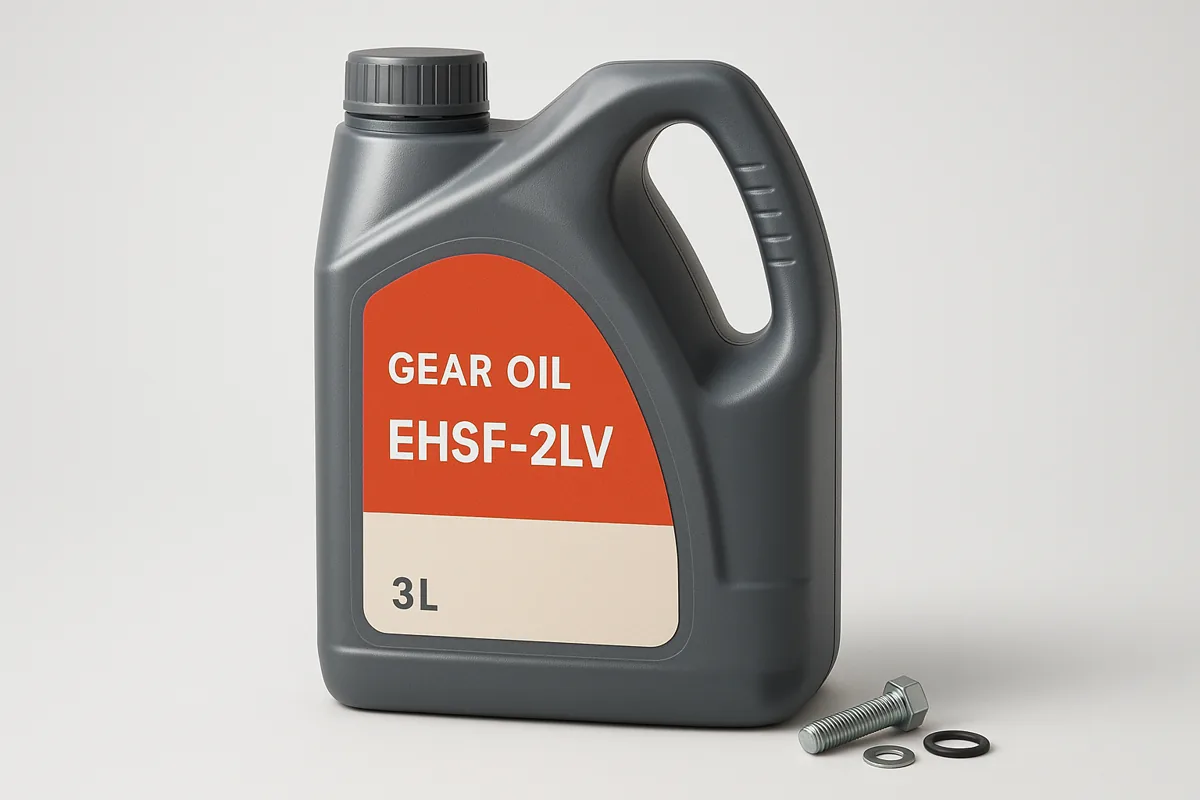
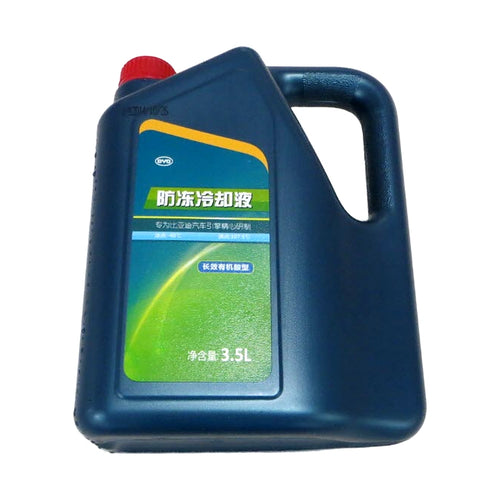
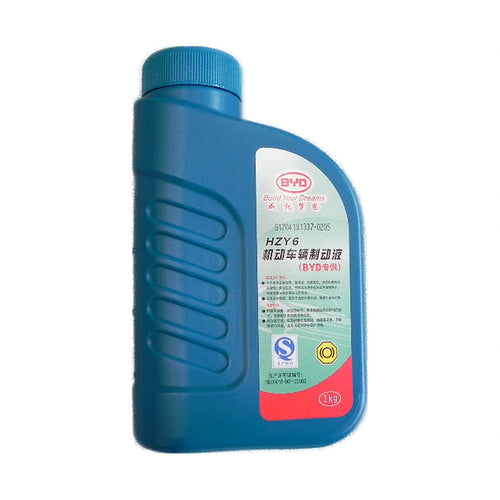
Order by the factory reference rather than by a general grade. Brake, coolant and hydraulic fluid holds brake fluid and organic acid technology antifreeze, and compatibility governs both. Lubricants and greases holds the factory specification gear oil for drive units and transmissions, supplied in drum quantity.
Buy the amount the job needs plus a margin. A full bleed or fill uses more than the nominal capacity. Use freshly opened containers, and never mix specifications, because a similar figure on the label rarely means a similar product.
Before You Order: 5 Checks
- Order by factory specification rather than by grade or colour.
- Never mix coolant chemistries, even for an emergency top up.
- Buy enough for the job plus a margin, since bleeding and filling use more than the capacity.
- Use freshly opened containers, particularly for brake fluid.
- Dispose of used fluid through a proper waste route rather than a drain.
What Changed and Why
Specifications have tightened as systems have become more precise. Brake by wire units contain fine valve clearances and a high pressure pump that tolerate moisture laden fluid poorly, so change intervals are enforced rather than suggested. Coolant loops passing near high voltage components require low conductivity products, and fluids sharing a housing with an electric machine must be compatible with winding insulation. Viscosities have thinned across the board to reduce drag, which places more weight on the additive package doing the protecting rather than on film thickness.
Fluids & Chemicals: Frequently Asked Questions
Why does brake fluid have a service life?
Because it absorbs moisture from the air by design, so that water stays dispersed rather than pooling at low points and corroding the system from inside. The cost of that property is a boiling point that falls steadily as the fluid ages, and boiled fluid forms vapour, which compresses where liquid does not. The consequence appears exactly when you least want it, as a pedal that goes long or soft after repeated heavy braking. Change intervals are stated in years rather than mileage for that reason.
Can I mix coolant types?
Treat it as a rule you do not break. The base fluid in two coolants may be identical while the additive packages are chemically opposed, and when those meet they can react and form a gel or a fine solid that settles wherever the passages narrow. That means the heater core, the radiator tubes and, on an electric car, the cooling plate. The car then overheats for reasons no amount of fresh coolant will fix. Where the service history is unknown, pay for a proper flush and refill with the specified product instead of guessing.
Why can I not use a general gear oil of the right viscosity?
Because viscosity is the least demanding part of the specification. The additive package determines how the oil protects tooth flanks under boundary conditions, how it behaves with friction materials, and whether it is compatible with the seals. Where the oil shares a housing with an electric machine, it also has to be dielectric and compatible with winding insulation, and a product that lubricates perfectly can still lower insulation resistance and set a high voltage fault.
How much should I buy?
Decide by asking two questions: what does the procedure consume, and how is the fill defined. Some units are filled to a level plug at a stated temperature, so the quantity varies with how well the old fluid drained. Others take a nominal charge that the handbook states exactly. Brake fluid is consumed rather than measured, since bleeding continues until the fluid runs clean. Coolant supplied as concentrate needs the right water and the right ratio, so order enough of both. Buying slightly over is the cheap option. Running short halfway through is not.
How should used fluid be disposed of?
Through a proper waste route, never down a drain or onto the ground. Brake fluid, coolant and gear oil are all harmful and are regulated wastes in most jurisdictions, and coolant in particular is dangerous to animals if ingested. Local authority waste sites and garages generally accept them. Keep used fluid in a sealed labelled container in the meantime rather than an unmarked bottle, and clean up spills promptly.
Can DOT 4 and DOT 5.1 brake fluid be mixed?
Both are glycol based, so they mix without harming the seals. The blend is only as good as the weaker fluid, though, and the car was tested on one particular grade. Silicone based DOT 5 is a different matter. It does not mix with glycol fluids, it separates out, and it lets water collect in pockets, which is exactly what brake fluid is meant to prevent. Some systems also call for a low viscosity grade so the stability control pump can move fluid quickly in the cold. Match the grade printed on the reservoir cap, then search our listings for that specification.
How can I tell whether my brake fluid needs changing?
Colour tells you little. Fresh fluid darkens quickly, and dark fluid can still be fine. What matters is how much water it holds, because water lowers the boiling point. Pen testers that dip into the reservoir give a rough reading, but they only sample the top layer, which is the freshest fluid in the system. A garage tester that heats a sample and measures its actual boiling point is far more reliable. If you do not know when the fluid was last changed, treat it as due. Ask a qualified mechanic to test it, then use the search box to find the correct grade.
Why does an electric car need a special coolant?
Coolant in a battery or power electronics circuit runs very close to high voltage parts, often through a cooling plate beneath the cells. Conventional coolant conducts electricity, so a small internal leak could give current a path to follow. Coolants for these circuits use deionised water and low ion inhibitors to keep conductivity very low. Topping up with tap water or a conventional product ruins that property. Some cars also run separate circuits that take different fluids. Match the OE number on the original container, or ask through the quote form and we reply within 24 hours, usually sooner.
Does the gear oil in an electric drive unit ever need changing?
Usually less often than in a petrol car, but rarely never. The oil still carries fine wear metal from the gears and bearings, and repeated heating slowly breaks down its additives. Many handbooks ask for an inspection at set intervals and a change later on, with shorter intervals for towing or hard use. Dark or metallic oil at the drain plug, or a whine that rises with road speed, points to wear worth investigating. The drain plug is often magnetic, and its washer is usually single use. Check the schedule in the handbook, then order oil by the OE number on the original container.
What does milky or cloudy fluid mean?
Cloudiness almost always means something has got into the fluid. In gear oil it usually means water, drawn in through a breather after washing or wading or through a failed seal, and water stops the oil protecting the gear teeth. In coolant, a brown or creamy sludge suggests two incompatible coolants have reacted. On a car with an engine it can also mean oil crossing over from a failed seal or cooler. Fresh fluid alone will not fix either problem, because the cause is still there. Have a qualified mechanic find the source before you refill with the specified product.
What should I do if brake fluid gets on the paintwork?
Act at once. Glycol brake fluid is a solvent that softens paint and lacquer within minutes, and it attacks some plastics too. Do not wipe it, because wiping spreads the damage across the panel. Flood the area with plenty of clean water, then wash it with car shampoo. Before you bleed the brakes, cover the wing and any painted surface below the reservoir with cloths, and keep a bottle of water to hand. Protect your eyes and skin as well, since the fluid irritates both. Then order fresh sealed fluid to the grade printed on the reservoir cap.
How long does fluid keep once the container is opened?
Brake fluid starts absorbing moisture as soon as the seal is broken, so a half used bottle left on a shelf for months no longer counts as fresh. Buy a size you will use in one job, and keep the cap tight in between. Coolant and gear oil are more tolerant, but they still degrade if left open, if dirt gets in, or if they are stored somewhere very hot or freezing. Check the batch code, and never decant fluid into unmarked bottles. If an old container has lost its markings, search the OE number on its label to confirm what it held.
Which grease should I use on brake caliper slide pins?
Only a grease made for that job. These are typically silicone or synthetic based and safe with the rubber boots. Mineral grease and general purpose lithium grease make the boots swell and soften, and the pins then stick. The result is uneven pad wear and a brake that drags or pulls to one side. Copper grease should not touch any of the rubber parts. Apply only a thin film, because excess grease collects dust and grit. Find the lubricant OE number in the service literature or on the original tube, then search for it here.
What is dielectric grease for, and does it conduct electricity?
It is an insulator, not a conductor. It seals connectors and bulb holders against moisture and corrosion. It belongs on the seal and around the terminals, not packed between the contact faces, where the pins push through it anyway. It does not replace a specified contact grease or a thermal compound on high voltage parts, which do a different job with different chemistry. Use the product the service literature names for that connector. Check the OE number on the original tube, and ask a qualified mechanic whenever high voltage parts are involved.
Why is my coolant level dropping with no visible leak?
The level drops a little after a refill as trapped air works its way out. Electric pumps often need a bleed routine run from a diagnostic tool before the system is truly full. Loss that keeps going is a different matter. Coolant can escape as vapour from a weeping hose clamp and evaporate before it drips, leaving a white or crusty trace. It can also leak into the cabin through the heater core, which fogs the windscreen, or into an internal component. Always check the level with the system cold. If it keeps falling, have a qualified mechanic pressure test the system before you top up.