TPMS & Valves
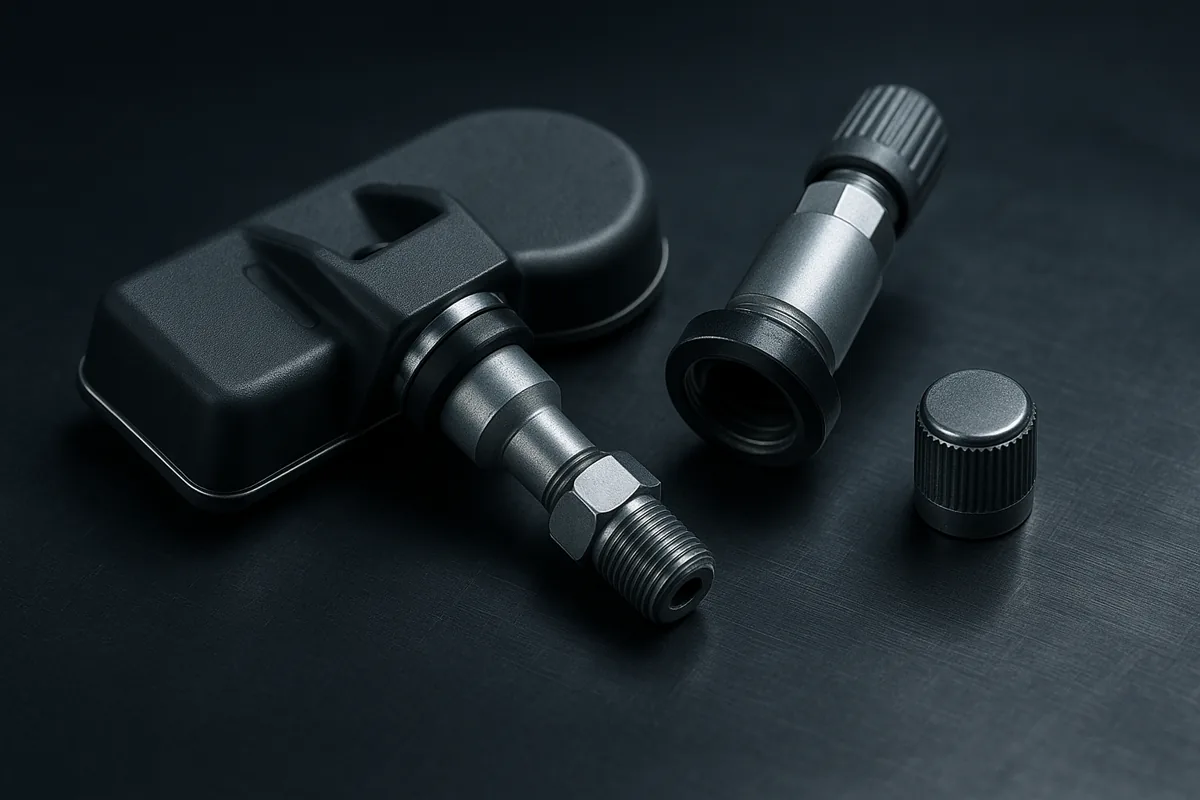
Shop TPMS & Valves by Part Type
Popular Right Now
scroll for more →
Symptom Finder: What Is Actually Broken?
| What you see or hear | Part to check first |
|---|---|
| Warning lamp lit with all four tyres at correct pressure | Tyre pressure monitoring module with an expired battery |
| One corner reporting no pressure reading at all | Tyre pressure monitoring module |
| System fault after a seasonal wheel change | Relearn required rather than a part |
| Slow deflation traced to the valve rather than the tyre | Valve stem seal and cap |
| Corroded metal valve stem snapping at the nut | Tyre pressure monitoring module with valve stem |
| Missing or seized valve cap letting grit into the core | Valve stem cap |
About TPMS & Valves
Tyre pressure monitoring became mandatory on new passenger cars in the European Union and the United Kingdom because underinflation is one of the most common and most consequential faults on the road, costing grip, fuel or range, and tyre life all at once. Two approaches exist. Direct systems put a battery powered sensor inside each wheel, usually built into the valve stem, measuring actual pressure and temperature and transmitting by radio to a receiver in the car. Indirect systems infer pressure from wheel speed data, since an underinflated tyre has a slightly smaller rolling radius and turns marginally faster. Direct systems are more accurate and tell you which corner is low. They also carry a sealed battery that lasts several years and then requires the sensor to be replaced. Every direct system needs to know which sensor sits at which corner, which is why a relearn follows any sensor change or wheel swap.
What to know before buying TPMS & Valves parts
Order the sensor by its OE number rather than by a generic specification. Radio protocol, frequency and the way the vehicle identifies each sensor all follow the manufacturer. This is a deliberately small category. It holds tyre pressure monitoring modules and Type A valve stem caps. Those are the two things owners actually replace. A sensor fails when its battery expires or its stem corrodes, and the caps keep water and grit out of the valve core.
Fit the module with a new seal and grommet where the design uses them. Torque the stem nut to specification rather than by feel. Then follow the vehicle's relearn procedure. Skip it and the system will report a fault however good the sensor is.
Buying four rather than one is usually the better decision. Sensors fitted together reach the end of their battery life together, so you pay the tyre removal cost once.
References with a published figure are available straight away. Anything unpriced is quoted against the same factory number. We cover the BYD group most fully, and other brands follow as catalogues load.
Before You Order: 6 Checks
- Match the OE number, since radio protocol and identification method follow the manufacturer.
- Confirm whether your system is direct with sensors in the wheels or indirect using wheel speed data.
- Order new seals, grommets and nuts where the sensor uses a clamp-in stem.
- Plan the relearn procedure before fitting, since the vehicle must be told which sensor is at which corner.
- Use nickel plated or plastic caps on metal stems to avoid seizing dissimilar metals together.
- Have sensors fitted by a tyre fitter who knows to protect them while the tyre is broken from the rim.
What Changed and Why
Direct monitoring has become the standard fitment because it names the corner and gives a real pressure reading, and the practical consequence is a service item nobody expected: sensor batteries are sealed and typically last several years, so a set of sensors reaches the end of its life at roughly the same time, often on a car that is otherwise healthy. Fitters increasingly replace sensors as a set with new seals during a tyre change rather than waiting for individual failures, and relearn tooling has become standard workshop equipment rather than a specialist item.
TPMS & Valves: Frequently Asked Questions
My warning light is on but the pressures are correct. Why?
Two possibilities dominate. A sensor battery has reached the end of its life, which typically happens after several years and often to more than one sensor within a short period, so the system reports a missing signal rather than a low pressure. Or the vehicle has lost its record of which sensor sits at which corner, usually after a wheel swap, and needs a relearn. Have the system read with a tool that can interrogate each sensor individually before ordering anything.
What is a relearn and when do I need one?
It is the procedure that tells the vehicle which sensor identity belongs at which wheel position. You need it after replacing a sensor, after swapping wheels between corners, and after fitting a second set of wheels. Depending on the vehicle it is done with a tool that triggers each sensor in turn, or automatically by driving above a set speed for a period, or through a menu in the vehicle's display. Check which method applies before the wheels go back on.
Can TPMS sensor batteries be replaced?
On the overwhelming majority of designs, no. The battery is sealed inside the sensor housing to survive years of heat, vibration and moisture, and there is no service access. When it expires the module is replaced. Since sensors fitted at the same time tend to fail within a short period of one another, many owners choose to replace the set during a tyre change, which avoids paying for tyre removal several times over.
Do I need sensors in my winter wheels?
If your vehicle uses a direct system, yes, or it will report a fault every time the second set is fitted. The usual approaches are a second set of sensors permanently fitted to the winter wheels with a relearn at each changeover, or moving one set between wheels twice a year, which costs less in parts and more in labour and risks damaging the sensors during fitting. On vehicles with indirect systems, no sensors are needed and a reset through the menu is enough.
Why did my valve stem snap?
Corrosion, usually between dissimilar metals. Many clamp in sensors use an aluminium stem with a nickel plated valve core and cap, and fitting a chrome plated brass cap creates a galvanic cell that corrodes the stem from the outside in. Road salt accelerates it. The stem then breaks at the nut, often while a tyre is being inflated. Use the correct cap material, replace the seal and nut whenever a tyre is changed, and do not overtighten the stem nut.
What do TPMS parts cost?
Valve caps sit right at the bottom of the range, and pressure monitoring modules are modest, though a set of four adds up alongside the tyre fitting labour. The live minimum and maximum are shown in the band at the top of this page. Because sensor replacement requires the tyre to be broken from the rim, the fitting cost is a real part of the total, which is the argument for replacing a set during a tyre change rather than individually.
Can I fit a TPMS sensor myself?
Only if you can safely break the tyre bead from the rim and reseat it, which needs a tyre machine rather than levers on most modern low profile tyres. The sensor itself is simple to fit: seat it correctly against the rim, torque the stem nut to the specified figure, and avoid clamping it at an angle. The greater risk is damaging the sensor while the tyre is manipulated, which is why this is usually left to a fitter who will also perform the relearn.
Will a universal or programmable sensor work?
Often, and with a caveat worth understanding. Programmable sensors are blank units configured with a tool to emulate a specific manufacturer's protocol, and when programmed correctly they behave like the original. What they need is the correct protocol for your exact vehicle and model year, and a fitter with current software. Where you want certainty, the factory reference removes the variable. Match the OE number here and the sensor arrives already speaking the right language.
Does tyre pressure monitoring replace checking pressures?
No, and this is worth being blunt about. Most systems warn at around a quarter below the recommended pressure, which is well past the point where handling, tyre wear and efficiency have already suffered. The system is a safety net for a puncture, not a maintenance tool. Check pressures with a gauge monthly and before long journeys, when the tyres are cold, against the figures on the door pillar placard rather than the number on the tyre sidewall.
Why does my pressure warning appear on cold mornings?
Because pressure falls with temperature, at roughly a tenth of a bar for every ten degrees Celsius. A tyre set correctly on a mild afternoon can be measurably low on a frosty morning and trip the warning, then recover as the tyres warm on the journey. That does not mean the warning is false: the tyre genuinely is underinflated at that moment. Set pressures when the tyres are cold, and add a little heading into winter rather than chasing the warning each morning.
Is an indirect system worse than a direct one?
It is less informative rather than useless. Indirect systems compare wheel rotation speeds and detect a tyre losing pressure relative to the others, which works and requires no sensors, batteries or relearns. What it cannot do is give an actual pressure reading, name the corner reliably, or detect all four tyres deflating equally over time. It also needs resetting after any pressure adjustment or tyre change. Direct systems cost more and tell you more.
The part I need shows no price. Can I still order it?
Yes. Sensors differ by radio frequency and by protocol, and the clamp in and snap in stems are separate references again, so the less common versions are quoted. Send the number and say what your wheels use. Replace all four together once the first battery fails. The sensors were fitted on the same day and reach the end of their life within months of each other, and the tyre removal cost is paid once instead of four times. Confirm your workshop can run the relearn procedure, because a new sensor that has not been registered leaves the warning lamp on.