Lubricants & Greases
Shop Lubricants & Greases by Part Type
Popular Right Now
scroll for more →
Symptom Finder: What Is Actually Broken?
| What you see or hear | Part to check first |
|---|---|
| Whine or roughness from a drive unit after an oil change | Gear oil of the wrong specification |
| Insulation resistance fault following a transmission service | Gear oil incompatible with motor windings |
| Oil dark, thin or smelling burnt on the dipstick | Gear oil past its service life |
| Metallic glitter visible in drained oil | Gear or bearing wear rather than the oil |
| Cold shift quality poor on a manual gearbox | Gear oil of the wrong additive package |
| Level low with no external leak | Seal leak allowing oil into an adjoining housing |
About Lubricants & Greases
Gear oil has a harder job than engine oil in one respect: it works in a boundary lubrication regime where teeth slide as well as roll, so it depends on extreme pressure additives that react with the metal surface to form a sacrificial film. Viscosity matters, and the additive package matters more, which is why gear oils are specified rather than simply graded. Electrified drivetrains added a requirement nobody used to think about. In a hybrid transmission or an electric drive unit the oil shares its housing with electrical windings and insulation, so its electrical properties, its compatibility with insulation materials and its behaviour at the temperatures a motor reaches are all part of the specification. A conventional gear oil in that position can lubricate perfectly and still lower insulation resistance.
What to know before buying Lubricants & Greases parts
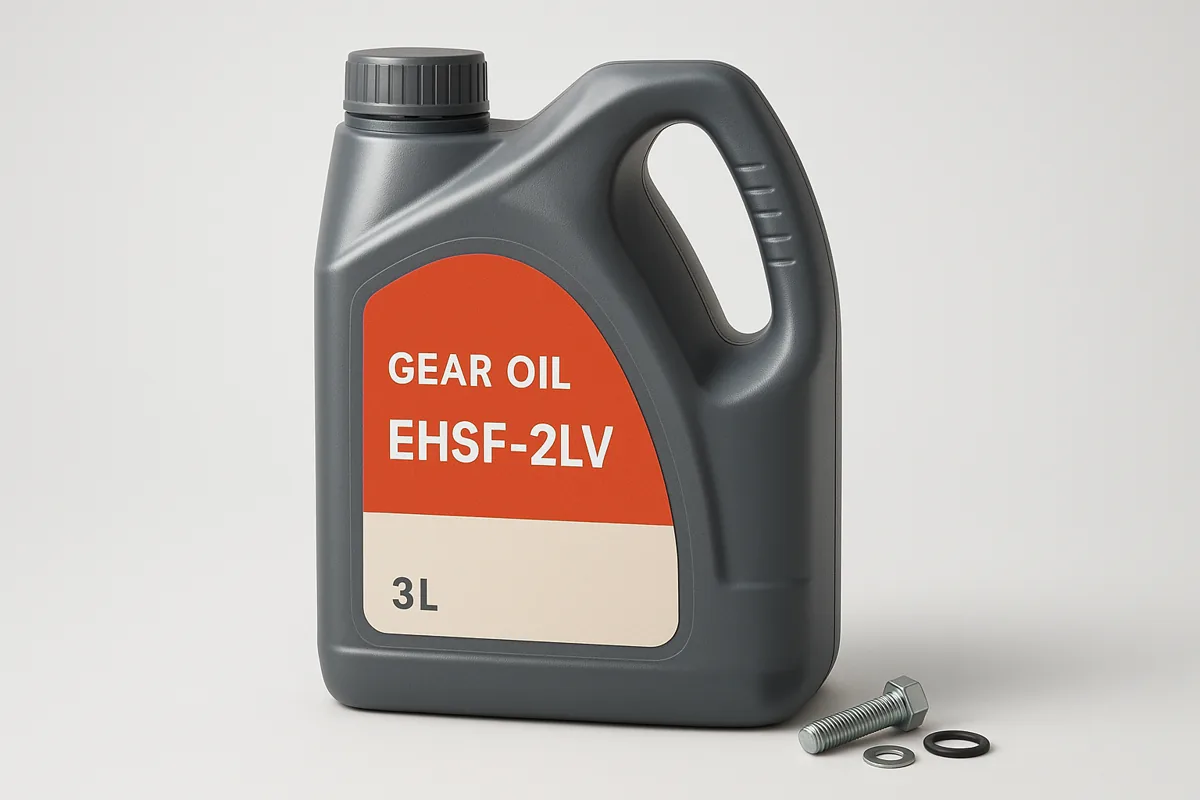
Order by the reference, not by the grade. The gear oil here is a factory specification product supplied in a drum quantity. It carries its own reference for good reason. Two oils of the same nominal viscosity can behave very differently. Their additive chemistry differs. So does the way they act on copper windings. They may also differ on the electrical requirements of a unit that houses a motor.
Buy the quantity the fill needs, with a margin for the change. Check how your unit is filled first. Many are filled to a level at a stated temperature rather than to a nominal capacity. Dispose of the used oil through a proper waste route.
Priced items can be ordered from the listing. Anything unpriced is quoted against the same factory reference. BYD group listings are the fullest and widen as more catalogues load. If the product you need is not shown, send the quote form with the OE number from the old container, or a photograph of the product and its label. We will check the factory catalogue against it.
Before You Order: 6 Checks
- Order by the factory specification rather than by viscosity grade alone.
- Confirm whether your unit shares a housing with an electric machine, which changes the requirement entirely.
- Buy the fill quantity plus a margin, since a change uses more than the nominal capacity.
- Check whether the unit is filled to a level at a stated temperature rather than a capacity.
- Never mix specifications, and drain fully rather than topping up with a different product.
- Dispose of used oil through a proper waste route.
What Changed and Why
Lubricant specification has tightened considerably as drivetrains have electrified. Fluids that share a housing with a motor must be dielectric, compatible with winding insulation and stable at motor temperatures, which rules out much of what would have been acceptable in a conventional gearbox, and manufacturers publish their own approvals rather than relying on general industry grades. Viscosities have also thinned across the board to reduce churning losses and improve efficiency, which places more weight on the additive package doing the protecting rather than on film thickness alone.
Lubricants & Greases: Frequently Asked Questions
Why can I not use any gear oil of the right viscosity?
Because viscosity is only part of the specification and often the least demanding part. The additive package determines how the oil protects tooth flanks under boundary conditions, how it behaves with the friction materials in a synchroniser or a clutch, and whether it is compatible with the seals in that particular unit. On an electrified drivetrain it also determines whether the oil is safe against motor windings. Two oils with identical grades on the label can behave entirely differently in service.
What happens if I use a conventional oil in an electric drive unit?
It may lubricate the gears perfectly and still cause a fault. Where the oil shares a housing with an electric machine, it contacts winding insulation, and a product that is not specified as dielectric can lower the vehicle's measured insulation resistance enough to set a high voltage fault and limit or disable drive. It can also attack insulation materials over time. This is one of the clearest cases in the catalogue where the correct product is not interchangeable with a similar one.
How much do I need?
The fill quantity for your unit plus a margin, and check how that fill is defined. Many drive units and gearboxes are filled to a level plug at a stated temperature rather than to a nominal capacity, so the amount that goes in varies with how thoroughly the unit drained and how it is positioned. Ordering the exact nominal figure regularly leaves a job short. Buying a little extra costs less than a second delivery mid job.
Does gear oil need changing on an electric vehicle?
Most manufacturers specify a change at a long interval or treat the fill as lifetime, and a change at sensible intervals is cheap insurance on a high value unit. Beyond fresh oil, the process gives you a look at the drain plug magnet, which is the only routine window into how the gears and bearings are doing. Follow the manufacturer's guidance, and use the specified product rather than a general gear oil of similar viscosity.
There is glitter in the drained oil. Is that normal?
Fine grey paste suspended in the oil and collected on the magnet is normal wear, particularly from a unit that has bedded in. Distinct flakes, curls or bright fragments are not, and they indicate a bearing or a gear breaking down. The distinction is worth making carefully, because the first is reassuring and the second is a reason to investigate before the debris circulates further. Compare what you find with the previous change if you have the record.
What does this oil cost?
It is supplied in a drum quantity rather than a single litre, so the figure reflects the volume rather than a high unit price. The live minimum and maximum for the category are shown in the band at the top of this page. Against the cost of the unit it protects, and given that it is consumed only at long intervals, lubricant is among the least significant costs of ownership and among the worst places to substitute.
Can I mix specifications if I only need a top up?
Better not to. Mixing additive packages can reduce the effectiveness of both, and on a unit with electrical requirements a small quantity of the wrong product may be enough to matter. If a unit is low, the more useful question is why, since these are sealed assemblies that should not consume oil, and a falling level usually means a seal is passing oil into an adjoining housing or onto the road. Find the leak rather than topping up repeatedly.
Is grease covered by this category?
The listings here currently centre on gear oil, and greases used in specific applications, such as constant velocity joint grease supplied with a boot kit or high temperature caliper grease, are generally supplied with the parts that need them. Where you need a grease on its own, the quote form checks the factory catalogue directly. Never substitute a general purpose grease into an application specified for a particular type, since compatibility with rubber and temperature range vary widely.
Why have gear oil viscosities become thinner?
To reduce churning and drag losses, which matter more as efficiency targets tighten and, on an electric vehicle, translate directly into range. A thinner oil circulates more readily and costs less energy to move, and the protection that a thicker film would have provided is delivered by the additive package instead. That shift is another reason to follow the specification rather than assuming a heavier oil is a safer choice, since a heavier product can measurably reduce efficiency and may not meet the approval at all.
How should used oil be disposed of?
Through a proper waste route, never down a drain or onto ground. Used gear oil contains wear metals and depleted additives and is a regulated waste in most jurisdictions. Local authority waste sites and garages generally accept it. Keep it in a sealed labelled container in the meantime rather than an unmarked drink bottle, and clean up spills promptly. Empty containers are usually recyclable once drained.
Will the oil specified for my gearbox suit the differential too?
Only where the manufacturer says so. Some vehicles share a fill between gearbox and final drive, and others keep them entirely separate with different specifications, particularly where one houses an electric machine and the other does not. Check the handbook or the workshop data for each unit rather than assuming, since filling a differential with a transmission fluid or the reverse is a straightforward way to produce a noise complaint a few thousand miles later.
The product I need shows no price. Can I still order it?
Yes. Lubricants are listed by specification and pack size, and the smaller or less common pack of a given grade is often the one waiting for a quote. Tell us the specification and how much the job needs, and the answer covers both the product and the shipping, because liquids travel under their own rules. Do not substitute on viscosity alone. A reduction gear filled with an oil that meets the number but lacks the required additive package will whine long before the drain interval, and dielectric fluids used near live components are a separate class again.