Brake, Coolant & Hydraulic Fluid
Shop Brake, Coolant & Hydraulic Fluid by Part Type
Popular Right Now
scroll for more →
Symptom Finder: What Is Actually Broken?
| What you see or hear | Part to check first |
|---|---|
| Brake pedal going soft after sustained heavy braking | Brake fluid past its useful life |
| Brake fluid dark or with visible sediment | Brake fluid due for replacement |
| Coolant discoloured, cloudy or containing debris | Coolant requiring replacement and a flush |
| Corrosion inside the cooling system with correct level | Coolant with depleted inhibitors |
| Freezing damage after a cold spell | Coolant mixed below its rated concentration |
| Blocked passages after topping up with a different product | Coolant of an incompatible chemistry |
About Brake, Coolant & Hydraulic Fluid
Fluids are chosen by chemistry rather than by colour, and the two here illustrate why. Brake fluid is hygroscopic by design, drawing moisture out of the air so that water stays dispersed rather than pooling and corroding the system from inside. The cost of that property is a boiling point that falls steadily as the fluid ages, which matters because braking hard turns kinetic energy into heat at the calipers, and fluid that boils forms vapour, which compresses, which is why a pedal can go soft after a long descent. Coolant does three jobs: it raises the boiling point and lowers the freezing point of water, and it carries corrosion inhibitors that protect a system containing several dissimilar metals. Organic acid technology inhibitors last far longer than the older silicate types they replaced.
What to know before buying Brake, Coolant & Hydraulic Fluid parts
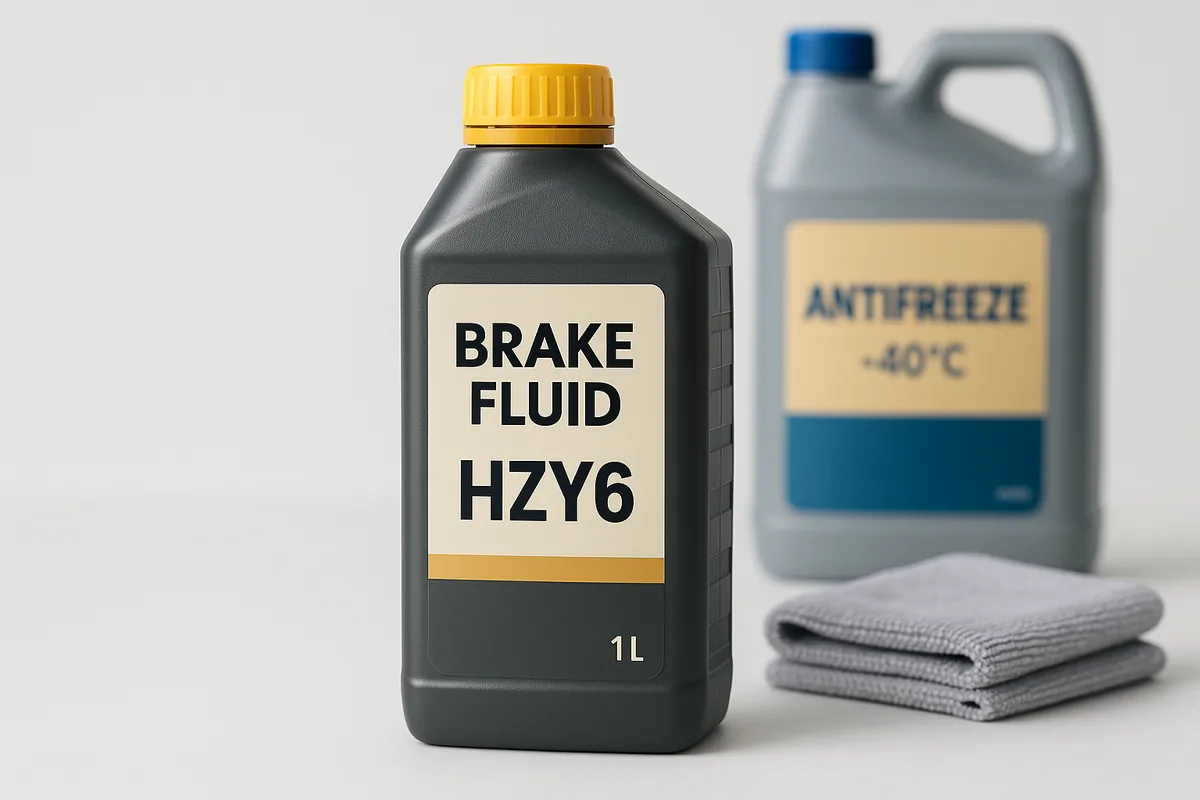
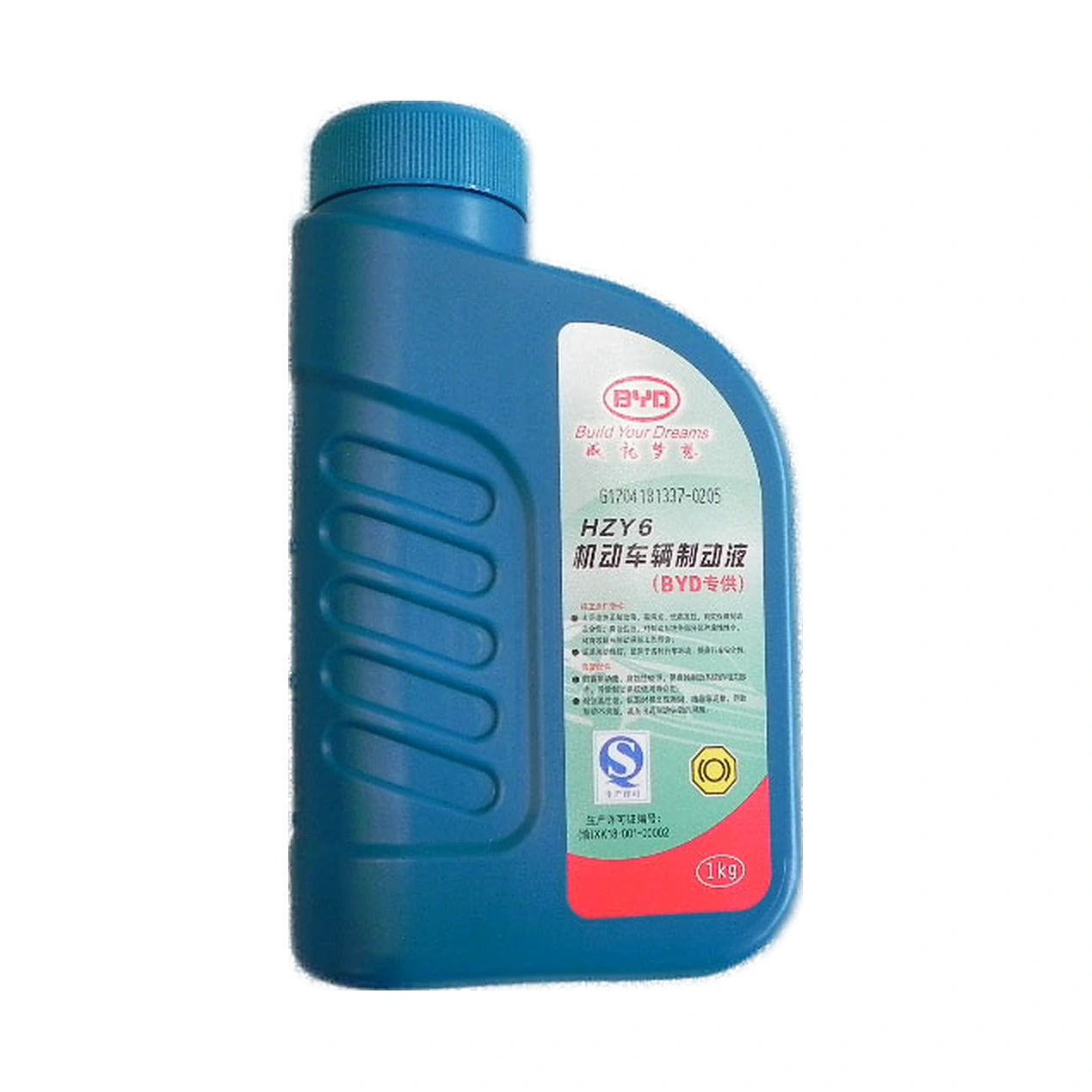
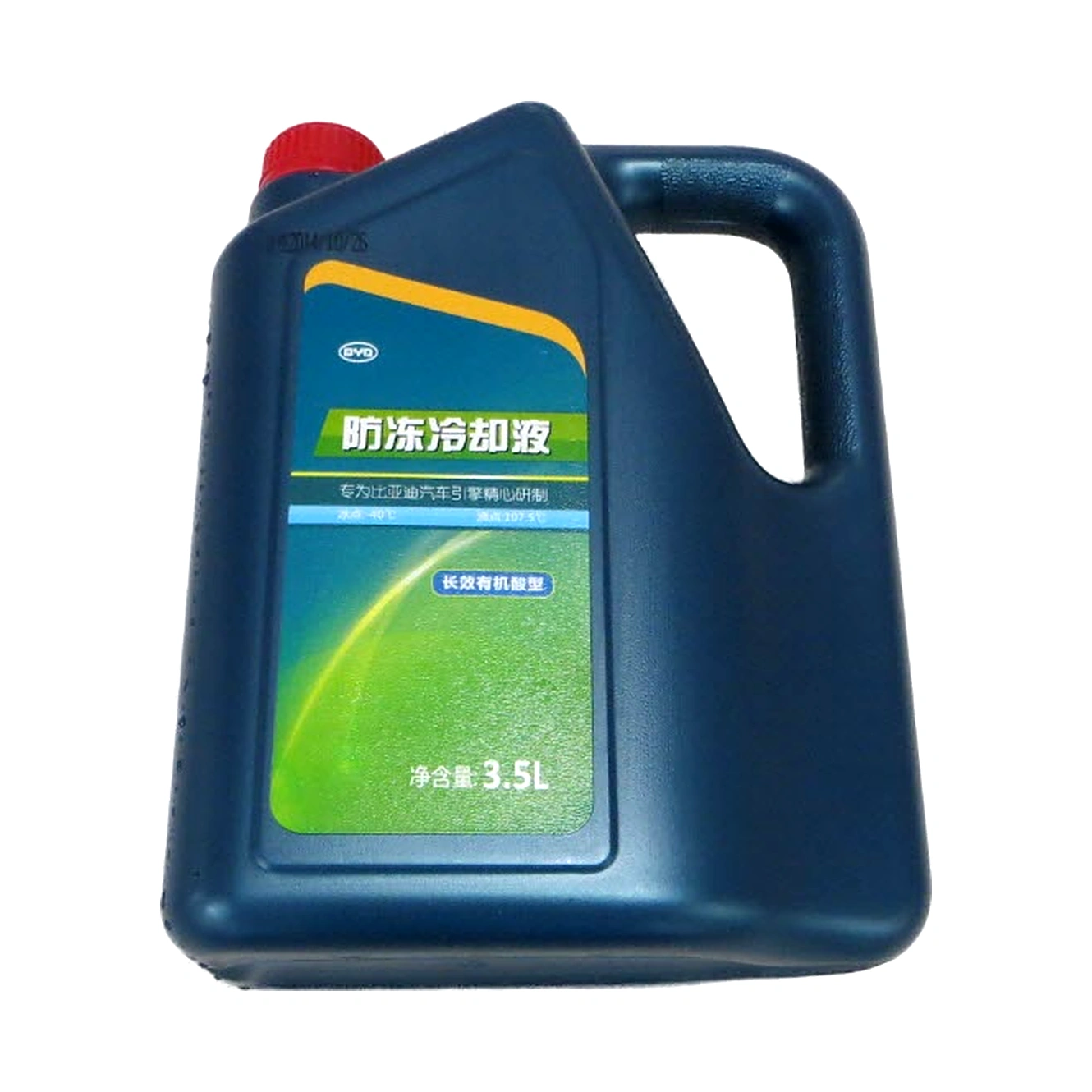
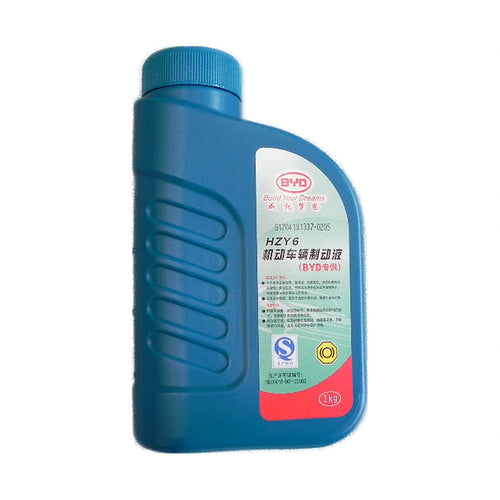
Order fluid by the factory reference rather than by a general grade. Brake fluid comes in a one litre presentation. The antifreeze is an organic acid technology coolant rated to a defined freeze point and supplied in a drum. Check whether your vehicle takes a concentrate or a ready mixed coolant.
Compatibility matters more than the headline specification. Coolants of different inhibitor chemistries can react together and drop solids into narrow passages. Brake fluid grades differ in boiling point and viscosity, which affects stability control response. Buy what the job needs plus a margin. A bleed uses more than expected, and part used containers deteriorate.
Items with a price can be bought directly, and the rest are quoted against the same factory reference. Dispose of what you drain through a proper waste route rather than a drain. Both fluids are regulated wastes, and coolant in particular is dangerous to animals. Cover is strongest across the BYD group and grows as further catalogues load.
Before You Order: 6 Checks
- Match the factory specification rather than a general grade, since compatibility governs both fluids.
- Never mix coolant chemistries, even in an emergency top up.
- Buy enough for the job plus a margin, since a full bleed uses more than expected.
- Use a freshly opened container of brake fluid, because it absorbs moisture once opened.
- Check whether your coolant is supplied as a concentrate and mix to the stated ratio.
- Dispose of used fluid properly, since both are harmful and regulated.
What Changed and Why
Fluid specifications have become tighter as systems have changed. Brake by wire units contain fine valve clearances and a high pressure pump, so moisture laden or contaminated fluid does more damage there than in a simple hydraulic circuit, and change intervals are enforced rather than suggested. Coolant has moved further, with loops passing near high voltage components requiring low conductivity products and long life organic acid inhibitors now standard. The practical consequence is the same in both cases: the right product from a sealed container matters more than it did, and topping up with whatever is available is a worse idea than it used to be.
Brake, Coolant & Hydraulic Fluid: Frequently Asked Questions
How often should brake fluid be changed?
At the manufacturer's interval, which is typically expressed in years rather than mileage because the fluid absorbs moisture from the air whether the vehicle is used or not. That absorbed water lowers the boiling point steadily, and the consequence appears exactly when you least want it: a pedal that goes long or soft after repeated heavy braking, because the fluid has boiled and vapour compresses where liquid does not. Testing fluid moisture content is quick and settles the question.
Why is brake fluid designed to absorb water?
Because the alternative is worse. A system will admit some moisture over time through seals and hoses regardless, and a fluid that repels water would let it pool at low points, where it corrodes the bores and freezes in winter. A hygroscopic fluid holds that water dispersed throughout, which protects the system at the cost of a falling boiling point. That trade is why the fluid has a service life and why a sealed container matters when you buy it.
Can I mix coolant types?
No, and this causes more damage than most people expect. Coolants use different corrosion inhibitor chemistries, and mixing incompatible types can cause the additives to react and drop solids out of solution, which block the narrow passages in a radiator, a heater core or a cooling plate. The result is overheating from an internal blockage that no amount of new coolant fixes. If you do not know what is in the system, have it flushed and refilled with the correct product rather than topping up.
What does organic acid technology mean?
It describes the type of corrosion inhibitor. Older coolants used silicates and phosphates, which protect quickly and deplete quickly. Organic acid inhibitors work more slowly at first and last far longer, which is why long life coolants with change intervals measured in years are almost all of this type. What matters practically is that the inhibitor chemistry is what makes coolants incompatible with one another, so the technology is the reason for matching the specification rather than a marketing distinction.
What happens if coolant is mixed too weak?
Two things, and both are avoidable. Freezing protection falls, so a cold spell can freeze coolant in the system and split a radiator or a block. And the inhibitor concentration falls with it, so corrosion protection weakens even in mild weather. Mixed too strong is also a mistake, since a very high concentration transfers heat less effectively than the correct ratio. Follow the stated mixing ratio for your climate, and use deionised water rather than tap water where a concentrate is diluted.
What do these fluids cost?
Both sit at the low end of the range, with brake fluid supplied in a one litre presentation and coolant in a larger drum, so the drum shows a higher figure for a much larger quantity. The live minimum and maximum are shown in the band at the top of this page. Given that both fluids protect systems whose components cost many times more, and that both are consumed on a schedule, this is not a category in which to economise.
Can I use a part-used bottle of brake fluid?
Better not to. Once opened, brake fluid begins absorbing moisture from the air in the bottle, so a container that has stood half full in a garage for a year may already be below the specification you are trying to restore. Buy the quantity the job needs, open it at the point of use, and dispose of what remains rather than storing it. The saving from using an old bottle is trivial against the point of changing the fluid at all.
How much do I need for a fluid change?
More than the system capacity, because a proper bleed pushes fresh fluid through until what emerges is clean, and the quantity depends on the vehicle, the number of circuits and whether a scan tool bleed cycles the hydraulic unit. For brakes, allow well over a litre on most vehicles. For coolant, the system capacity plus a margin for the bleed and for topping up as air works its way out over the following days. Ordering short costs a second delivery.
Does an electric vehicle need brake fluid changes?
Yes, and arguably more attentively. Regenerative braking means the friction system is used less, so the fluid gets less thermal cycling and the intervals are still time based because moisture absorption continues regardless. Brake by wire units also contain fine clearances and a high pressure pump that tolerate contaminated fluid poorly. A vehicle whose brakes are barely used still needs its fluid changed on schedule, and the low usage is not a reason to extend the interval.
What about coolant near high voltage components?
Its electrical conductivity is part of the specification. Loops that pass through or alongside high voltage components must use a low conductivity coolant, and a conventional product of the wrong type in that position can lower insulation resistance and set a fault that disables the vehicle. This is not a subtle effect that appears years later. Use exactly what the manufacturer specifies, from a sealed container, and never top up such a loop with a general purpose product.
How should used fluid be disposed of?
Through a proper waste route rather than a drain. Brake fluid and coolant are both harmful, coolant is notoriously attractive to animals and dangerous if ingested, and both are regulated wastes in most jurisdictions. Local authority household waste sites and garages generally accept them. Keep used fluid in a sealed labelled container in the meantime, and clean up spills promptly rather than leaving coolant on a driveway where a pet might find it.
The fluid I need shows no price. Can I still order it?
Yes. Fluids behave differently from hardware here, because the same specification is sold in several pack sizes and only some of those have a standing price against them. State the specification you need and the volume the job takes, and a figure comes back with the shipping arrangements, since brake fluid and coolant concentrate travel under transport rules that affect the delivered cost. Confirm whether you want concentrate or ready mixed before you send the enquiry. Buying concentrate and diluting with the wrong water is the most common way an otherwise correct coolant order goes wrong.