Electronics, Sensors & ADAS
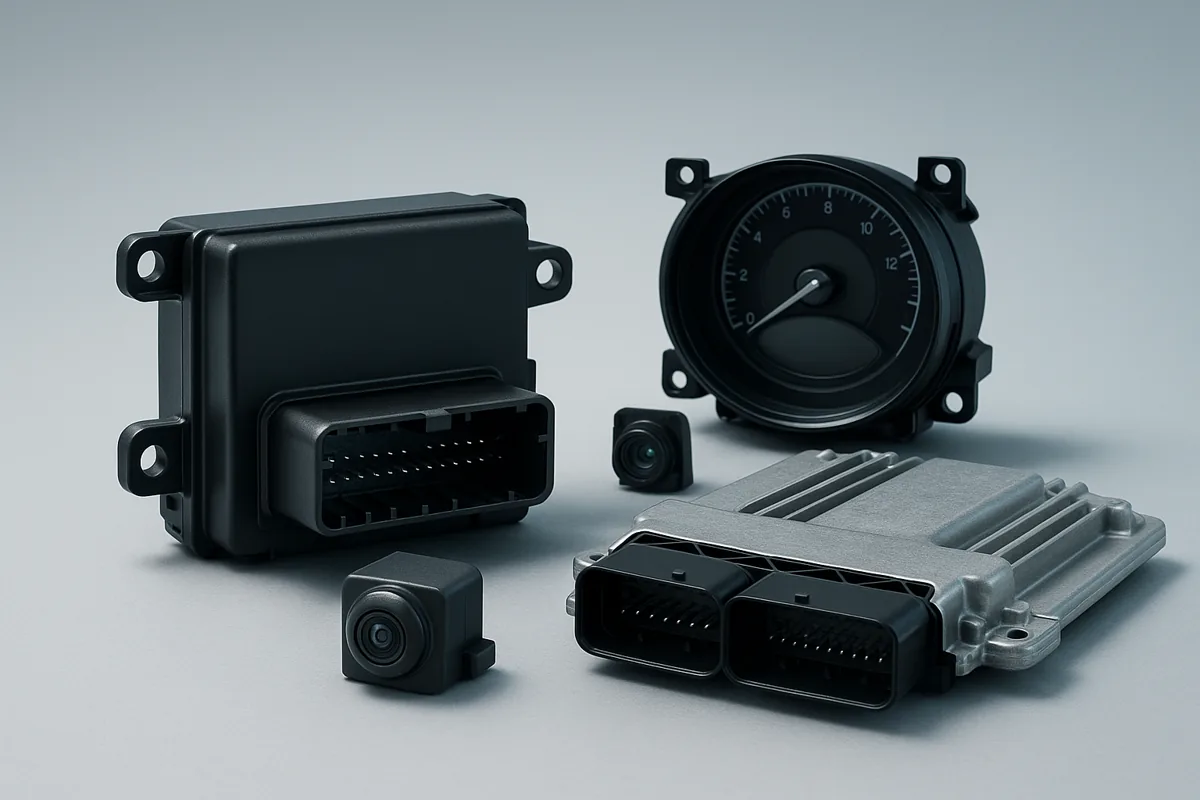
Shop Electronics, Sensors & ADAS by Part Type
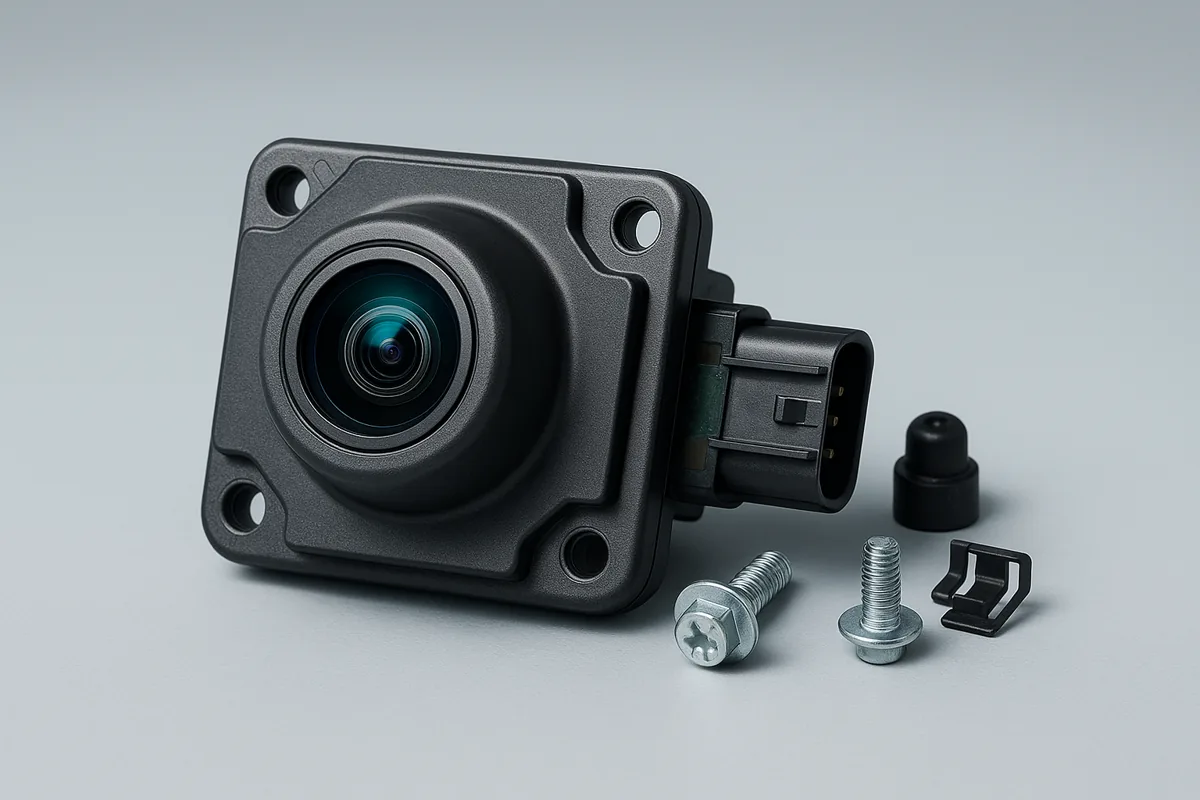
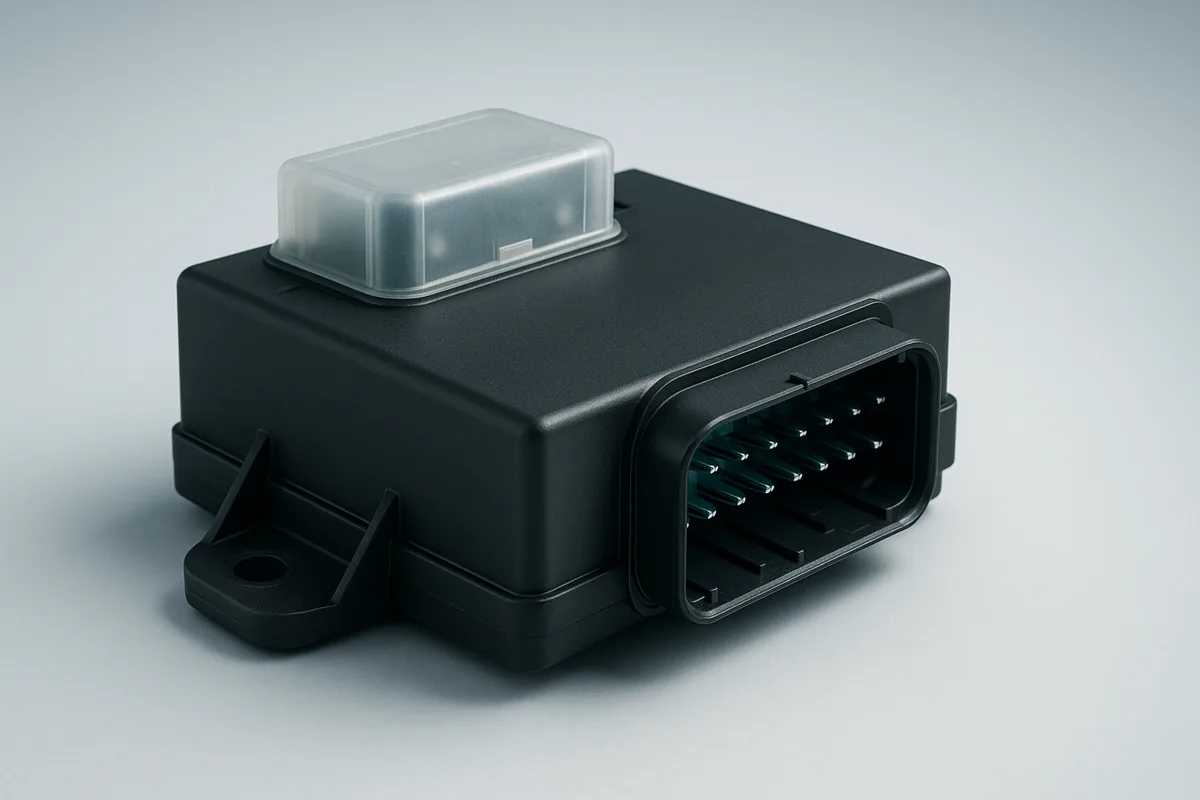
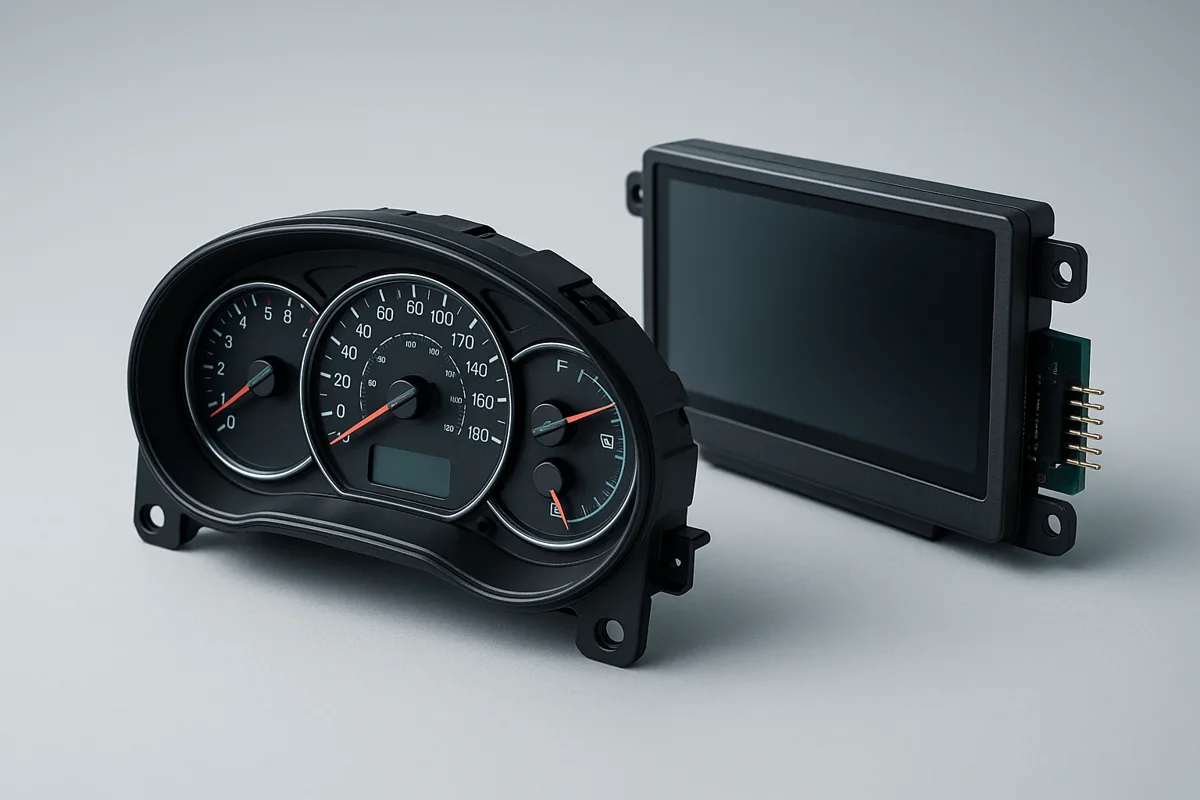
Popular Right Now
scroll for more →
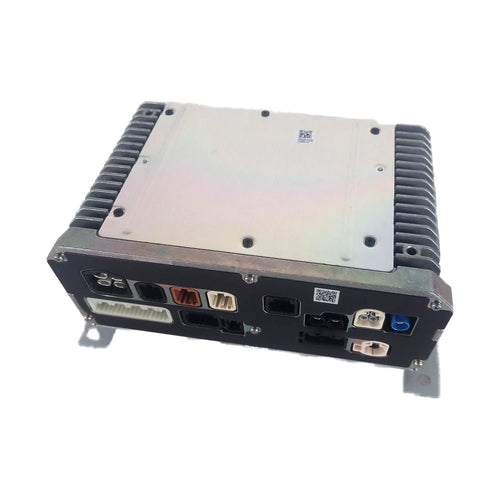
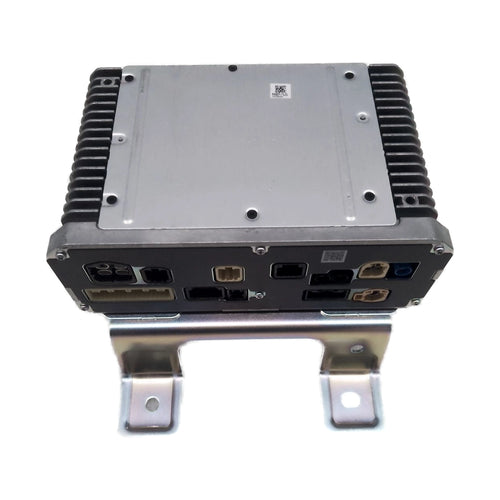
Symptom Finder: What Is Actually Broken?
| What you see or hear | Part to check first |
|---|---|
| Several unrelated body functions failing together | Body control module or the low voltage supply |
| Driver assistance unavailable after a screen change | Forward camera requiring calibration |
| Parking sensors beeping with nothing behind | Parking sensor probe |
| Engine cutting out and restarting when cool | Crankshaft position sensor or its wiring |
| Central screen restarting repeatedly | Low voltage supply or a software fault |
About Electronics, Sensors & ADAS
Modern vehicles are best understood as a distributed computer that happens to drive. Dozens of controllers exchange messages continuously over several networks, each owning a set of functions, with a gateway between them that forwards what should pass and blocks what should not, keeping the buses that matter for safety apart from the ones that carry media. Feeding all of it is a sensing layer: cameras that read detail and lane markings, radar that measures distance and closing speed through weather a camera cannot see through, ultrasonic probes for parking, and a large population of temperature, pressure and position sensors reporting what every mechanical system is doing. Almost none of this is a simple swap, since modules carry configuration unique to one vehicle and sensing hardware must be aimed rather than merely bolted on.
What to know before buying Electronics, Sensors & ADAS parts
Test the low voltage supply and the connectors before you order. Both produce faults that read as module failures. Arrange any coding or calibration before the part is fitted, not after.
Four child categories cover the group. Control units and modules holds body controllers, engine and vehicle control units, gateways, domain controllers and keys. Cameras, radar and park assist holds the sensing hardware for driver assistance.
Infotainment and instruments holds clusters, screens, head units and speakers. Sensors covers the temperature, pressure and position sensors used across the vehicle.
Before You Order: 5 Checks
- Test the low voltage supply and inspect connectors before ordering any module or sensor.
- Match the OE number and confirm against the vehicle identification number, since software follows the build.
- Arrange calibration before fitting any camera or radar.
- Expect proof of ownership requirements for keys and security bound components.
- Ask whether a software update addresses the behaviour before ordering for a non hardware fault.
What Changed and Why
Electronics are consolidating from dozens of small modules into a few powerful domain or zonal controllers, which reduces wiring while concentrating more function into each unit and making its replacement a larger event. Driver assistance has moved from optional to mandated on new vehicles in Europe and the United Kingdom, multiplying the sensors on every car and making calibration a routine part of collision and glass repair. Over the air updating has arrived alongside, so a fault that looks like hardware is occasionally resolved by a software release instead.
Electronics, Sensors & ADAS: Frequently Asked Questions
Several things stopped working at once. Is a module dead?
Probably not, and a scan tool that lists a dozen codes at once is usually telling you something else. Sensors and assistance modules share a network and a supply, so one weak feed, one bad earth or one damaged connector in a common branch takes several systems down together. Read the fault memory across all modules and look for the pattern rather than the longest list. Where every affected unit sits on the same circuit or the same bus segment, the wiring is the suspect. A single dead module tends to fail alone and stay failed.
Does a replacement module need coding?
Expect it to. A sensor or assistance controller comes from the factory knowing nothing about your car: which options it carries, which market it was built for, which software the other modules on the network are running. Until that information is written in, the unit either sits silent or reports itself as incompatible. Some parts need only configuration, which a good independent workshop can do. Others need full programming with manufacturer access. Establish which category your part falls into, and that the workshop can handle it, before the order is placed.
Which sensors need calibration after replacement?
Anything that measures the world outside the car. Forward cameras, corner and front radars, surround view cameras and lidar units all report positions relative to a fixed reference, so the vehicle has to be told precisely where each one now points. Steering angle sensors and yaw sensors need their zero reset for the same reason. Ordinary sensors that measure a temperature, a pressure or a rotation generally do not. Beyond replacement, calibration is also required after a windscreen change, after suspension work that alters ride height and after any impact to a bumper carrying radar.
Why do sensor faults so often turn out to be wiring?
Because sensors sit in hot, vibrating, wet places and their leads live there too. Chafe against a bracket, hardening from heat, oil or coolant contamination in a connector, and water sitting in a plug all produce intermittent signals that a control unit reports as a sensor fault. That is why a sensor replaced once and failing again is a wiring problem until proven otherwise. Inspect the lead and the connector before ordering, particularly on position sensors near the engine.
Can software updates fix faults?
For driver assistance systems the answer is more often yes than people expect. Complaints about phantom braking, lane keeping that wanders, radar that drops out in rain or a camera that reports a blocked view are frequently addressed by revised software rather than by new hardware, because the perception logic is exactly what gets refined after launch. Have the vehicle checked against the manufacturer's current release before a sensor is condemned. Where the unit genuinely has an internal fault or physical damage, no release will recover it and the part is the answer.
Can I fit a used module that carries the same OE number?
Sometimes, but a matching number only proves that the hardware fits. A module taken from another car still holds that car's configuration. Engine, body and security units also hold that car's immobiliser pairing, so they usually refuse to start your car or report a mismatch until they are reset or matched. Units with the same hardware number can also run different software levels. Read the OE number on your old part. Before you commit, ask your workshop whether they can adapt a used unit or would rather code a new one.
How do I find which parking sensor has failed?
Switch the ignition on, apply the parking brake and select reverse. Then listen closely to each sensor or touch it lightly with a fingertip. A working sensor makes a faint, rapid ticking and vibrates slightly. The silent one is usually the fault, though a scan tool reading the park assist module will name the position directly. Before replacing it, check the connector behind the bumper for corrosion and the sensor face for cracks or caked dirt. Then read the OE number printed on the old sensor body and enter it in the search box.
Can a replacement parking sensor be painted to match the bumper?
Yes. Many are supplied unpainted for that reason, but the face is a thin diaphragm that has to vibrate to send and receive its pulse. Heavy primer, filler or several coats of paint damp that movement. The sensor then reads objects as closer than they are or stops responding altogether. Use light coats of the bumper colour with no filler, and keep the total film thin. A body shop used to painting sensor faces will know the limit. Confirm the OE number on the old sensor first, since corner and centre positions can differ.
My reversing camera picture is misty. Can it be dried out?
Occasionally, but mist that clears as the car warms up and then comes back means the seal around the lens or the connector has failed, and water will keep getting in. Drying and resealing may buy time. Moisture inside the housing still corrodes the image board, though, and the picture usually degrades to flicker, lines or a blank screen. Avoid pressure washing close to the lens. If the image is permanently clouded, replace the camera. Its OE number is on a label on the housing, usually visible once the surrounding trim is removed.
Will a replacement instrument cluster show the correct mileage?
Not on its own. A new cluster starts at or near zero, and a workshop with suitable equipment has to write in the true mileage when it codes the unit to the car. In the UK it is lawful to set a replacement to the vehicle's genuine mileage, but showing a lower figure is an offence. A future buyer is also entitled to know the cluster was changed. Keep the invoice, a photo of the old display and the MOT history together. Check the OE number on the back of the old cluster, then book the coding before fitting.
Where do I find the OE number on a module or sensor?
Look for a printed or engraved label on the housing, usually alongside a barcode, the supplier's own reference and a software or hardware version. The OE number follows the vehicle maker's numbering format, and it is the one to search. On control units the label often faces the mounting bracket, so photograph it once the unit is out. On small sensors it may be moulded into the body in tiny characters, and a phone camera zoom helps. If the label is unreadable or several numbers look plausible, send clear photos and we reply within 24 hours, usually sooner, through the quote form.
How can I tell whether a temperature or pressure sensor is reading wrongly?
Compare its live value with something you know. After the car has stood overnight, every temperature sensor should read close to the outside air temperature, so one that sits well away from the others is suspect. An intake or barometric pressure sensor should read local air pressure with the ignition on and nothing running. A value stuck at the very top or bottom of its range usually points to an open or short circuit in the wiring rather than the sensor. A value that looks plausible but drifts is more likely the sensor itself. Once you have confirmed the fault, match the OE number on the old part.
Can a bumper be repaired or repainted in front of a radar sensor?
Yes, with care. The radar looks through the bumper cover or a badge panel, and the radar was set up to see through the plastic and paint in its path. Filler, extra paint layers and some metallic finishes weaken or bend the signal. That shows up as reduced range, radar blocked messages or adaptive cruise dropping out. Repairs in the radar zone should respect the maker's paint thickness limits and should never use filler. Replace a cracked badge or cover rather than repairing it, then have the radar aimed. Check the OE number on the old cover or sensor before ordering.
The infotainment screen is blank. Is it the display or the head unit?
On many cars these are separate parts. The display on the dash is linked by a video cable to a host unit mounted behind the glovebox, under a seat or in the boot. If the screen stays dark but the audio, parking chimes or steering wheel controls still work, the host unit is alive. In that case the display, its supply or the video link is the suspect. If nothing responds at all, check the fuse and the host unit first. A hard reset, often a long press on the power button, is worth trying. Then read the OE number on whichever unit is at fault.
What precautions should be taken when fitting a control unit?
Switch everything off, disconnect the low voltage battery and wait a few minutes before unplugging anything, because connecting or disconnecting a module while powered can damage it. Handle the unit by its case, not the pins, and keep the connectors clean and dry. Check that each plug locks fully and that any earth strap goes back onto bare metal. During coding or programming, connect a battery support unit, because a voltage dip part way through can leave the module unusable. Airbag units need extra care and are best left to a qualified mechanic. Before starting, confirm that the new unit's OE number matches the old one.