Steering
Shop Steering by Part Type
Popular Right Now
scroll for more →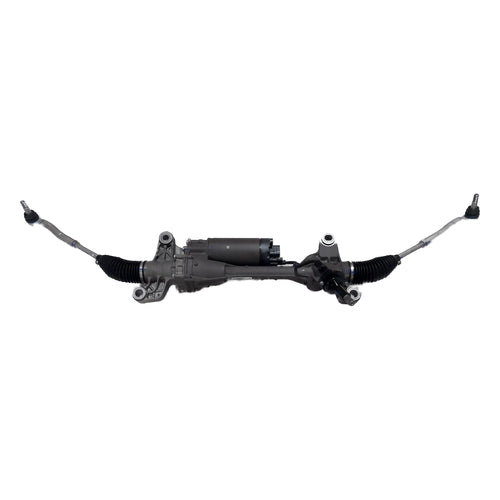
Symptom Finder: What Is Actually Broken?
| What you see or hear | Part to check first |
|---|---|
| Steering suddenly heavy with a warning lamp | EPS motor, controller or the low voltage supply |
| Knock through the wheel over rough roads | Intermediate shaft universal joint |
| Play at the wheel before the road wheels move | Tie rod ends or the rack |
| Whine that rises with engine speed | Hydraulic power steering pump |
| Tyre wearing on one shoulder | Tie rod out of adjustment or worn |
About Steering
Steering has to do two things that pull against each other: reduce the effort needed to turn the wheels, and tell the driver what those wheels are doing. A rack and pinion gear converts rotation into lateral movement, tie rods carry it to the steering arms, and joints at every connection allow the suspension to move without introducing play. Assistance used to be hydraulic, with a belt driven pump feeding a valve in the rack and consuming energy whenever the engine ran. Electric assistance replaced it almost universally, using a torque sensor at the column and a motor that adds only what the map calls for, which saves energy and, more importantly, puts the steering under software control so lane keeping and parking assistance can apply torque of their own.
What to know before buying Steering parts
Match every steering part by OE number. Assistance maps and geometry follow the exact variant, so a part from a similar model will not do.
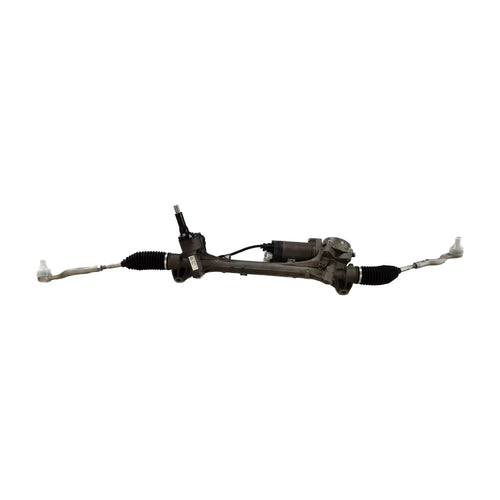
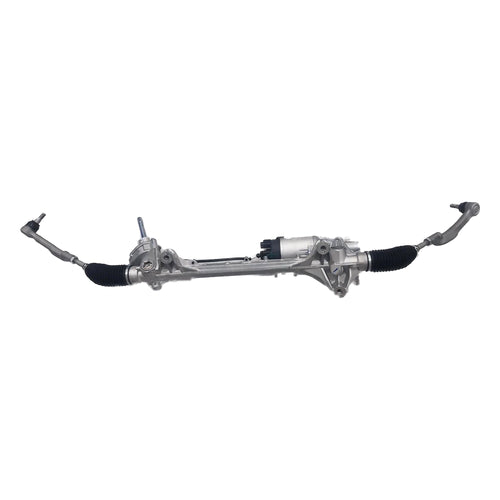
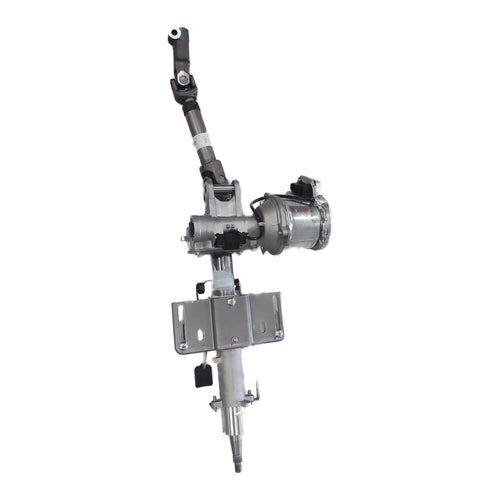
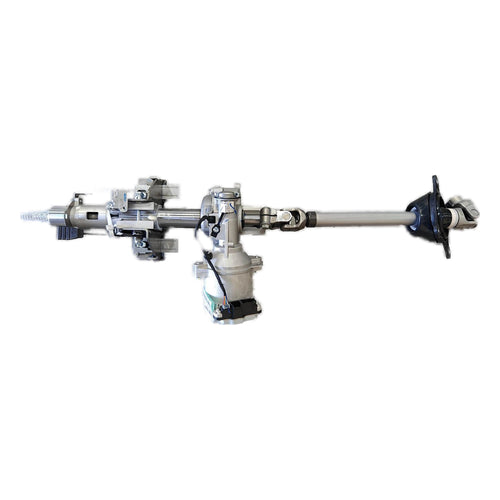
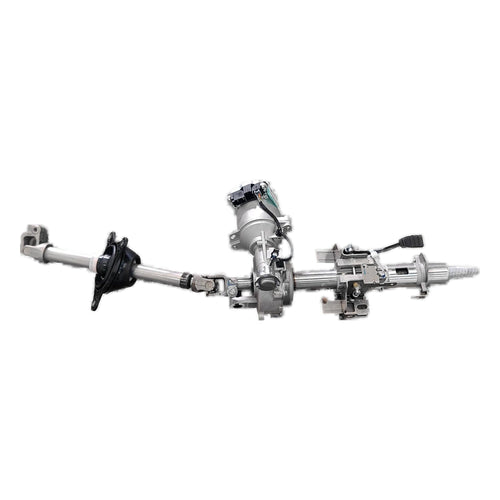
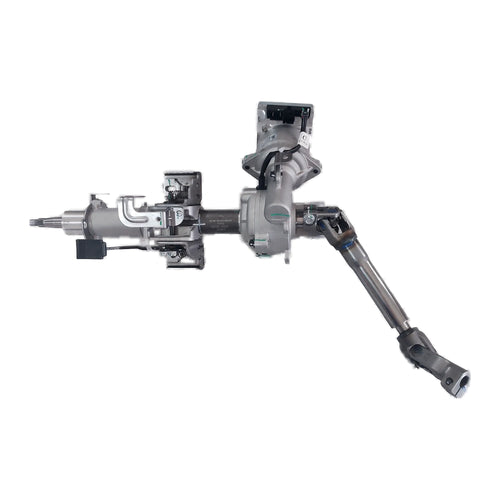
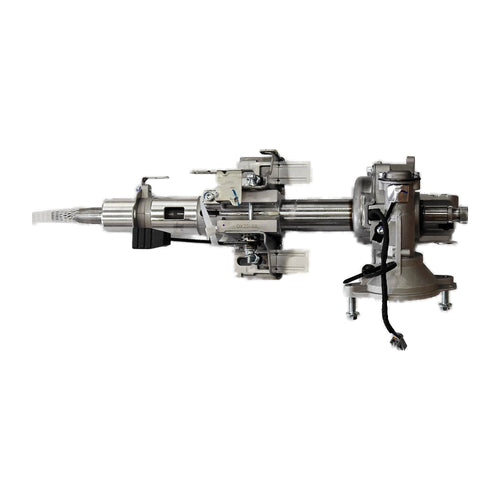
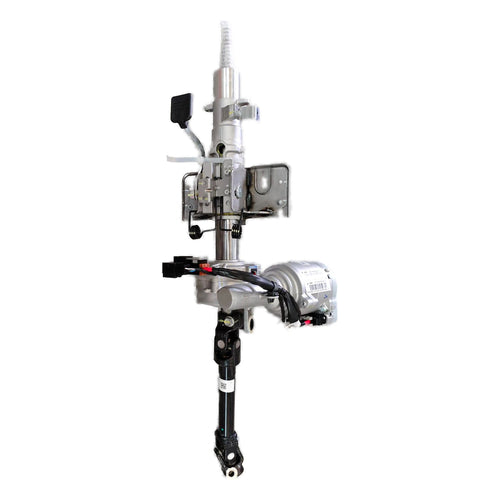
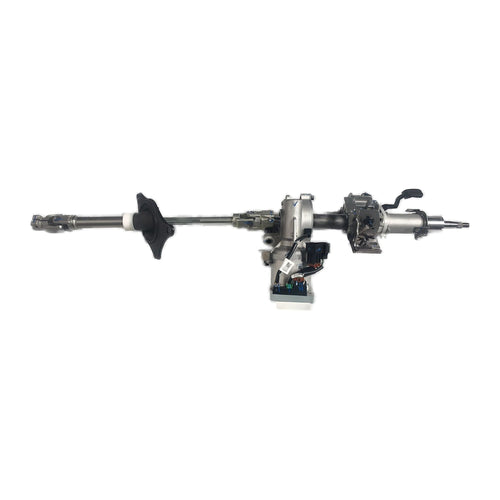
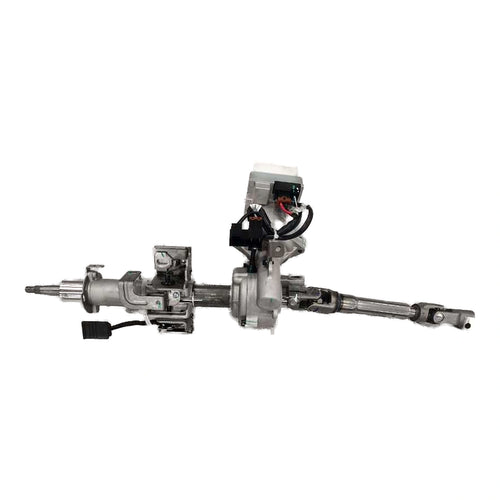
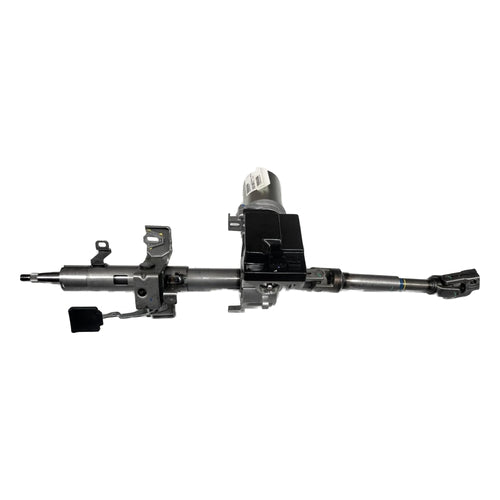
Four child categories cover the system. Steering rack and gear holds complete electric and manual gears, supplied with their tie rods. Steering column and wheel holds columns, intermediate shafts, universal joints and wheels in factory colours. Power steering pump and EPS holds hydraulic pumps with their formed oil lines, plus electric motors and controllers. Tie rods and ball joints holds the wearing joints at the ends.
Plan an alignment at the end of any work here. Electric components usually need coding and a steering angle calibration as well.
Before You Order: 5 Checks
- Read the fault codes and check the twelve volt supply before ordering electric assistance components.
- Match the OE number, since assistance maps and rack ratios follow the exact variant.
- Book an alignment for immediately after any tie rod, rack or arm work.
- Expect a steering angle calibration after replacing steering components.
- Never fit a column or shaft recovered from a vehicle that has been in a collision.
What Changed and Why
Electric assistance is now close to universal because it consumes power only while steering and because it makes the steering an actuator the vehicle can command, which is what enabled lane keeping, lane centring and automated parking without additional hardware. Hands on detection has followed, adding a capacitive sensor or a torque based strategy to the rim. Steer by wire has reached production on a small number of models, though regulation and the requirement for a mechanical fallback keep it rare for now.
Steering: Frequently Asked Questions
My steering has gone heavy. Where do I start?
Read the codes and measure the supply before touching any hardware. An assisted rack draws a large current when it works hard, and the control unit will cut assistance entirely rather than drag the network down with it, so a battery past its best or a corroded earth strap produces heavy steering that comes and goes. Charging faults do the same. Once voltage under load is proven good and the earths are clean, the stored faults will point at the torque sensor, the motor or the control unit. The car stays steerable throughout, just heavily at low speed.
How do I tell rack play from joint play?
Isolate it by hand. With the car raised on stands and the wheels off the ground, wrap your fingers around each joint in turn so that you can feel the two halves rather than just watch them, and have an assistant rock the wheel slowly from side to side. Movement between the ball and its socket transmits as a distinct knock under your fingers. If every joint feels tight and the rack itself shifts in its mounts, the bushes or the bolts are the problem. If the rods move together with a delay at the wheel, the rack is worn internally.
Do I need an alignment after steering work?
Assume so for anything that changes a length or a mounting position. Replacing a track rod end, a complete rod, a rack or a suspension arm all move the toe setting, and toe is the angle that destroys tyres fastest when it is wrong. Counting threads gets the car to the alignment rig safely and no further. Book the rig for the same day the work is done. On vehicles carrying lane assistance, add a steering angle sensor calibration afterwards, since the system takes its straight ahead reference from the geometry you have just changed.
Why is the rack supplied with tie rods?
Two practical reasons and one commercial one. The inner joints screw into the ends of the rack bar and are then staked or pinned, which is an assembly operation with a torque figure and a locking method that most workshops are not equipped to reproduce. The pair is also set to a matched length at the factory so the car starts life symmetrical. And a rack fitted with the old rods transfers whatever wear was in them onto a new unit, which is a poor outcome after a substantial job. Complete assemblies simply fit faster.
Can a steering column be replaced with a used one?
It is a poor gamble. The column is an energy absorbing structure: in a frontal impact the shaft is meant to shorten and the mounting bracket to deform, taking load out of the driver. A column that has already begun that process, even slightly, has spent the deformation it was designed to offer and will not behave the same way again. From the outside a partly collapsed column and a sound one look identical, and a salvage yard cannot tell you which you are buying. Order the factory reference and treat the saving as not worth having.
What causes a clunk through the steering when I turn at parking speed?
Low speed manoeuvres near full lock load every part of the system at once, so the clunk can start in several places. The usual sources are a worn inner tie rod joint, rack mounting bushes that have gone soft or bolts that have lost their torque, and on electric racks, wear in the internal gearing or in the belt drive between the assistance motor and the rack bar. A new joint will not fix internal rack wear, so find the source with the wheels raised before you buy anything. Then match the OE number stamped or printed on the worn part.
My horn has stopped working and the airbag light is on. Is that a steering part?
Very probably the clock spring. This is the coiled ribbon cable behind the steering wheel that keeps the airbag, the horn and the wheel mounted buttons connected as the wheel turns. The ribbon can tire and snap, often after the wheel has been turned while the column was disconnected during other work, and then all of those circuits drop out together. Treat it as a safety fault, because the driver airbag may not deploy. The airbag module has to be removed using the maker's disarming procedure, so leave this to a qualified mechanic. Read the OE number from the label on the old unit before ordering.
A rack gaiter has split. Do I need a new rack?
Not if you catch it early. The gaiter keeps water and grit off the polished rack bar and the inner joint, and a split one also fails the MOT. If the bar is clean and the inner joint still feels tight, a new gaiter and clips will do, and it makes sense to renew both sides at the same time. If water has been getting in for months, look for rust pitting on the bar, because pitting destroys the seals. On electric racks, moisture can also reach the motor and sensor. Check the OE number on the gaiter or on the rack label, then use the search box.
Why is my steering wheel off centre after fitting new tie rod ends?
Because the toe setting has changed, so the car now runs straight with the steering wheel turned. Counting threads during fitting gets you close but rarely exact, and a small difference between the two sides shows up as a crooked wheel. The fix is on the alignment rig, where both track rods are adjusted by equal amounts until the wheel sits level and toe is within specification. Never correct it by moving the wheel round a spline on the column. That only hides the error, and on cars with an angle sensor it confuses the stability and lane systems. Book the alignment, then recalibrate if the car requires it.
What makes a hydraulic power steering pump whine?
Usually the fluid rather than the pump itself. A low level lets the pump draw in air, and aerated fluid whines and looks foamy in the reservoir. Air also gets in after a hose or rack has been changed if the system was not bled by turning the wheel slowly from lock to lock with the engine idling. The wrong fluid grade can cause noise and damage seals, so use the specification in the handbook. If the level is right, the fluid is clean and the whine still rises with engine speed, the pump bearings or vanes are worn. Match the OE number on the pump body.
Can I fit a rack from a different version of the same model?
Only if the OE number matches. Racks that look identical can differ in gear ratio, travel and mounting points, and electric units can also differ in motor rating and in the software the control unit expects. A mismatched rack may bolt in and then refuse to communicate, leaving the car with no assistance and a warning light. Left and right hand drive racks are different parts. Read the number from the label on the old rack or motor housing and enter it into the search box. For date split models, also check the build date on the identification plate.
Inner or outer tie rod: which one do I need?
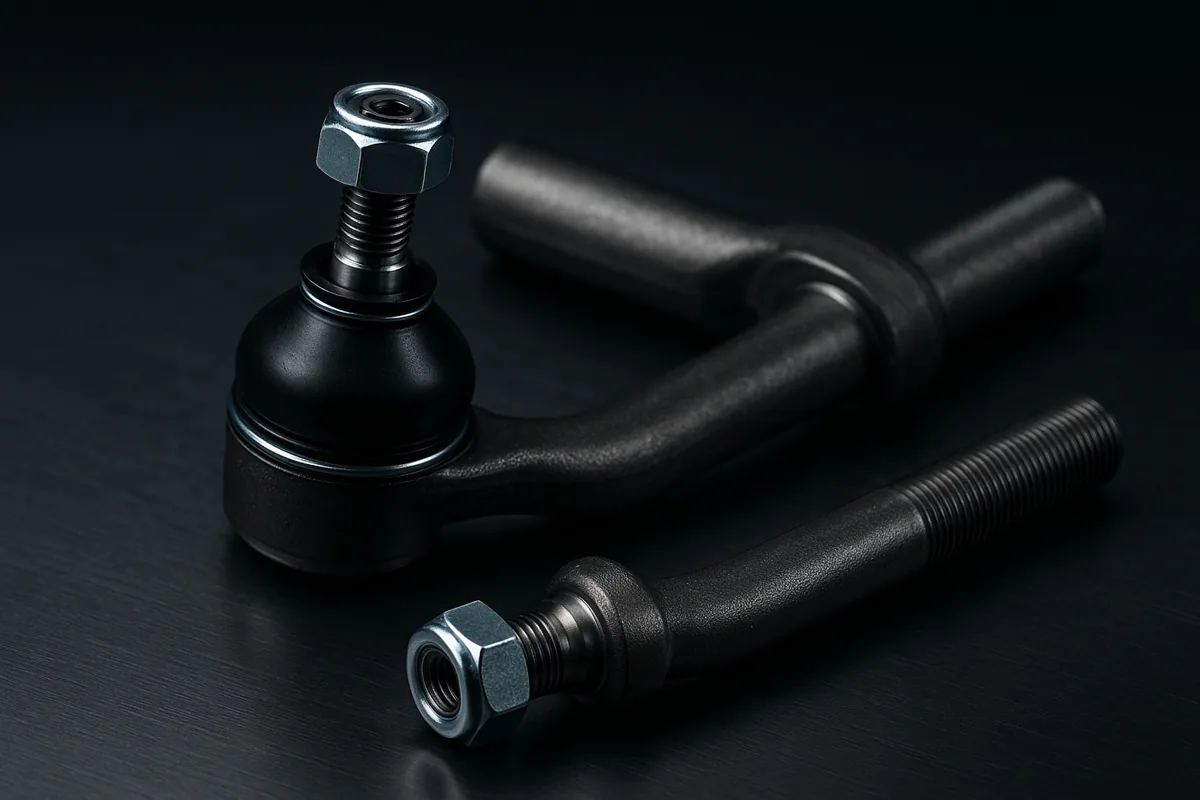
The outer end, often called the track rod end, joins the rod to the steering arm on the hub. It usually wears first because it sits closest to the road and moves with every suspension stroke. The inner joint screws into the rack bar and is hidden under the gaiter. Replace whichever joint shows play, since a new outer end on a worn inner rod leaves the knock where it was. Outer ends are often made for one side only, so check which side the part is for as well as the OE number on the old part before searching.
Does a steering wheel shimmy at motorway speed point to a steering fault?
Sometimes, but check the cheaper causes first. A vibration that appears within one speed range and fades above it is usually wheel balance or a distorted wheel or tyre. Worn tie rod ends and rack bushes let the wheels oscillate and make that vibration worse. A shimmy that comes only under braking points to the discs instead. Have the wheels balanced, then check the joints for play with the car raised. If a joint is loose, read its OE number and order the matching part, because a worn joint will quickly scrub uneven wear into new tyres.
What does the steering intermediate shaft do, and how does it fail?
It connects the steering column to the pinion on the rack. It passes through the bulkhead with a universal joint at each end and often has a sliding section so the column can collapse in an impact. Worn joints or a dry spline cause a knock through the rim over bumps, a notchy feel as the wheel turns, or a tight spot at one point. The pinch bolts must be tightened to the correct torque, and the shaft must go back on the same spline so the wheel stays centred. Check the OE number on the shaft, or ask through the quote form. We reply within 24 hours, usually sooner.