Suspension
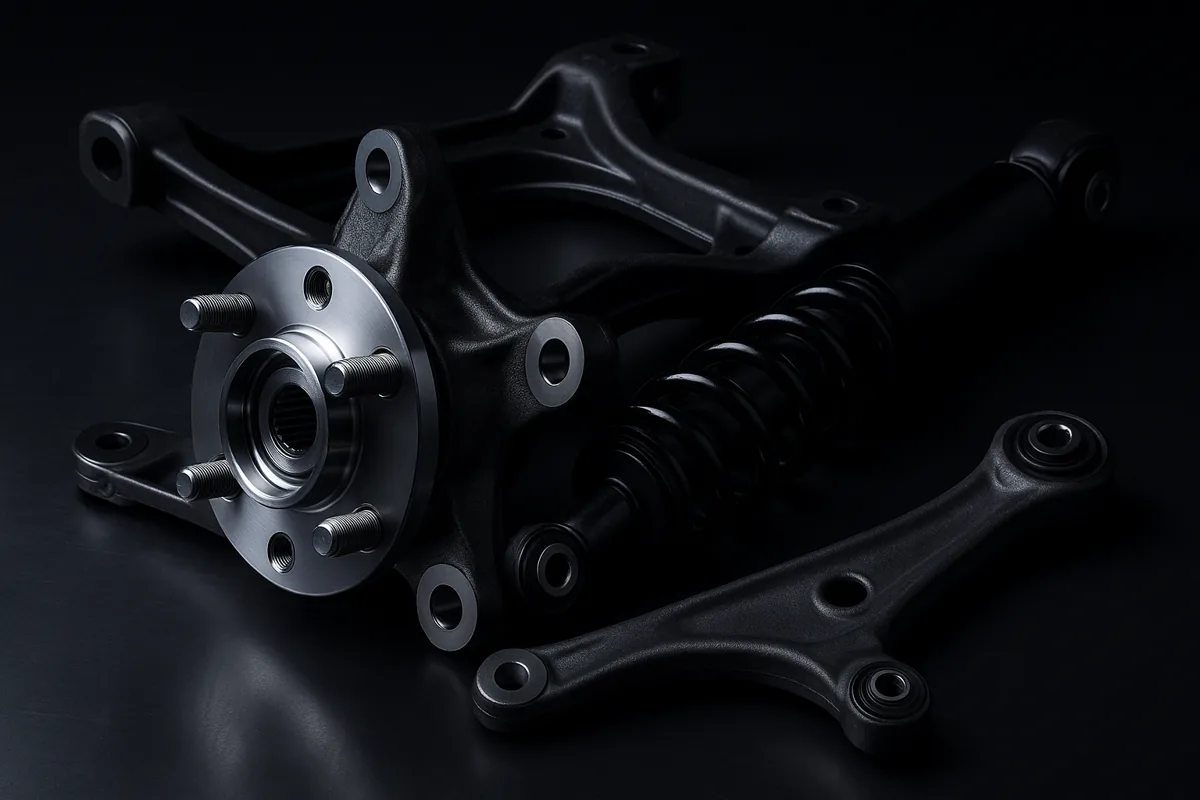
Shop Suspension by Part Type
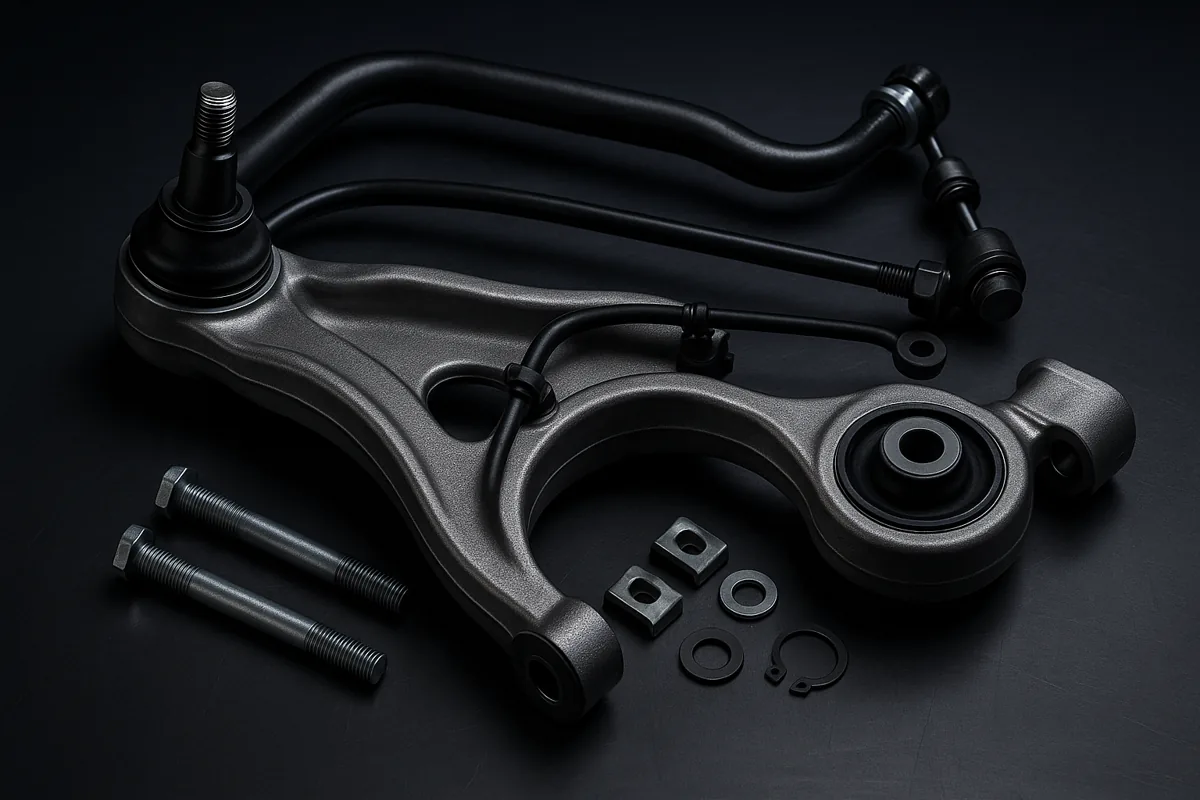
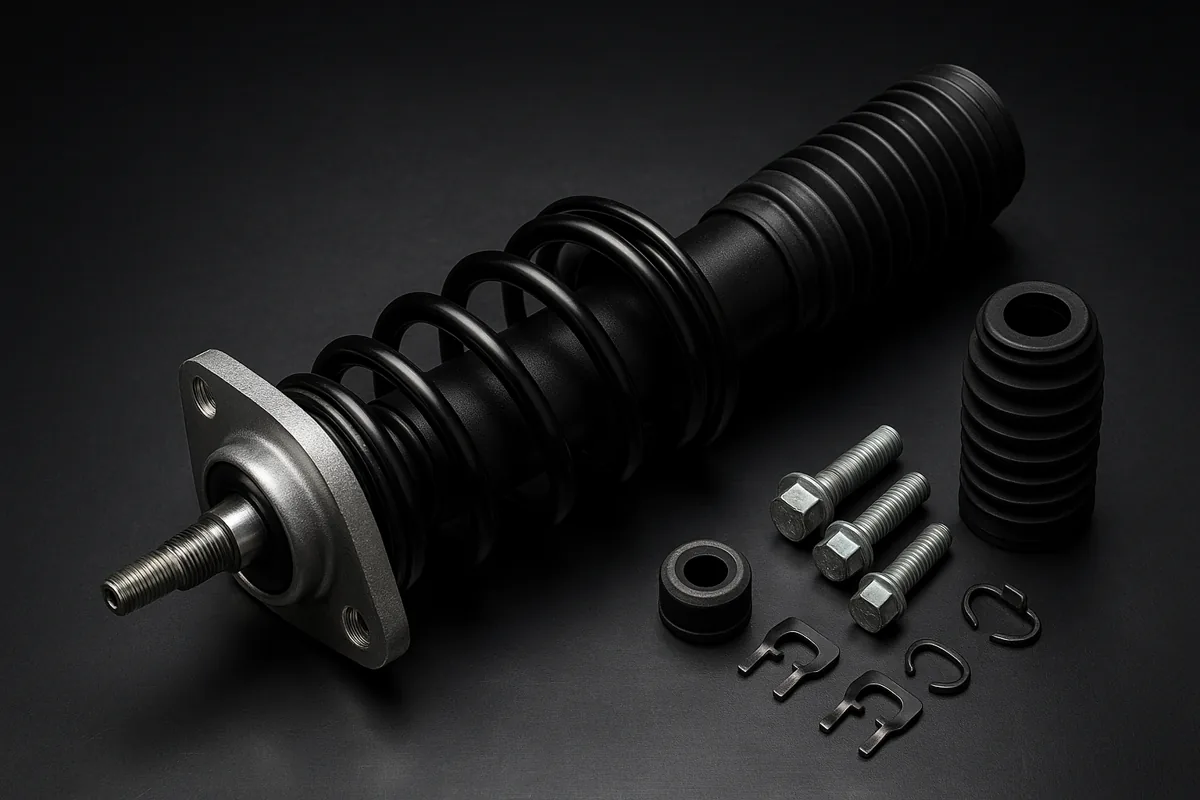
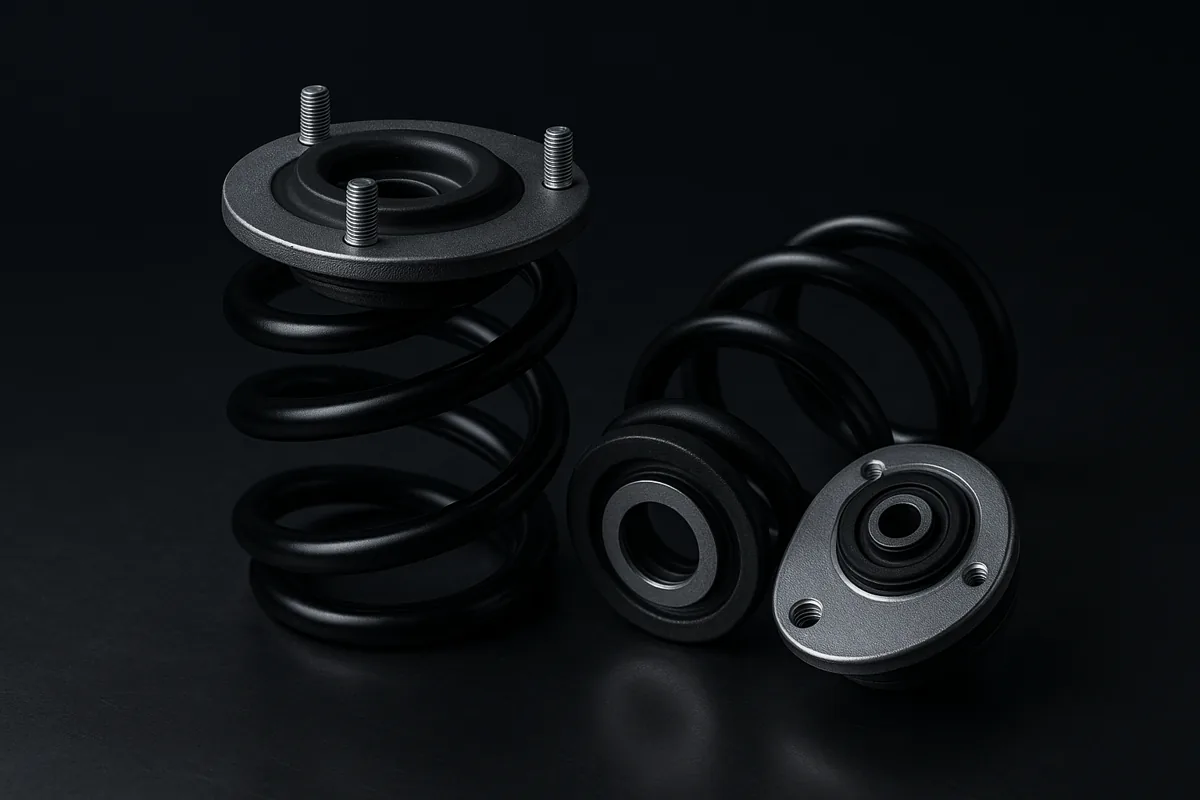
Popular Right Now
scroll for more →
Symptom Finder: What Is Actually Broken?
| What you see or hear | Part to check first |
|---|---|
| Rattle over small bumps at low speed | Anti-roll bar link |
| Knock over larger bumps with wandering steering | Control arm bush |
| Body continuing to move after a bump | Shock absorber |
| Knock or creak from the top of a strut | Strut upper mount or bearing |
| Humming that rises with road speed | Wheel hub unit |
About Suspension
Suspension has two jobs and they are constantly in tension. It must keep each tyre pressed against the road with as consistent a load as possible, which is what generates grip, and it must isolate the body from the road surface, which is what makes a vehicle tolerable to sit in. Springs carry the weight and set ride height, dampers control what the springs are allowed to do afterwards, and arms and links keep each wheel pointing and leaning exactly as designed through every millimetre of that travel. Bushes at every joint locate the arms precisely while filtering vibration, which is a contradiction resolved by careful tuning rather than by a single material. Kerb weights have risen sharply with battery packs, which has raised the loads every one of these components carries.
What to know before buying Suspension parts
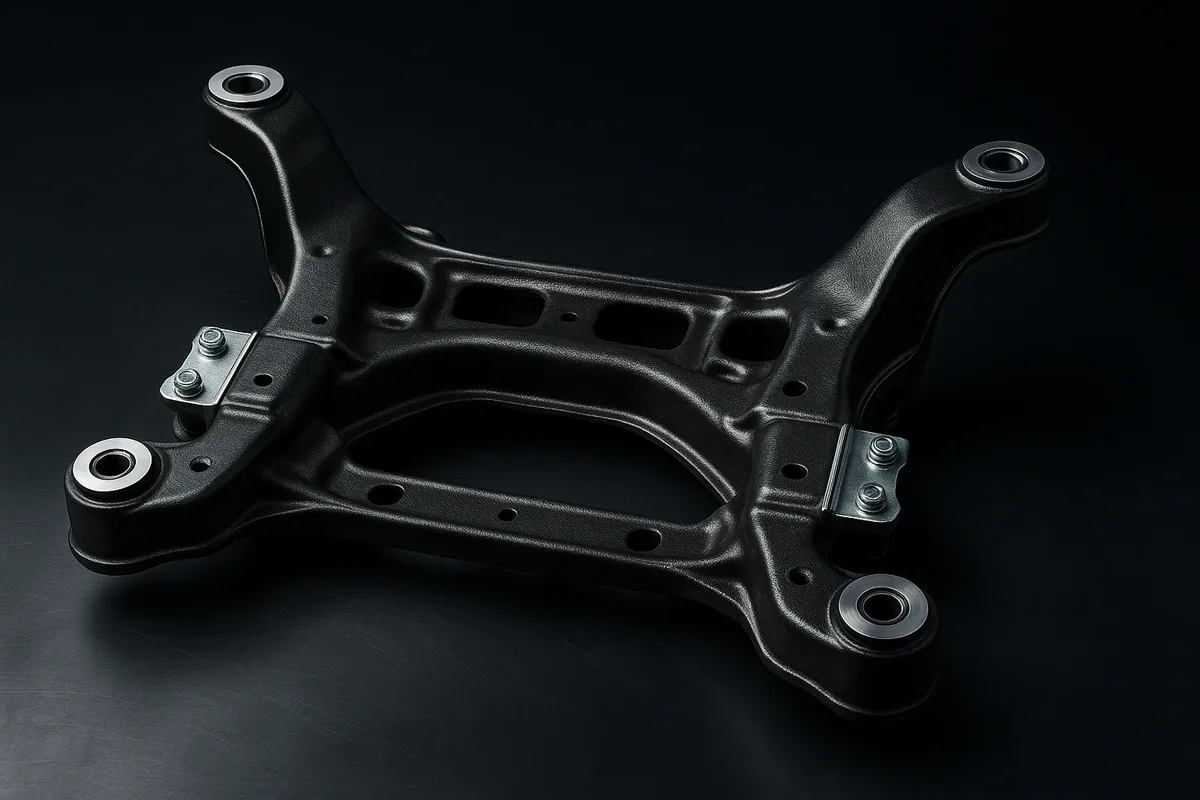
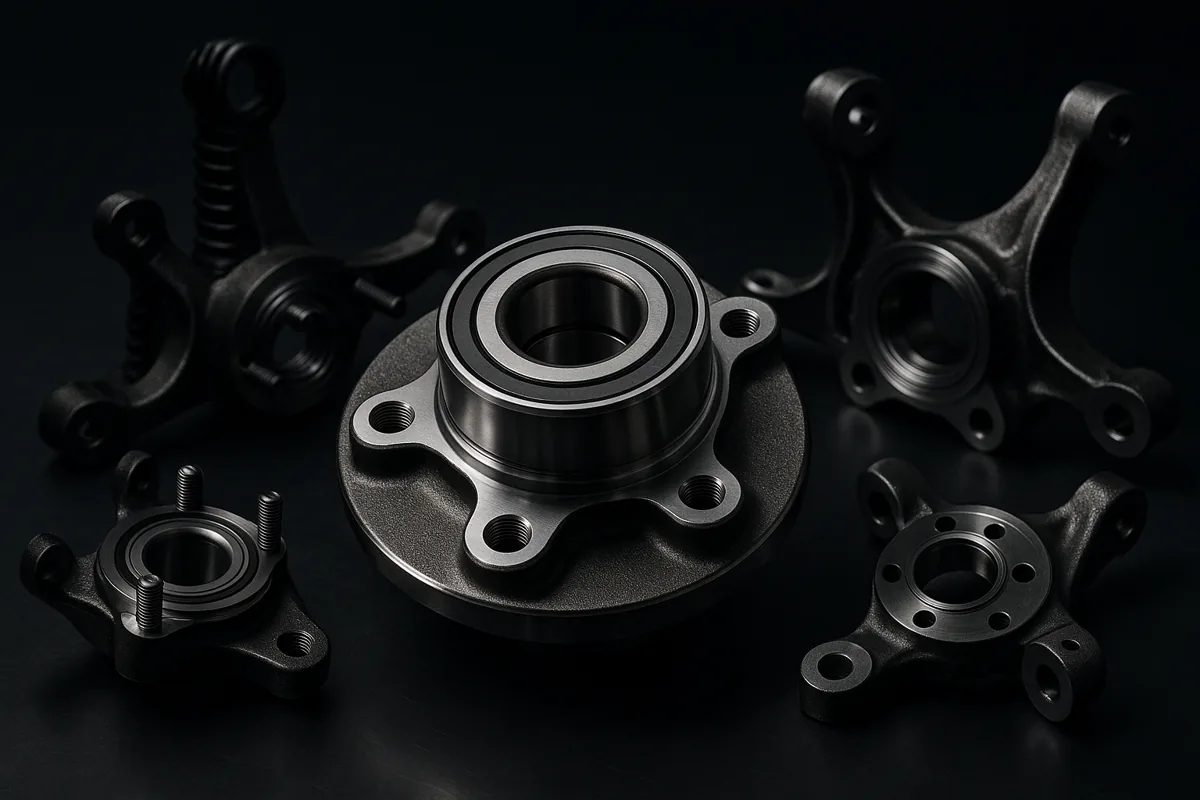
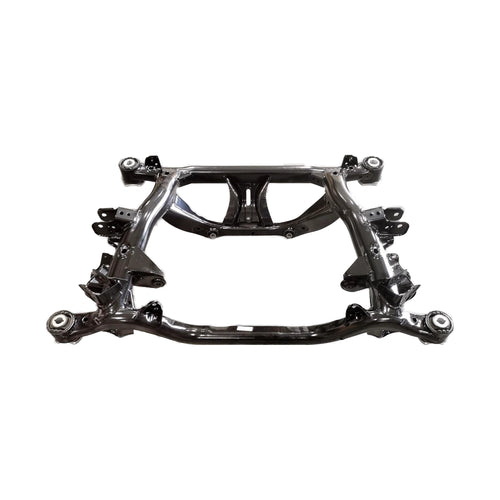
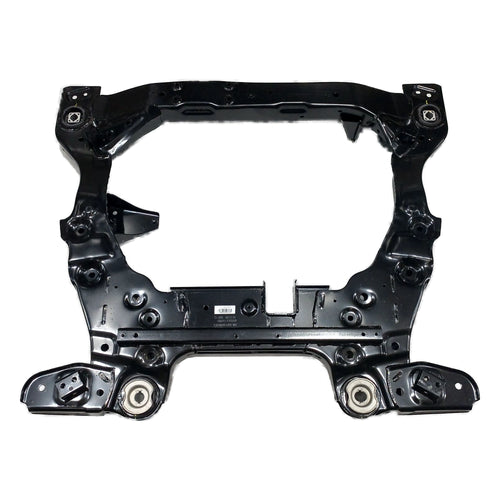
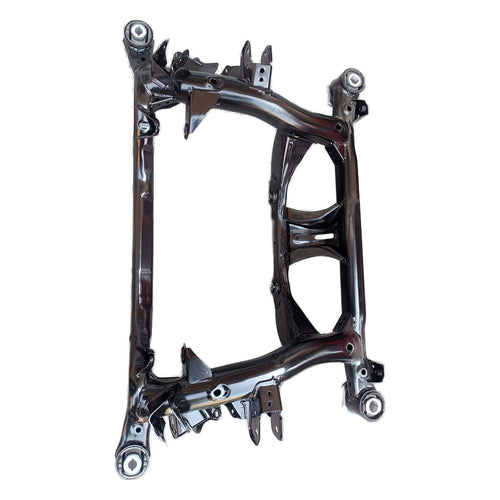
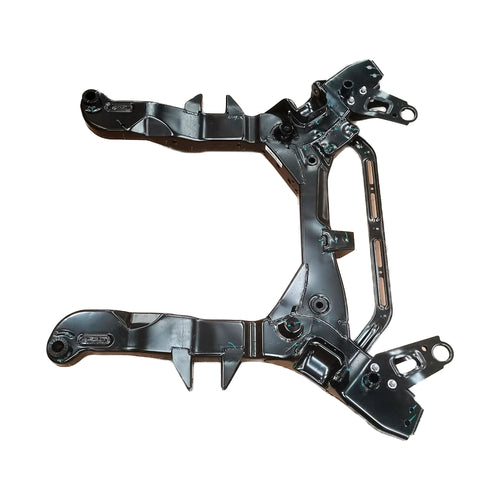
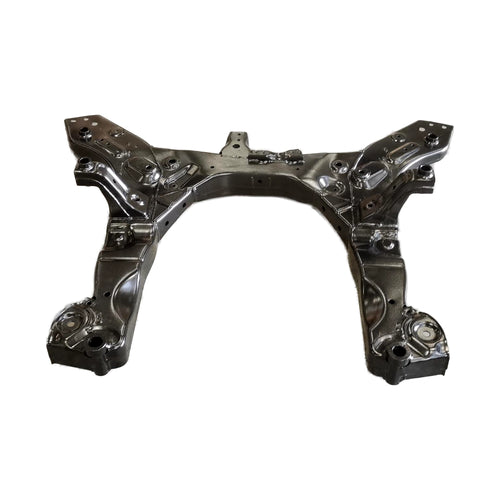
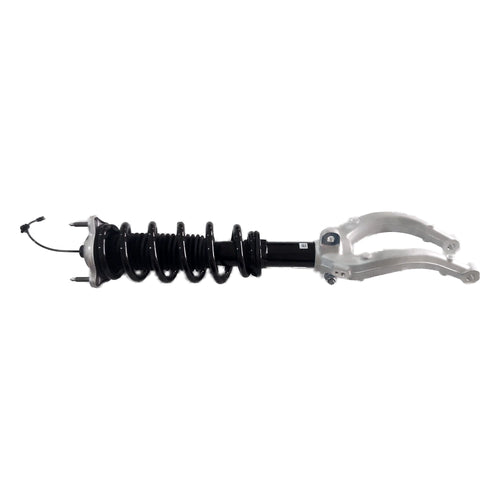
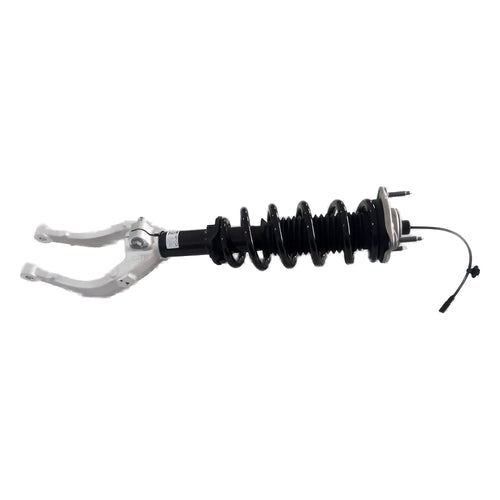
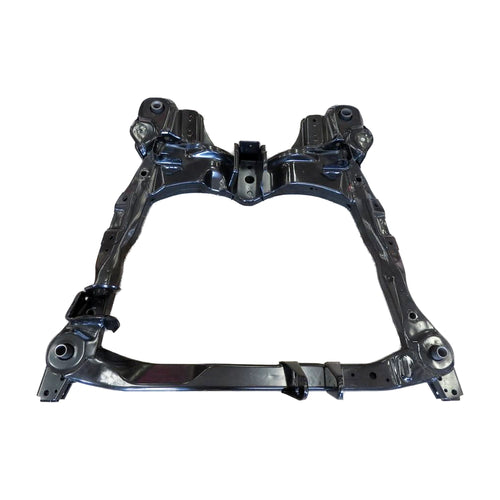
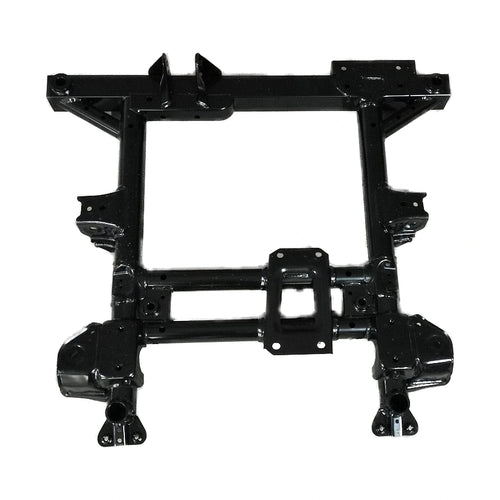
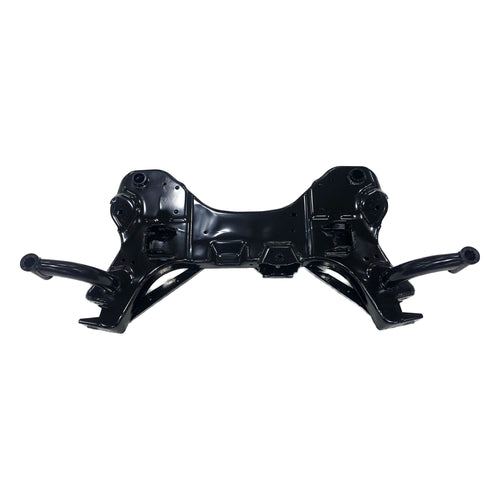
Five child categories divide the system. Control arms and bushings covers arms, links, anti roll bars and their bushes. Shock absorbers and struts covers dampers with their boots and bump stops. Springs and top mounts covers coil springs, seats, cushion pads, mounts and bearings. Wheel hubs, bearings and steering knuckles covers the corner assemblies. Subframe and crossmembers covers the cradles and torsion beams that carry it all.
Order dampers and springs in axle pairs. Match everything by OE number, because rates and geometry follow specification rather than the model. Book an alignment after any arm, knuckle or subframe work.
Before You Order: 5 Checks
- Replace dampers and springs in axle pairs so grip and ride height stay matched.
- Match the OE number, since spring rates and damper valving follow weight and specification.
- Torque bush fixings at normal ride height rather than with the suspension hanging.
- Book an alignment after any arm, knuckle or subframe work.
- Order boots, bump stops and mounting kits with dampers, since reusing them causes noise.
What Changed and Why
Weight is the defining change. Battery packs have added several hundred kilogrammes, which has pushed spring rates, damper valving, bushing sizes and wheel bearing capacities upward and made frequency dependent and adaptive damping common on mainstream vehicles rather than premium ones. Aluminium forgings have spread into lower arms to recover unsprung mass, and those cannot be heated or straightened if damaged. Multi link rear axles have moved down the range to control the geometry of heavier cars, adding more individual arms per corner and more references to match.
Suspension: Frequently Asked Questions
Where do I start with a suspension noise?
With the cheapest and most common cause, which is the anti roll bar links. They are small ball jointed rods taking constant reversing loads, and they wear quickly, producing a light metallic knock over ripples and manhole covers at low speed that vanishes on smooth roads. After that, control arm bushes produce a heavier knock over larger bumps with wandering steering, and top mounts produce a knock at the front that is accompanied by a creak on turning. All three are inexpensive.
Do dampers and springs have to be replaced in pairs?
Dampers, yes, across the axle. Two units of different condition on the same axle give the car different responses on its left and right sides, and the moment that matters is a swerve or a hard stop on a bumpy road. Springs are a little more forgiving but follow the same logic, since a sagged spring on one side leaves the car sitting low and loads the anti roll bar permanently. Front and rear are independent decisions. There is no obligation to change all four corners unless all four have done the same mileage and show it.
Why must bushes be torqued at ride height?
Think of the rubber as a spring in torsion rather than a plain bearing. It is bonded to the inner sleeve and to the outer shell, so when the arm swings the rubber winds up instead of sliding. Clamp that bolt while the wheel hangs free and you have set the neutral position at full droop, which means the rubber is permanently wound in one direction whenever the car rests on its wheels. It tears itself apart in a season. Load the suspension on ramps or with a jack under the hub before final tightening.
How do I know which wheel bearing is noisy?
Load and unload each side with the steering. A failing bearing produces a rumble that rises and falls with road speed rather than engine speed, and weight transfer changes it: on an empty road, a long gentle curve to the left puts more load on the right hand wheels, so a right hand bearing gets louder there and quieter on the opposite curve. Confirm off the road by lifting each wheel and rocking it at twelve and six o'clock while feeling the hub. Eliminate the tyres first, since a worn tread pattern roars in a very similar way.
Do I always need an alignment?
After anything that disturbs an arm, a knuckle, a subframe or a tie rod, yes, because those components define camber, caster and toe, and bolts through slotted or eccentric mountings will not return to exactly the same position. Dampers alone on a rear axle usually do not change geometry, and front struts do, since camber is set at the strut on many designs. When in doubt, book the rig visit. It costs far less than a set of tyres.
Does a heavy electric car wear out its suspension faster?
Generally, yes, and the bushes and top mounts usually show it first. A battery pack adds a large mass carried low in the body. The springs sit under more preload, the dampers work in a higher load range and every rubber joint deflects further over each bump. Instant motor torque also twists the arms and their bushes each time you pull away. Parts for these vehicles are rated for that load, so fitting a lighter design from another model is a false economy. Read the OE number on the old part and enter it exactly in the search box.
Is a damper with oil on it finished?
Not always. A light mist of oil around the rod seal is common and usually harmless, because the seal is designed to leave a thin film on the rod. If the body is coated in wet, dirty oil or it drips onto the spring seat, the seal has failed and the unit is losing the fluid that does the damping. Confirm it on the road. A failed damper lets the body float after a crest, dive under braking and skip over broken tarmac. If you see both signs, read the OE number on the old unit and search for it.
Can a coil spring break without me noticing?
Easily. Springs usually snap at the bottom coil. Water and salt sit in the spring seat there and corrode the coating until a pothole finishes the job. The broken end often stays trapped in its seat, so the car feels almost normal on a smooth road. The clues are one corner sitting slightly low, a clonk over speed humps or a creak at full lock. Shine a torch along the lowest coil to look for a clean break. A loose end can cut into the tyre, so stop driving and read the OE number on the old spring before ordering.
Should I replace the whole control arm or just the bush?
It depends on how the arm is built. On many arms the bushes are bonded and the ball joint is riveted or pressed in and not serviced separately, so the complete arm is the only proper repair. Where the bush can be serviced, fitting a new one needs a press or a dedicated tool, and the arm must be sound with a tight ball joint. If the ball joint has play, a torn boot or corrosion, fit the complete arm. Search the OE number from the old arm. If you only need the bush, ask through the quote form and we reply within 24 hours, usually sooner.
Is the wheel bearing sold on its own or as a hub unit?
Both designs exist. Many modern vehicles use a sealed hub unit that bolts to the knuckle in one piece, with the bearing, flange and wheel speed encoder built in. Other designs press a bearing into the knuckle and then press a separate hub into the bearing. That needs a press and the correct drifts, because pushing on the wrong race ruins a new bearing instantly. On press fit types the magnetic encoder side must face the wheel speed sensor, or the ABS light comes on. The OE number on the old hub or bearing tells you which design your vehicle uses.
Can I reuse the hub nut and suspension bolts?
Often not. Many hub nuts have a collar that is staked into a groove in the driveshaft, and that deformed collar is what stops the nut loosening. Once the nut has been undone, it cannot lock the same way again. Some arm and knuckle bolts are tightened to a torque plus an angle, which stretches them slightly and makes them single use. A reused fastener can work loose or leave the bearing with end play, which also disturbs the wheel speed signal. Check the fitting instructions for your model and have a qualified mechanic do the final tightening.
Should I fit new top mounts when changing struts?
Usually, yes. The top mount carries the full load of that corner through a rubber isolator. On the front it also contains a bearing that lets the strut turn with the steering. It has done the same mileage as the old strut, and replacing it later means compressing the spring and stripping the corner a second time. While the corner is apart, check the bump stop and the dust boot as well. A split boot lets grit score the new rod, and a crumbled bump stop lets the strut bottom out. Read the OE number on the old mount and search for it alongside the strut.
When does a subframe need replacing rather than just its mounts?
Mostly after corrosion or an impact. The subframe is a steel cradle that carries the arms, the steering rack and often a drive unit, and it bolts to the body through large rubber mounts. Worn mounts cause a clunk when you accelerate or brake and a vague feel in corners, and they can be replaced on their own. The frame itself needs replacing when rust has thinned the metal near a mounting point, or when a kerb strike has bent it so the alignment cannot be brought back into range. Have a qualified mechanic measure it, then match the OE number on the old frame.
Why does one corner of my air suspension sit low overnight?
If only one corner drops, the leak is almost always at that corner. The usual causes are a perished rubber bellows on the air spring or a loose line fitting. If the whole car drops evenly, suspect the valve block, or a compressor that can no longer keep up. With the suspension raised, spray soapy water over the bellows, fittings and lines and watch for bubbles. Deal with it early, because a compressor that runs constantly to make up for a leak overheats and fails as well. Take the OE number from the old air spring or strut before ordering.
How do I tell a left hand part from a right hand one?
Many arms, knuckles, hubs and struts are handed. The left and right versions are mirror images and carry different OE numbers. Sides are named as seen from the driving seat facing forwards, so in the UK the left is the nearside, next to the kerb. A part fitted to the wrong side may still bolt up, but it puts the caster angle, the caliper mounting or the sensor in the wrong place. The OE number on the old part already tells you the side. If the part changed during production, the build date on the identification plate decides which version fits.