Driveline & Axles
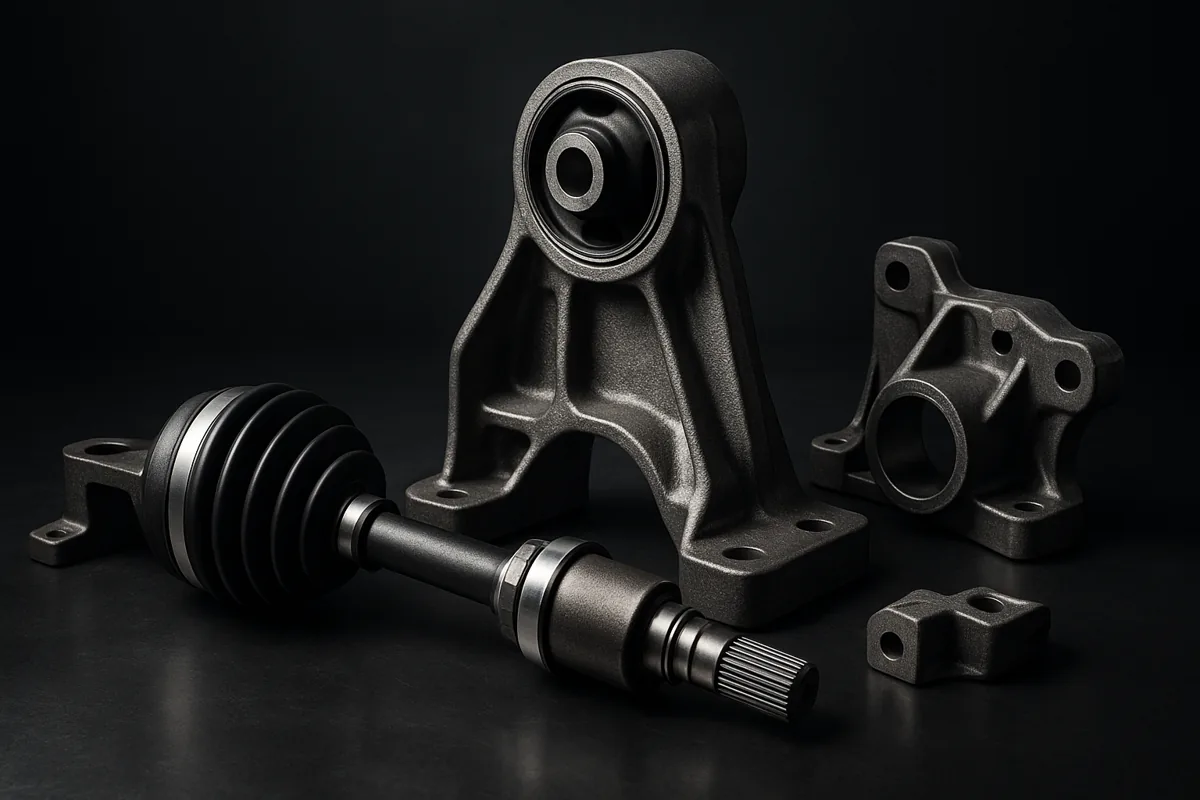
Shop Driveline & Axles by Part Type
Popular Right Now
scroll for more →
Symptom Finder: What Is Actually Broken?
| What you see or hear | Part to check first |
|---|---|
| Clicking on full lock at low speed | Outer CV joint or complete driveshaft |
| Clunk when taking up drive or lifting off | Powertrain mount or driveshaft joint |
| Whine that follows road speed | Final drive gear or bearing |
| Grease flung around the inside of a wheel arch | CV joint boot |
| Vibration under acceleration that fades when coasting | Inner CV joint |
About Driveline & Axles
The driveline exists to get torque to the wheels while everything moves relative to everything else. A final drive reduces speed and multiplies torque, and a differential inside it lets the outer wheel turn faster than the inner through a corner while both still receive drive. From there, shafts carry torque out to the hubs through constant velocity joints that accommodate suspension travel and, at the front, steering angle. Holding all of it in place are mounts, bonded rubber elements tuned to locate the assembly firmly while blocking the vibration it produces. Electric drivetrains simplify the middle of this chain by removing gear changes entirely, and complicate the ends of it, since torque arrives instantly and reverses frequently under regenerative braking.
What to know before buying Driveline & Axles parts
Start with the boots and the mounts. They fail first. The shafts and gear sets behind them fail last and cost far more to put right. Match everything by OE number, and order graded parts only once you have measured.
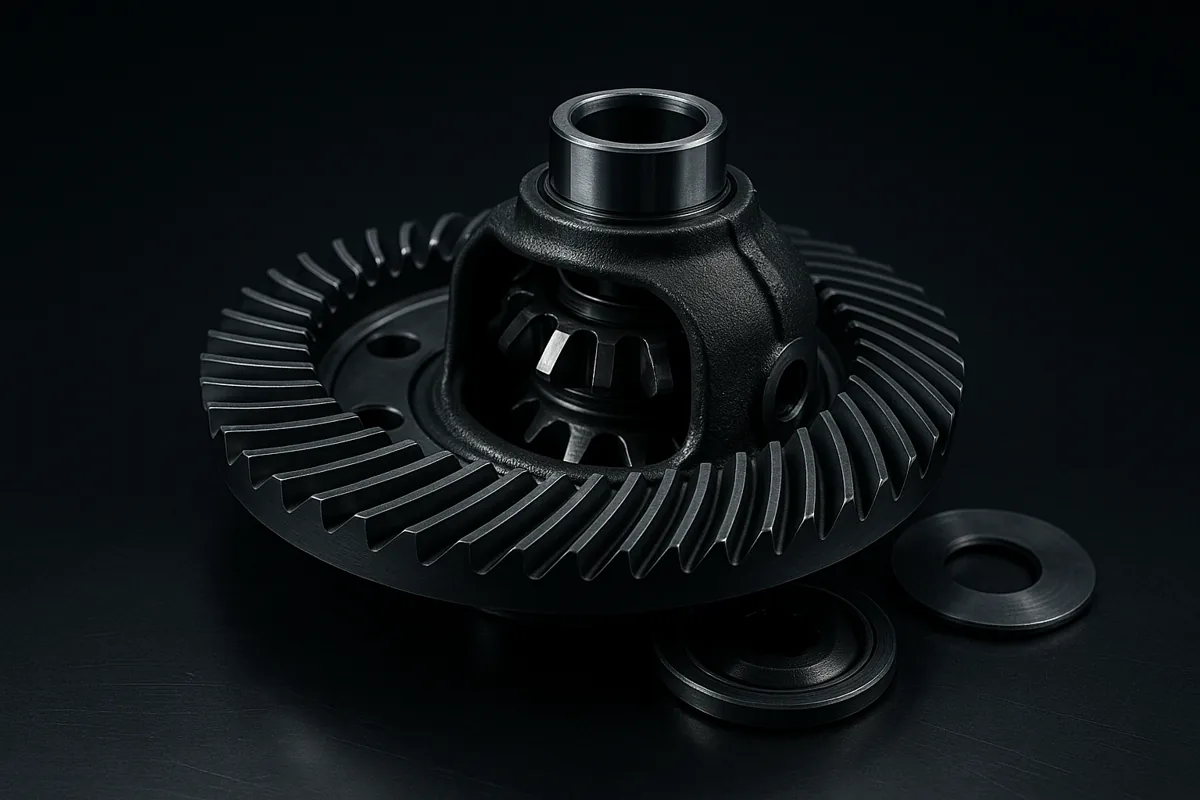
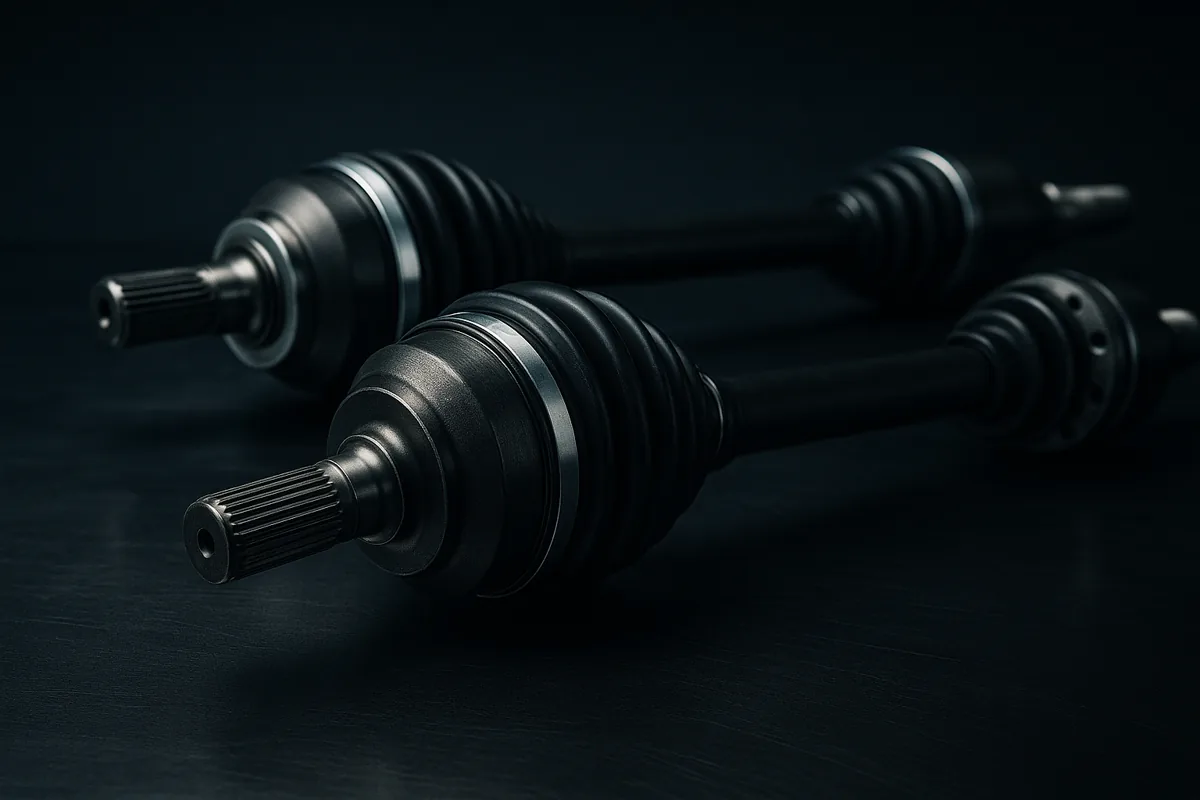
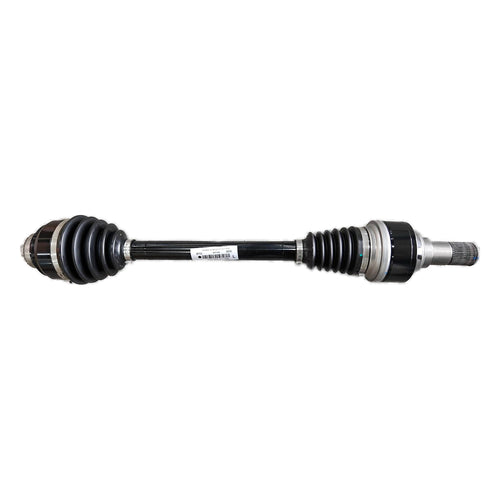
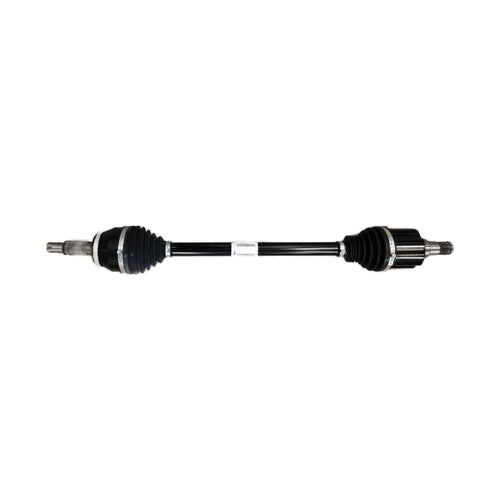
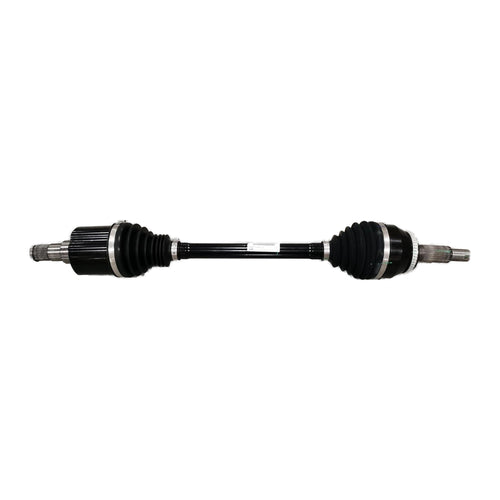
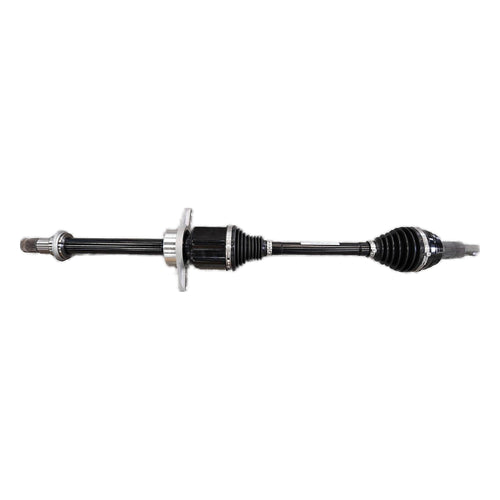
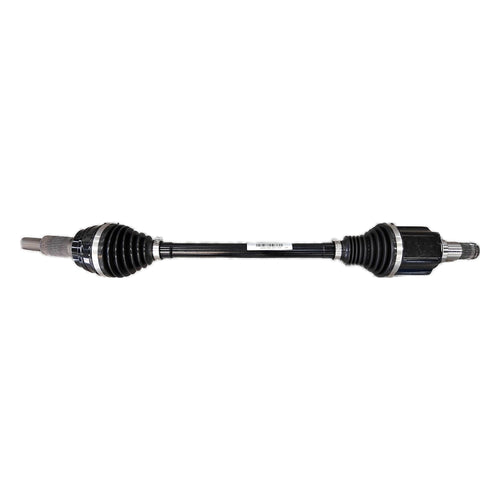
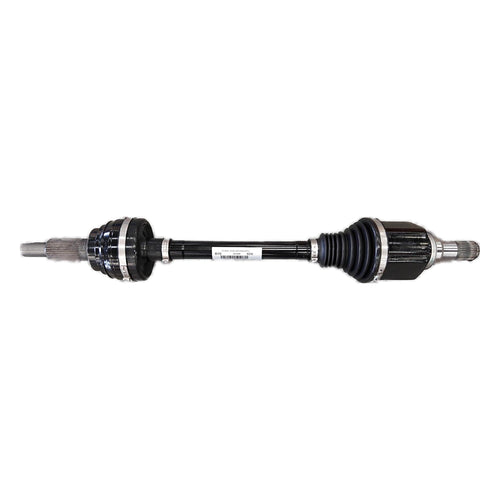
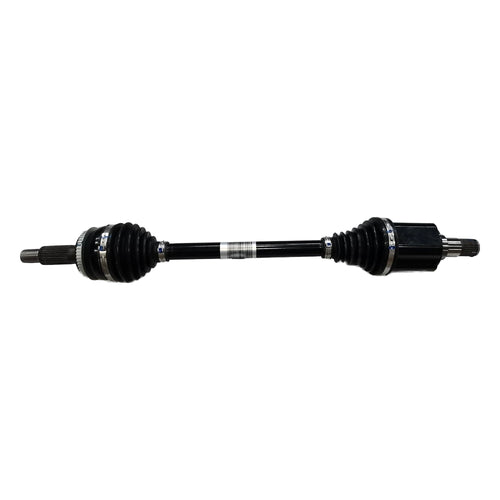
Four child categories cover the group. Drive shafts and CV joints holds complete shafts and the boots whose condition decides how long a shaft lasts. Differential and final drive holds carriers, gears and the graded shims and thrust washers that a rebuild is measured against.
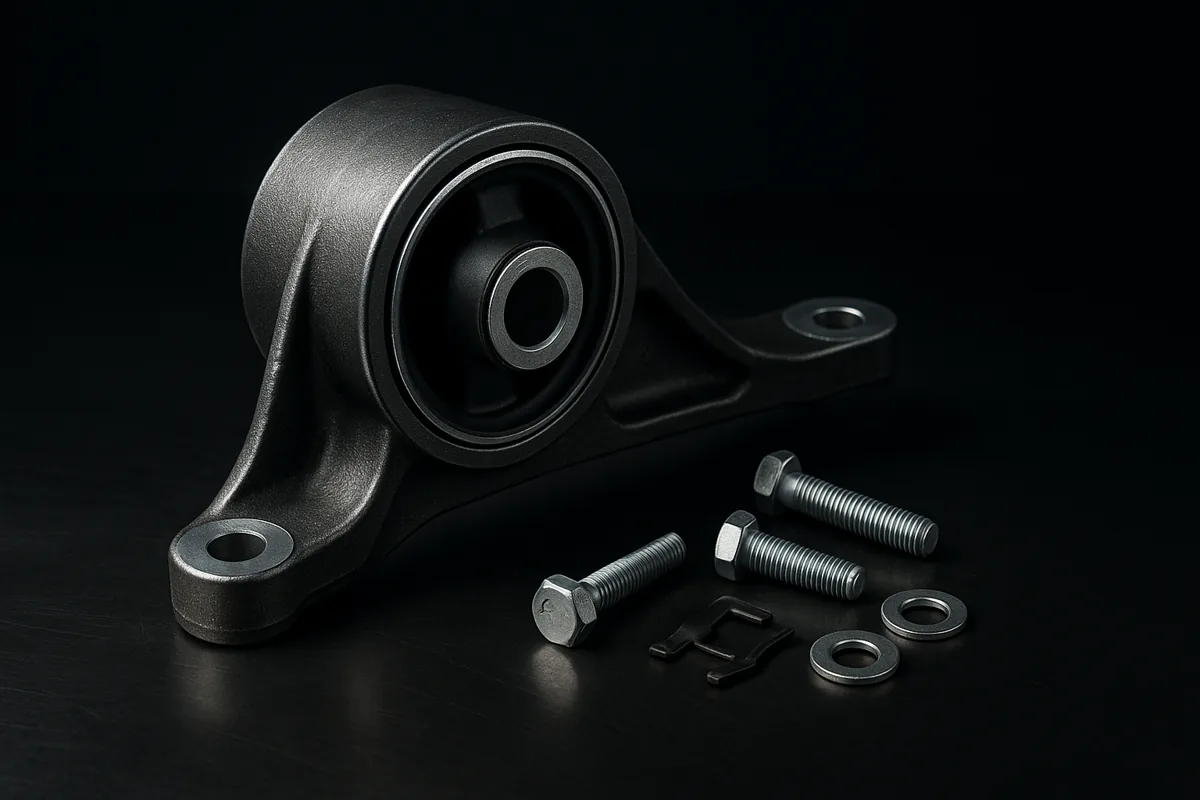
Gearbox internals holds shafts, gears, bearings and selector parts for manual transmissions. Engine and powertrain mounts holds the supports and brackets that carry the assembly.
Before You Order: 5 Checks
- Inspect CV boots at every service, since a split boot is the start of nearly every joint failure.
- Match the OE number and the position, because shaft lengths and spline counts differ side to side.
- Order a new hub nut with any complete driveshaft, since most are single use.
- Measure before ordering graded differential shims and thrust washers.
- Identify whether the rubber support or the steel bracket has failed before ordering a mount.
What Changed and Why
Electric drivetrains have changed what wears in this group. Full torque from a standstill and frequent reversal under regenerative braking load joints, splines and mounts more sharply than a combustion drivetrain that was cushioned by a clutch or torque converter, and heavier kerb weights add to it. Manufacturers have responded with larger joints, thermoplastic boots and mounts tuned to block the high frequency tones that a motor and reduction gears produce, which are audible in a cabin with no engine noise to mask them.
Driveline & Axles: Frequently Asked Questions
What is the cheapest thing to check when the driveline is noisy?
The boots and the mounts, in that order. A split constant velocity boot costs very little to replace and, caught early, saves a complete shaft, since every joint failure begins with grit entering through a torn boot. Worn powertrain mounts produce the clunk on taking up drive that owners frequently attribute to the differential or the shafts. Both are visible on a raised vehicle in a few minutes, and both are far cheaper than the parts people order first.
How do I tell final drive noise from a wheel bearing?
By how the noise responds to load rather than to speed. A gear mesh problem changes between gentle acceleration and coasting at the same road speed, because tooth loading changes, while a bearing produces a steadier rumble that stays broadly constant with load and alters as cornering shifts weight onto it. Both follow road speed rather than motor speed, which is why the load test rather than the speed test is the useful discriminator.
Why are differential shims sold in graded sizes?
Because clearance is set by selection rather than adjustment. Manufacturing tolerances mean every carrier, gear and housing combination is slightly different, so the factory measures the assembly and fits the graded shim or thrust washer that brings backlash and bearing preload into specification. A rebuild follows the same process: assemble dry, measure, calculate, then order the exact grade. Buying an assortment wastes most of it and encourages assembly by feel, which is how rebuilt final drives come to whine.
Do electric vehicles use anything in this group?
Most of it. They have driveshafts and constant velocity joints, a differential inside the reduction gearbox, and powertrain mounts carrying the drive unit, and all three work harder because torque arrives instantly and reverses under regeneration. What they do not have is a multi speed gearbox, so nothing in the gearbox internals listings applies to a battery electric vehicle. Those parts serve the combustion and hybrid vehicles in the catalogue.
Should I repair a boot or replace the shaft?
Catch it early and the boot kit is much the better value. A boot that has only just split, with grease still packed inside and no noise from the joint, can be saved by stripping, cleaning out every trace of grit, inspecting the tracks and repacking with the correct grease. Once the joint clicks on lock, wear has already occurred and cleaning will not reverse it, at which point a complete shaft is the honest answer once labour is counted.
How do I tell an inner constant velocity joint fault from an outer one?
An outer joint usually fails first and makes a rhythmic clicking on full lock under power. It is loudest when pulling out of a parking space. An inner joint rarely clicks. It shows up as a shudder or vibration under acceleration that fades as you lift off, or as a clunk when drive is taken up after coasting. Some shafts are supplied only as complete assemblies, while others let you replace the joint alone. Read the OE number on the old shaft and enter it in the search box before ordering.
Can I reuse the drive shaft hub nut?
Usually not. Most drive shaft nuts lock by deforming, either through a staked collar or a distorted thread, and once that deformation has been used the nut cannot hold reliably a second time. A reused nut can back off and let the shaft splines and hub bearing move against each other, which causes a clunk and then damage. Tighten the new nut with a torque wrench to the figure in the service information, never with an impact gun. Then stake or pin it as the original was. Search the OE number from the old nut or shaft to find the correct item.
Should I fit a new output seal when the drive shaft comes out?
Yes, in almost every case. The seal lip takes a set against the old shaft and is easily nicked as the splines pass through it, so a seal that was dry before removal often weeps afterwards. Oil the new lip and drive the seal in square and flush with a tool that bears on the whole outer edge. Then guide the shaft in without letting the splines drag. If a new seal still leaks, look for a worn groove on the sealing surface of the shaft. Read the OE number from the old seal to order the matching part.
If one powertrain mount has failed, should I replace them all?
Replace the failed one, then inspect the rest carefully. Mounts on the same vehicle age together, and a collapsed mount shifts load onto its neighbours, so a second failure often follows. Look for cracked or separated rubber, a unit sitting lower than it should, and fluid staining around hydraulic mounts, which lose their damping when the internal membrane ruptures. With the brakes firmly applied, a helper can gently take up drive while you watch from a safe position, and excessive movement shows clearly. Order by the OE number on each mount, because positions are rarely interchangeable.
Does the oil in an electric drive unit ever need changing?
Yes, although far less often than engine oil. The reduction gears and differential run in a sealed oil bath that also carries away wear particles, and most of those particles are produced early on while the gears bed in. Intervals vary widely between vehicles, so follow the service schedule for yours and use exactly the specified oil, since some units also use it to cool the motor. Owners often report that a fresh change quietens a developing whine. For drain plugs and sealing washers, check the OE number on the old part or ask a qualified mechanic.
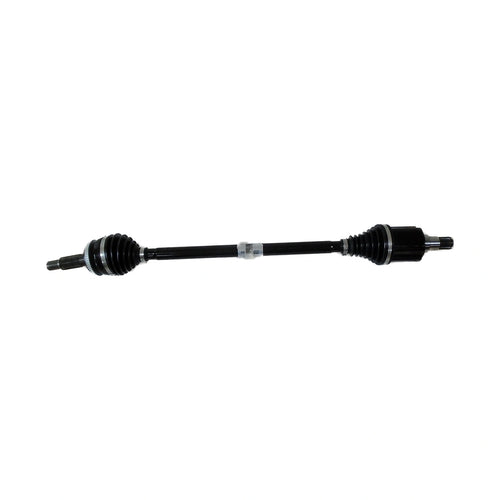
Are the left and right drive shafts the same part?
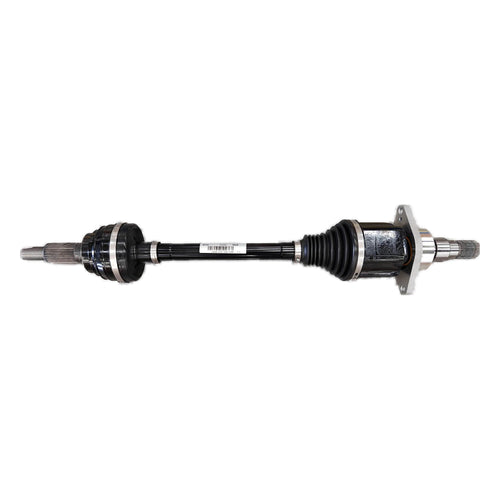
Rarely. The gearbox or drive unit sits off centre, so the shafts differ in length. Many designs balance this with an intermediate shaft and a support bearing on the longer side, which keeps the joint angles similar and reduces torque steer. Joint types, spline details and sensor rings can also differ between sides, and between versions of the same model. Order each side by the OE number on its own shaft, usually printed on a label or stamped near the inner joint, and never assume one side is simply a mirror image of the other.
Why does my gearbox grind going into one particular gear?
A grind into one gear only, usually worse on a quick change or with cold oil, points to a worn synchroniser ring for that gear. The ring acts as a small cone clutch that matches the gear speed to the shaft before the dog teeth engage, and once its friction surface wears it cannot do that in time. First check that the clutch releases fully, because a dragging clutch grinds into every gear. If the ring is at fault, the gearbox must be opened. Identify each ring by its OE number and have a qualified mechanic inspect the dog teeth as well.
Why is the drive shaft stuck in the hub, and how should it come out?
Over time the splines corrode into the hub, especially on cars used through salted winters. With the nut removed, support the hub and use a puller that bears on the shaft end rather than hammering it, since blows can damage the joint internals and the hub bearing. Penetrating oil and patience do most of the work. On refitting, clean the splines thoroughly and follow the service information on whether a light film of assembly paste is specified. If the splines or threads are damaged during removal, search the OE number from the old shaft to find its replacement.