Fuel & Air Supply
Shop Fuel & Air Supply by Part Type
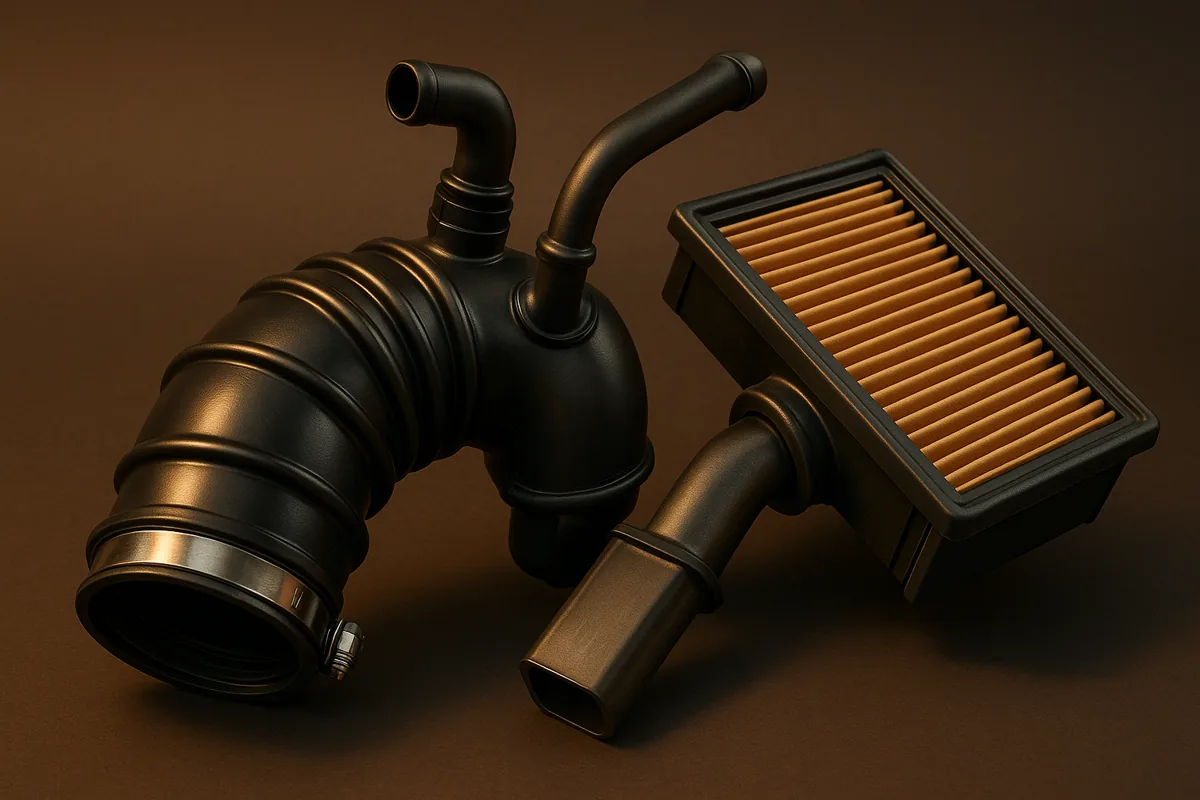
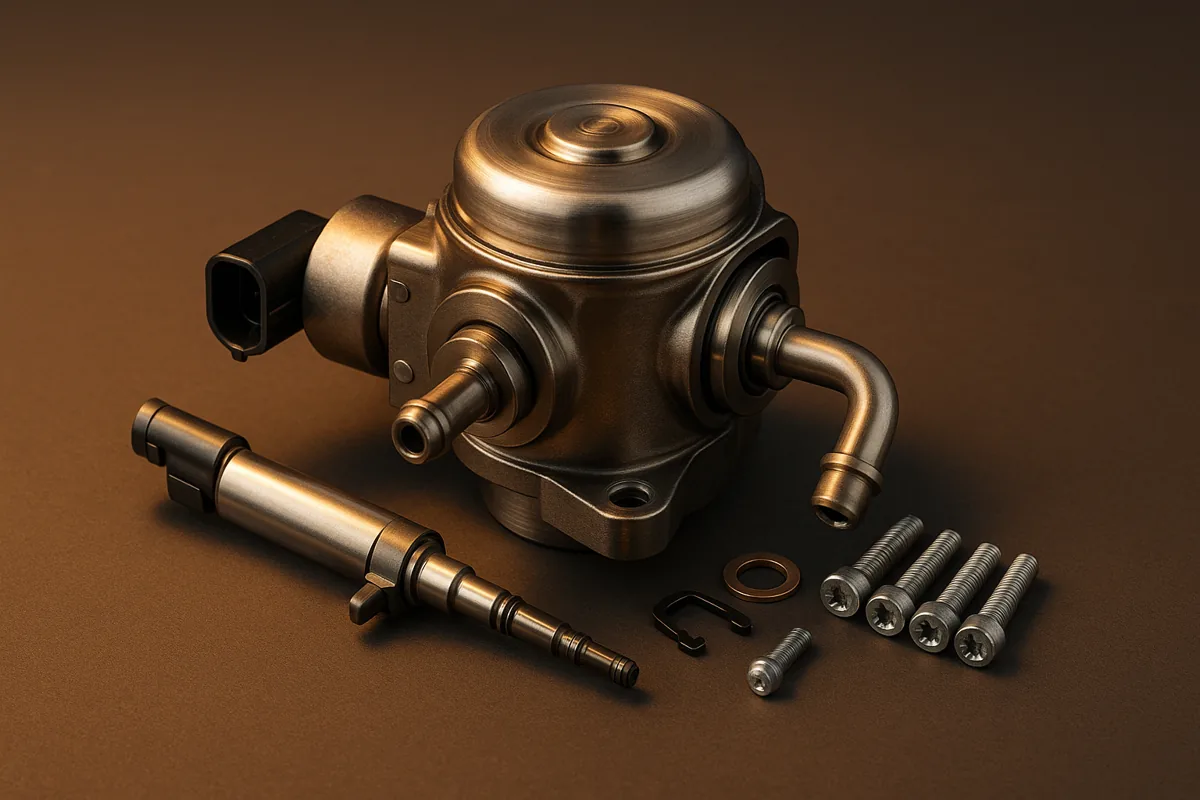
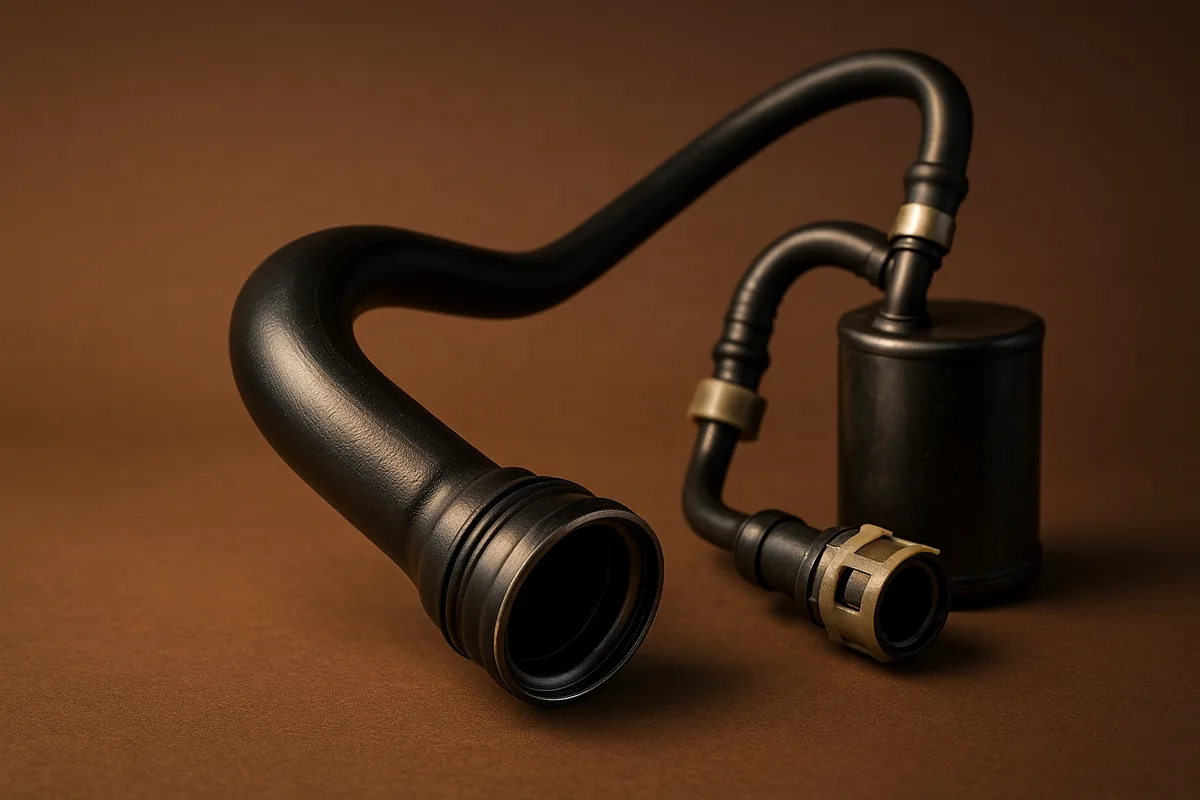
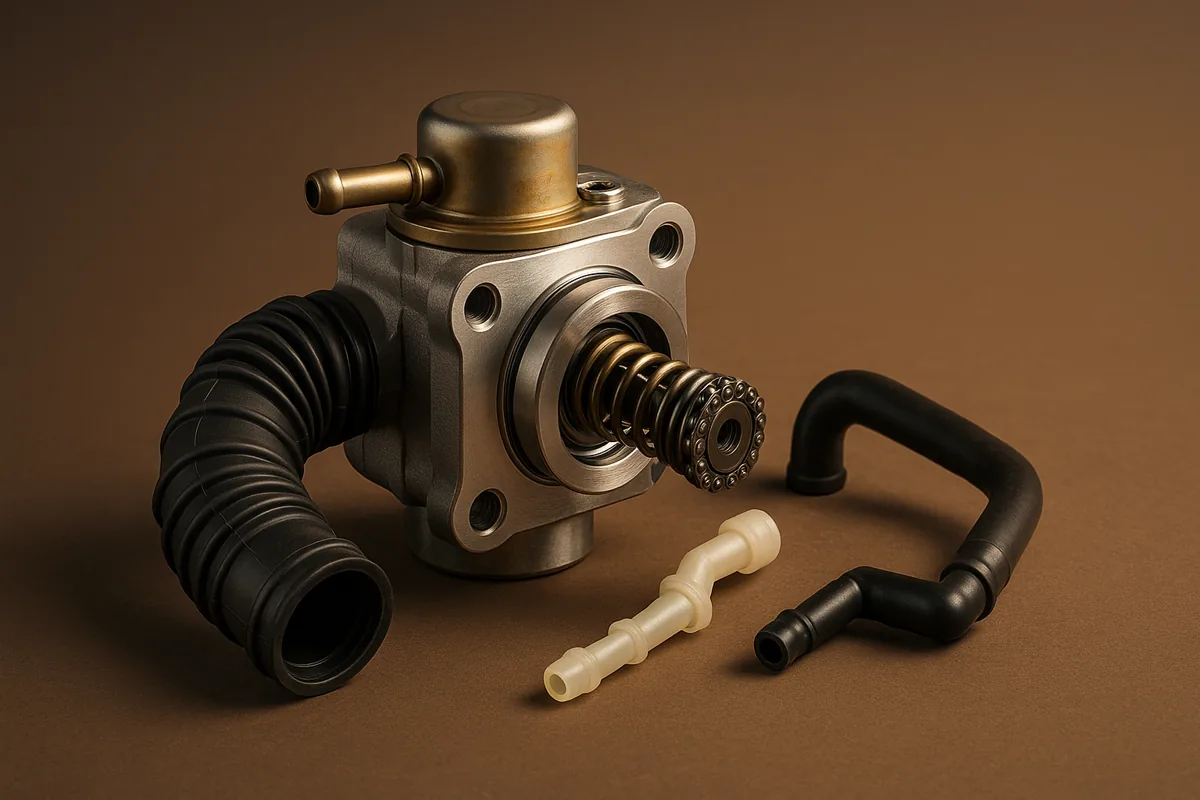
Popular Right Now
scroll for more →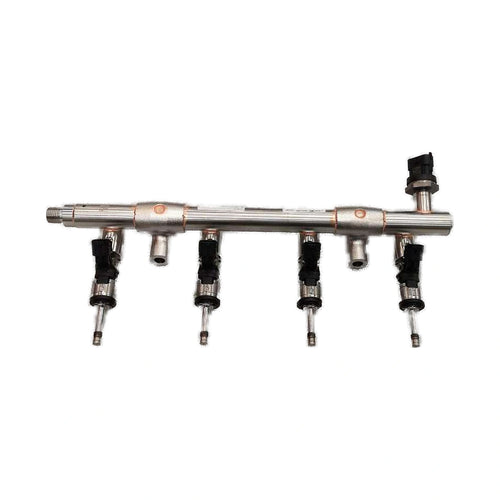
Symptom Finder: What Is Actually Broken?
| What you see or hear | Part to check first |
|---|---|
| Rough idle with fuel trim running lean | Split intake hose or ventilation pipe |
| Misfire confined to one cylinder | Fuel injector |
| Power loss under load with a rail pressure fault | High-pressure fuel pump |
| Long cranking before the engine starts | Fuel pump losing prime |
| Hunting idle after throttle body cleaning | Idle relearn not performed or a reused gasket |
About Fuel & Air Supply
An engine burns air and fuel in a ratio it must hold within a few per cent, which means measuring one and metering the other very precisely. Air enters through a filter, passes a measuring point, and reaches the cylinders through a throttle and a manifold designed around the pressure waves that help fill each cylinder. Fuel travels from a tank through nylon lines to a low pressure pump, then to a high pressure pump that lifts it to injection pressure, feeding a rail and injectors that open for fractions of a millisecond at a time. Everything after the measuring point is sealed for a reason: a split hose admits air the engine never counted, and the fuelling drifts until the control unit compensates for a leak it cannot see.
What to know before buying Fuel & Air Supply parts
Check rail pressure and fuel trim data before you order. Supply, injector and intake faults present in much the same way, and they differ enormously in price.
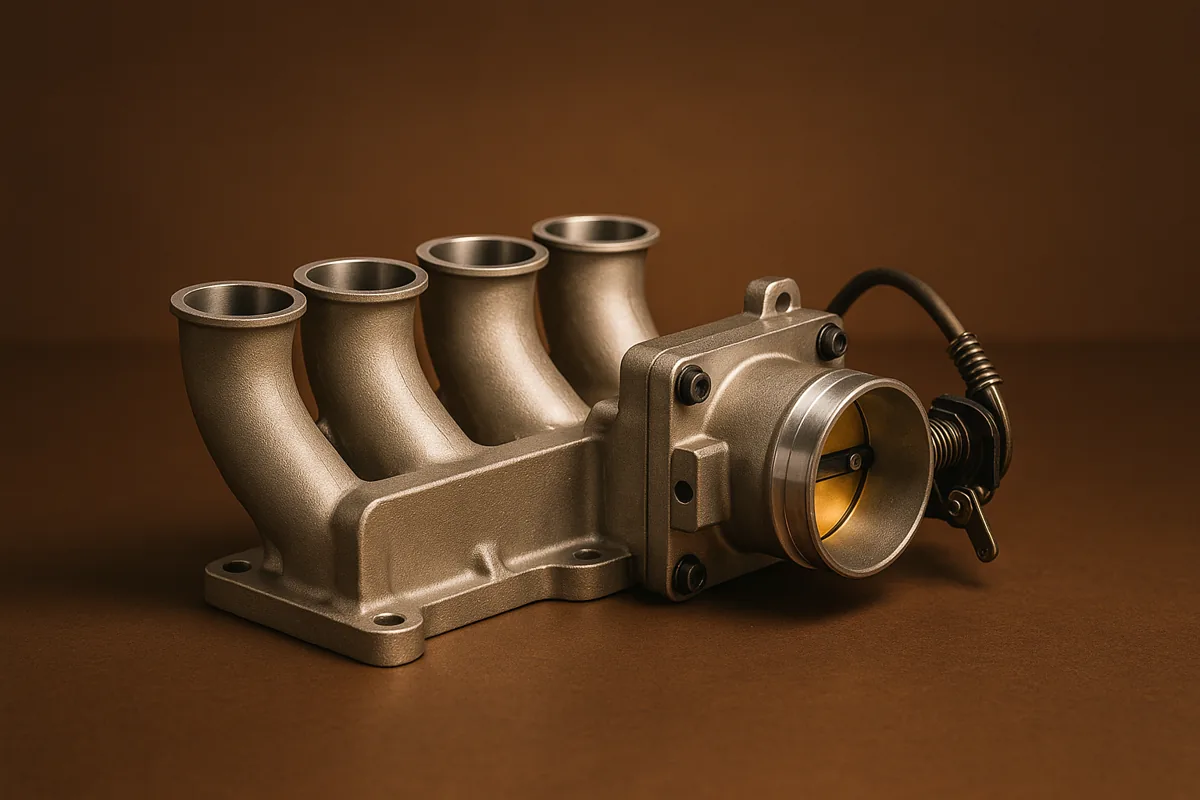
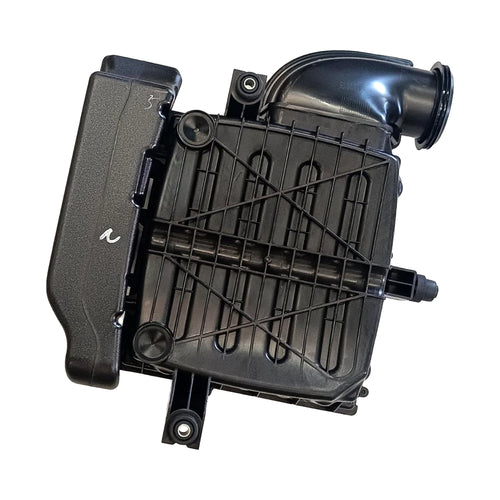
Air intake and filter covers filters, ducts, resonators and the crankcase ventilation pipes, which behave like intake parts when they split. Throttle body and manifold covers the throttle, the manifold, gaskets and cables.
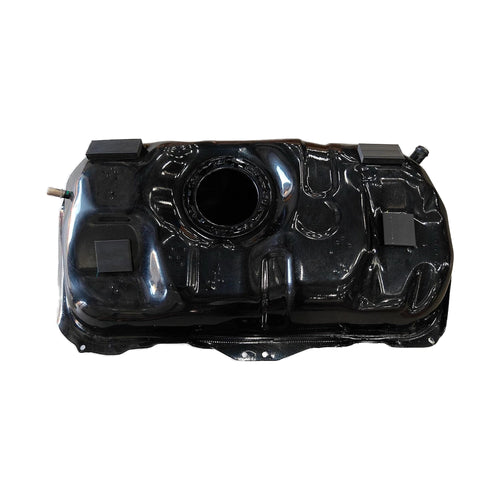
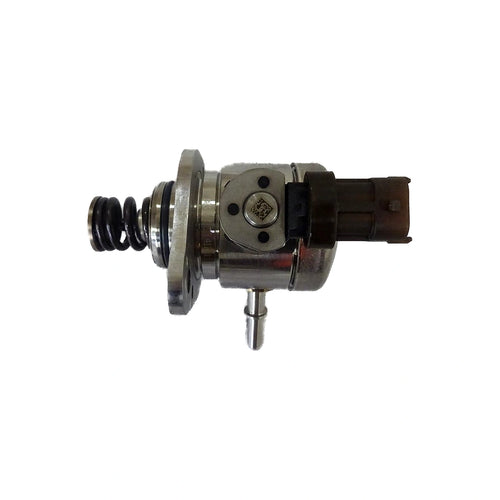
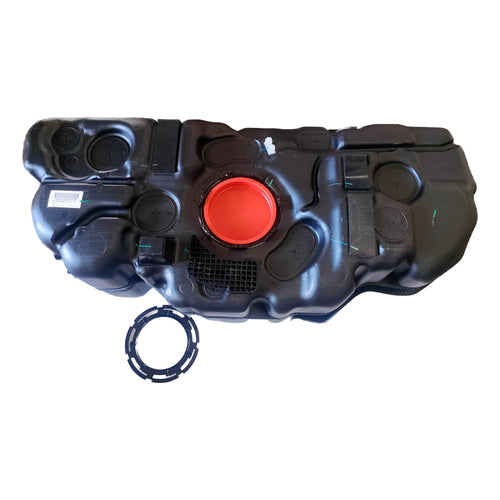
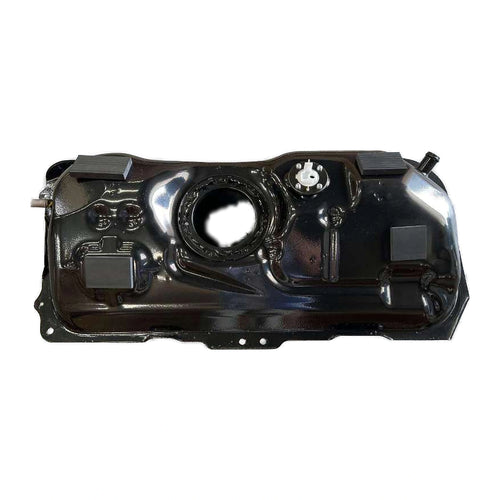
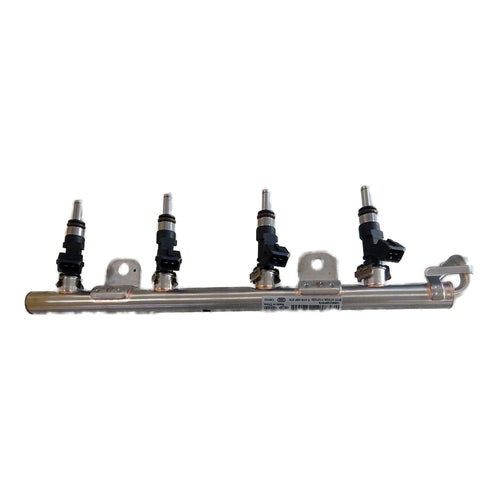
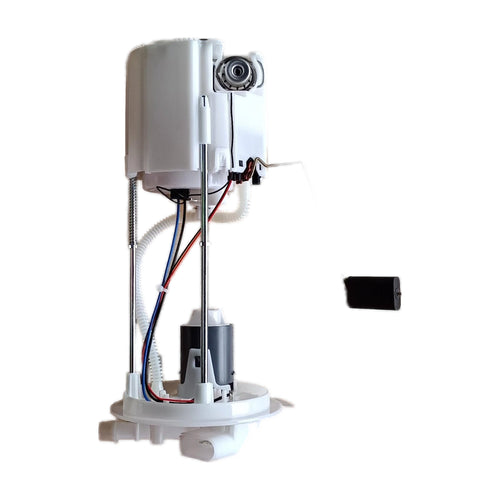
Fuel pump and injection covers in tank pumps, high pressure pumps, rails and injectors. Fuel tank, lines and filters covers tanks, straps, filler hoses and the numbered nylon and hard line sections.
Before You Order: 5 Checks
- Read rail pressure and fuel trim data before ordering, since supply and injector faults look alike.
- Inspect intake hoses at their corrugations and undersides, where splits hide.
- Try cleaning and an idle relearn before replacing an electronic throttle body.
- Order new high pressure pipes, seals and gaskets with any joint you open.
- Check whether your injectors require calibration coding after replacement.
What Changed and Why
Direct injection has raised pressures and tightened tolerances, and it brought a consequence port injection never had: without fuel washing over them, intake valves accumulate carbon from crankcase and recirculation gases, which is why walnut blasting has become a routine service on some engines. Injectors have moved to piezo actuation on higher specification units and now commonly carry a calibration code that must be entered after replacement. Evaporative systems have tightened in parallel, with sealed tanks and active leak detection reporting faults that were previously invisible.
Fuel & Air Supply: Frequently Asked Questions
Where do I start with a rough idle and a lean reading?
Air getting in after the meter is the classic explanation, so hunt for it methodically. With the engine idling, use a length of hose as a stethoscope along the intake tract and listen for the hiss, or spray a little carburettor cleaner around joints and watch for a change in idle speed. Pay attention to the concertina sections of moulded hoses, where cracks form on the hidden underside. Include the crankcase breather pipe and the brake servo hose in the search, since both feed the same manifold and both harden with age.
How do I tell a pump fault from an injector fault?
Put a scan tool on it and watch two numbers. The first is rail pressure against the value the control unit is asking for. A shortfall under load points at delivery, meaning the lift pump, a clogged filter or a worn high pressure unit. The second is the misfire counter per cylinder. Even pressure with one cylinder counting misfires puts the fault at that injector, its wiring or its calibration data. Add a return flow test on common rail diesels, which shows a leaking injector clearly. Guessing without these figures is how people buy pumps they did not need.
Should I clean or replace a throttle body?
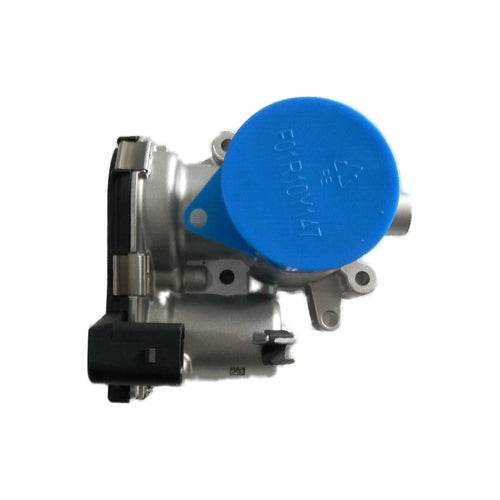
Clean first, and perform the idle relearn afterwards. Carbon and oil mist build up around the butterfly and change the airflow at the small openings the control unit uses at idle, and a proper clean with the correct product resolves a large share of hunting idle complaints. Fit a new gasket on refitting, since a reused one leaks and produces exactly the fault you were trying to cure, and run the relearn on a fully warmed engine or the procedure will not take.
Why do fuel lines need ordering by section number?
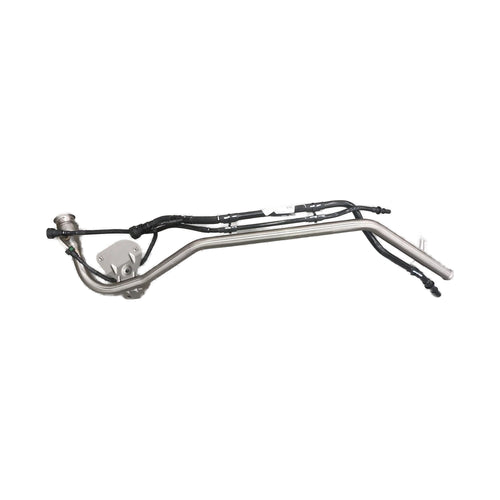
Because a modern vehicle carries many separate formed sections and they cannot be told apart from a description. Each is shaped to a specific route with specific quick release couplings at each end, and a line that is nearly right sits under tension or fouls something hot. Read the number moulded into the old line, and where it is unreadable, send photographs and the routing through the quote form so the catalogue is checked properly rather than approximated.
What damages a high-pressure fuel pump?
Three things, and dirty fuel leads the list. The pump is lubricated by whatever passes through it, so water and abrasive particles work directly on clearances measured in microns. Running the tank very low is the second, because a lift pump that gulps air leaves the high pressure element momentarily dry. The third is neglect of the filter, which lets the first two happen sooner. When one of these pumps does let go, swarf travels downstream into the rail and the injectors, so the sensible defence is clean fuel and filters changed on time.
How do I know when the engine air filter needs changing?
Follow the service schedule first, and change it sooner if the car covers dusty roads or spends long spells in heavy traffic. Take the element out and hold it up to a bright light. Clean pleated paper lets the light through evenly, while a clogged filter looks grey or brown and blocks it. A restricted filter causes sluggish pickup and higher fuel consumption, although modern engines hide both well. When you refit it, make sure the airbox seals seat fully, because dust drawn past a lifted lip wears the engine. Read the OE number on the filter frame and enter it in the search box.
What are the signs that the in-tank fuel pump is failing?
The usual pattern is a longer crank before the engine fires, hesitation or surging under hard acceleration, and a louder whine from the tank area. Some pumps cut out without warning after a hot soak and then recover once they cool. Before condemning the pump, measure delivery pressure and volume against the specification. Also check the relay, fuse, earth and connector, because a voltage drop gives the same symptoms. On many cars the pump is built into a module with the strainer and the level sender. Take the OE number from the label on the module flange and search for it.
Why does the fuel gauge read wrongly after years of normal use?
The level sender is usually a float arm sweeping a resistor track, and the wiper wears grooves where the float spends most of its time. The gauge then jumps, sticks or falls to empty. Corroded pins on the connector on top of the module cause the same symptoms, so clean and inspect them first. Some senders are sold on their own and others only with the pump module, and the resistance range must suit the instrument cluster. If the search box finds nothing for the OE number on the old sender or module, send it through the quote form and we reply within 24 hours, usually sooner.
Why do some plug-in hybrids make me wait before the fuel filler opens?
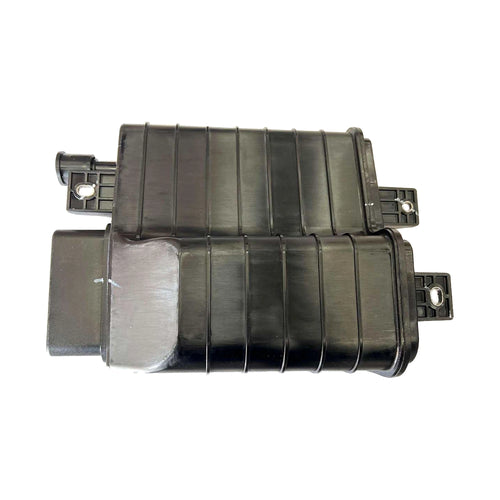
Because the tank is sealed. A car that can run for days on electricity alone would otherwise vent vapour through the carbon canister all the time, so a tank isolation valve keeps it closed and the tank is built to withstand pressure and vacuum. Pressing the release switch lets the control unit release that pressure safely before the flap unlocks. If the flap refuses to open or the release takes unusually long, suspect the isolation valve, the tank pressure sensor or the flap actuator before the tank itself. These tanks cannot be swapped for a conventional design, so match the OE number on the tank label.
Does fuel go stale in a hybrid that rarely starts its engine?
It can. Petrol loses its lighter fractions and begins to oxidise after a few months, leaving gum and varnish on the pump, the injector tips and the high pressure side. Many plug-in hybrids track the age of the fuel and start the engine by themselves to use it up, so an occasional run you did not ask for is normal. Help it by keeping the tank modestly filled rather than brimmed, so fresh fuel turns over, and by using the engine on a longer journey now and then. If the car starts badly after long storage, ask a qualified mechanic to check fuel pressure and injector spray before ordering parts.
Can I reuse the quick release connectors on fuel lines?
The connector body usually survives, but treat its seals and retaining clip with suspicion. Inside the female end sit O rings and a plastic clip. A flattened ring or a clip showing white stress marks can leak or let go, with fuel close to hot components. Release the coupling with the correct tool rather than prising it, and clean away grit before you separate it. When you reassemble it, listen for the click, then pull firmly to prove it has locked. Some line sections come with new couplings already fitted. Check the number moulded on the old line and search for the matching section.
Do new injectors need coding to the engine?
On most modern direct injection and common rail engines, yes. Each injector is flow tested at the factory and carries a correction code printed or etched on its body. The control unit uses that code to adjust the opening time so every cylinder receives the same quantity of fuel. Fit an injector without entering its code and you can expect rough running, smoke on a diesel or misfires on that cylinder. Renew the sealing washer, combustion seal and leak off connections at the same time. Read the OE number on the old injector body and use the search box, then have the coding done with suitable diagnostic equipment.
Do petrol cars still have a fuel filter I can change?
Many no longer have a serviceable one under the car. On a large share of modern petrol engines the fine filter sits inside the tank as part of the pump module and is designed to last the life of the vehicle unless contamination blocks it. Diesels are different. Their external filter traps fine particles and separates water, needs changing on schedule, and usually needs draining and priming afterwards. Check your service schedule, then locate the filter or module and read the OE number from it before using the search box.
When does an intake manifold need replacing rather than repairing?
When the fault is inside it. Many plastic manifolds carry variable length runners or swirl flaps on a shaft, and worn bushes, a broken flap or a failed actuator linkage often cannot be serviced separately. Typical symptoms are a flat spot at one particular engine speed, a rattle from the intake and a fault code for runner or flap position. Cracked plastic near the mounting bosses or a warped flange also rules out a repair. Always fit new gaskets when refitting, and tighten the bolts in sequence to the specified torque. Read the OE number moulded or labelled on the old manifold and search for it.